
The short homeschool kindergarten supply list
If you only read one section, read this one. These are the supplies most kindergarten families use every week:
- Pencils (regular No. 2 or triangular "fat" pencils for small hands) and a few good erasers
- Crayons, plus washable markers and colored pencils if you have them
- Child-safe scissors with a blunt tip
- Glue sticks (they go fast, so buy a multipack)
- Primary-lined paper or a primary composition notebook with a picture box at the top
- A small whiteboard, dry-erase markers and a cloth
- Counters for math: buttons, dried beans, pasta or bought counting bears
- Play-dough for hand strength and letter making
- Picture books and early readers, mostly from the library
- A plan or curriculum, so you are not deciding what to teach every morning
That is genuinely enough to start. Everything else on this page is either an upgrade or a way to stay organized.
What's inside the Complete Kindergarten Bundle
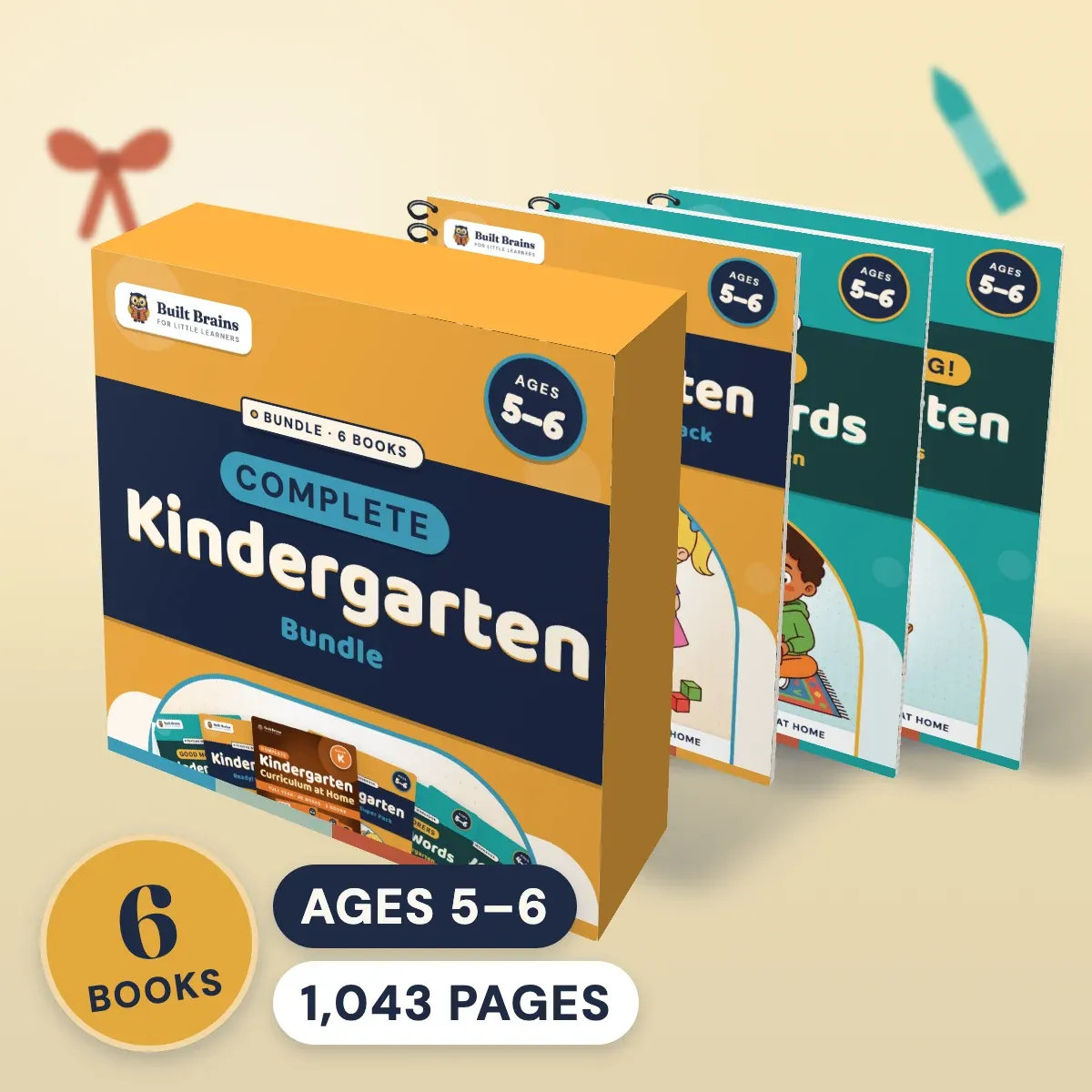
The plan is the item that saves you the most time. Our Complete Kindergarten Bundle is 1,043 printable pages in six books: the 36-week Kindergarten at Home Curriculum (phonics from letters to silent e, 70+ sight words, a decodable story every week, math from counting to 100 to adding and subtracting within 10, and a science or social studies theme each week), Good Morning! Kindergarten Warm-Ups, the Kindergarten Ready! Skills Kit, the Kindergarten Enrichment Super Pack, Sight Word Explorers: Kindergarten with 52 sight words, and CVC Word Quest. It is $59 (the books bought separately add up to $86), an instant PDF download in black and white that prints on US Letter or A4, with a 14-day money-back guarantee.
Essentials vs nice-to-have: the full table
Prices below are rough US ranges for basic, unbranded versions and will vary by store, season and sales. Back-to-school sales in July and August are the cheapest time to stock up on crayons, glue and paper.
| Item | Essential or nice to have | Approx. price | Why it earns its place |
|---|---|---|---|
| Pencils (pack of 12 to 24) | Essential | $2–$6 | Daily writing; buy more than you think |
| Erasers | Essential | $1–$4 | Cap erasers save pencil ends |
| Crayons (24 pack) | Essential | $1–$4 | Coloring builds hand strength |
| Child scissors | Essential | $2–$5 | Cutting practice several times a week |
| Glue sticks (multipack) | Essential | $3–$8 | Cut-and-paste pages and crafts |
| Primary-lined paper or notebook | Essential | $2–$6 | Letter size and spacing |
| Small whiteboard and markers | Essential | $6–$15 | Fast practice without wasting paper |
| Counters (beans, buttons or bears) | Essential | $0–$12 | Adding, taking away, patterns |
| Play-dough | Essential | $3–$8 | Fine motor, making letters and numbers |
| Printer paper (500-sheet ream) | Essential if printing | $6–$12 | Roughly a semester of worksheets |
| Printer | Essential if printing | $80–$250 | See printer tips below |
| Washable markers | Nice to have | $3–$8 | Art and bigger labels |
| Colored pencils | Nice to have | $3–$8 | Finer coloring as control improves |
| Sheet protectors (pack of 50 to 100) | Nice to have | $5–$12 | Turn any page into wipe-clean practice |
| Laminator and pouches | Nice to have | $25–$50 | Cards and charts you use daily |
| Dry-erase pocket sleeves | Nice to have | $8–$15 | Sturdier than sheet protectors |
| Linking cubes or base-ten blocks | Nice to have | $10–$25 | Place value and measuring |
| Analog learning clock | Nice to have | $5–$15 | Telling time later in the year |
| Wall calendar and weather chart | Nice to have | $0–$10 | A printable works just as well |
| Pencil grips | Only if needed | $3–$8 | For an awkward grip that persists |
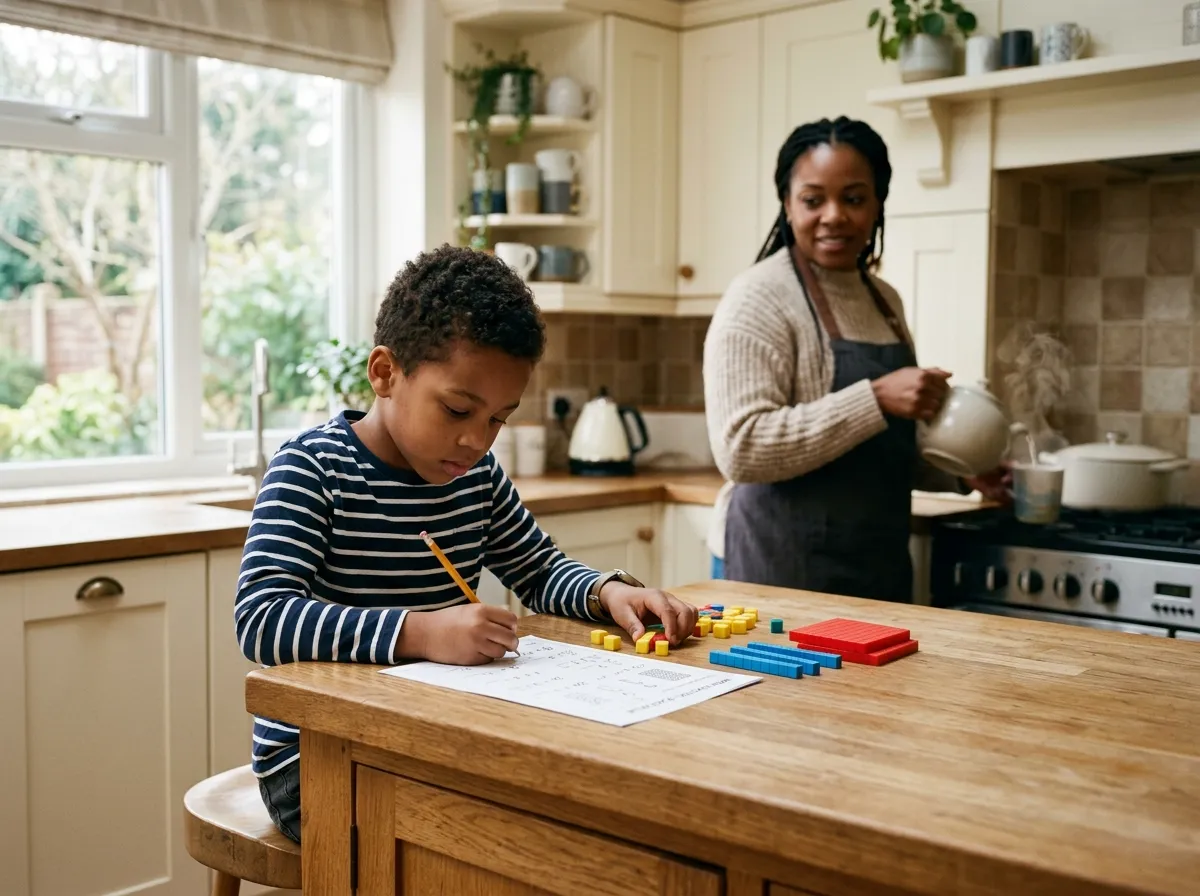
| Desk or school table | Skip | n/a | The kitchen table works well |
Do you need a printer to homeschool kindergarten?
If you plan to use printable pages, yes, and it is the purchase most worth getting right. A print shop or library works for occasional pages, but daily worksheets add up fast and the trips eat your time.
Which printer type suits kindergarten printables
- Monochrome laser printer. The best fit for black-and-white worksheets. Toner does not dry out if you take a week off, and the cost per page is usually low. It cannot print color.
- Ink tank inkjet. Refillable bottles instead of cartridges. Higher up-front price but low running cost, and it prints color and photos.
- Cartridge inkjet. Cheapest to buy, often the most expensive per page, and cartridges can dry out if the printer sits unused.
Because Built Brains pages are black and white by design, a basic laser printer handles them well, and your child gets to add the color.
Printing tips that save money
- Print one week at a time, not the whole year. Plans change, children skip pages, and you waste less.
- Use draft or "toner save" mode for practice pages your child will color anyway.
- Print double-sided for reading pages and parent notes, single-sided for anything your child cuts out.
- Plain 20 lb copy paper is fine for worksheets. Use cardstock (65 lb or heavier) only for cards and crafts that need to stand up to handling.
- Slide pages you want to reuse into sheet protectors instead of printing them again.
Laminator or sheet protectors?
A laminator feels like a classic homeschool purchase, but many families barely use it. Start with sheet protectors and dry-erase markers. They let your child trace letters, write numbers or do a calendar page each morning, then wipe it clean for tomorrow.
Buy a laminator when you notice you keep wanting to protect cards: sight word cards, letter flashcards, a hundreds chart or a visual schedule. A basic two-roller model is enough. Use 3 mil pouches for most pages and cut laminated cards with rounded corners so they do not scratch little hands.
How to store homeschool kindergarten supplies
Storage matters more than it sounds. If supplies are hard to reach, lessons start late and your child loses interest while you search for glue.
- A caddy on the table. A plastic caddy or a few jars holding pencils, crayons, scissors and glue. It lives on a shelf and comes out at lesson time.
- A file crate with weekly folders. One hanging folder per week of your curriculum. Print the week's pages on Sunday and drop them in. Finished work goes in a second folder or a binder.
- A book basket. Library books in one basket so they do not get lost, with a due date written on a sticky note.
- A math tub. Counters, dice, a ruler, a clock and a deck of cards in one box.
- A keep box. Save one piece of work a week (a page of writing, a drawing) to see progress across the year. Recycle the rest without guilt.
A $50 homeschool kindergarten starter setup
Here is a basic kit that covers the essentials for roughly $50, assuming you already have a printer or will print elsewhere. Prices are approximate and vary.
- Pencils, 24 pack: about $4
- Erasers: about $2
- Crayons, 24 pack: about $2
- Washable markers: about $4
- Two pairs of child scissors: about $5
- Glue sticks, multipack: about $5
- Primary composition notebook: about $3
- Small whiteboard with markers: about $10
- Sheet protectors, pack of 50: about $6
- Play-dough, four tubs: about $5
- Ream of printer paper: about $7
That totals around $53. Use dried beans or buttons as counters, and the library for books, and you have spent nothing more. Add a curriculum when you are ready, and buy extras only when you notice a real gap.
 New
NewAges 5–6 · 687 pages
Complete Kindergarten Curriculum at Home36 weeks of phonics, reading, math and more — planned for you
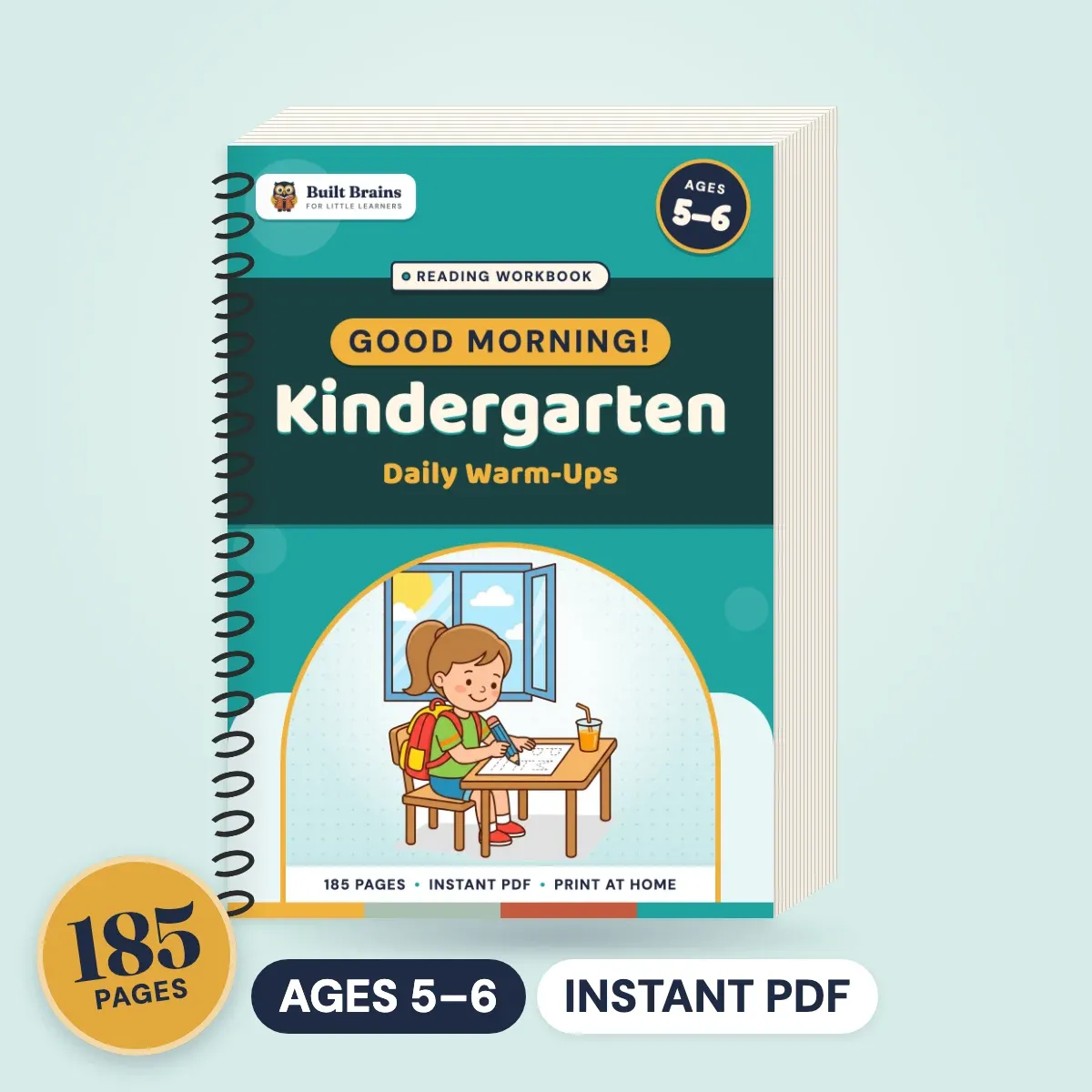
Ages 5–6 · 185 pages
Good Morning! Kindergarten Warm-Ups180 daily pages: phonics, sight words and math
What you do not need to buy
A lot of homeschool spending happens before the first lesson. These are the items families most often regret:
- A full classroom setup. Desks, rugs and wall posters look lovely online, but kindergarteners learn just as well at the kitchen table or on the floor.
- Lots of educational toys. A few open-ended things (blocks, play-dough, a ball, art supplies) do more than a shelf of single-purpose gadgets.
- Workbooks for every subject from different publishers. They rarely line up, and you end up with gaps and repeats. One plan with a clear order is easier.
- Tablets and apps. Not needed for kindergarten. If you use them, treat them as extras rather than the core.
- Every manipulative. Beans, pasta, coins and a deck of cards cover most kindergarten math.
Kindergarten supplies and the skills they build
It helps to know why each item is on the list, so you use it well:
- Play-dough, scissors and glue build the small hand muscles children need for writing. Our fine motor activities guide has ideas that work for kindergarteners too.
- A whiteboard makes mistakes cheap. Children try harder when they can wipe and retry.
- Counters keep math concrete. Kindergarten math should be done with objects before pages.
- Library books do the heavy lifting for vocabulary. Aim for several picture books read aloud every day.
If you are earlier in your planning, our step-by-step guide on how to homeschool kindergarten covers schedules, legal basics and what to teach. If you are still choosing between curriculum types, our comparison of printable vs boxed homeschool curriculum lays out costs and trade-offs.
The easiest way to put it all together
Supplies are only half the setup. The other half is knowing what to do with them each day. The Complete Kindergarten Bundle gives you the year's plan plus the extra practice books, so you can print a week, fill a folder and start.
Want to see the page style first? Try our free printable book with the crayons and pencils you already have. Every Built Brains product is an instant black-and-white PDF that prints on US Letter or A4, and comes with a 14-day money-back guarantee.
Questions parents ask
A table, good light, a plan, and basic supplies: pencils, crayons, child scissors, glue sticks, primary-lined paper, a small whiteboard, counters and lots of library books. If you use printable curriculum, add a printer and paper. Expensive furniture, a dedicated classroom and tablets are not needed for a strong kindergarten year.
It can cost very little. Supplies run roughly $50 to $150 for the year, depending on what you already own. Curriculum ranges from free (library and online resources) to printable plans under $100 to boxed sets that cost several hundred dollars. Printing at home adds paper and ink, often a few cents a page in black and white.
No. A laminator is handy for pages you reuse daily, like calendar pages, letter cards or a hundreds chart. A cheaper option is a pack of clear sheet protectors and dry-erase markers: slide a page in, write, wipe and reuse. Buy a laminator later if you find yourself wanting to keep many pages long term.
If most of what you print is black-and-white worksheets, a basic monochrome laser printer is usually the cheapest to run and rarely dries out between uses. If you print a lot of color, look at an ink tank model with refillable bottles. Small cartridge inkjets cost the least up front but often the most per page.
They overlap heavily. Preschool leans on chunky crayons, play-dough, large paper, beads for threading and lots of play materials. Kindergarten adds regular pencils, primary-lined paper, a whiteboard for letters and sums, counters for adding and taking away, and early readers. Most preschool supplies carry straight into kindergarten.