Printable vs boxed curriculum: the quick answer
The four main types of homeschool curriculum differ mostly in three ways: what you pay, how much planning you do yourself, and how the material arrives.
- Boxed curriculum: physical books shipped to you, often with teacher guides, readers and sometimes manipulatives. Highest cost, least prep.
- Online curriculum: lessons on a screen, often with automatic grading. Monthly or yearly subscription. Little prep, but more screen time.
- Printable curriculum: PDF files you download and print. Low cost, flexible, but you do the printing and organizing.
- Library-based and unit studies: you build lessons from library books and free resources around themes. Lowest cost, most planning.
None is the "right" answer for every family. Many homeschoolers mix them: a printable plan for reading and math, library books for read-alouds, and an occasional boxed kit for science.
What's inside the Everything Bundle
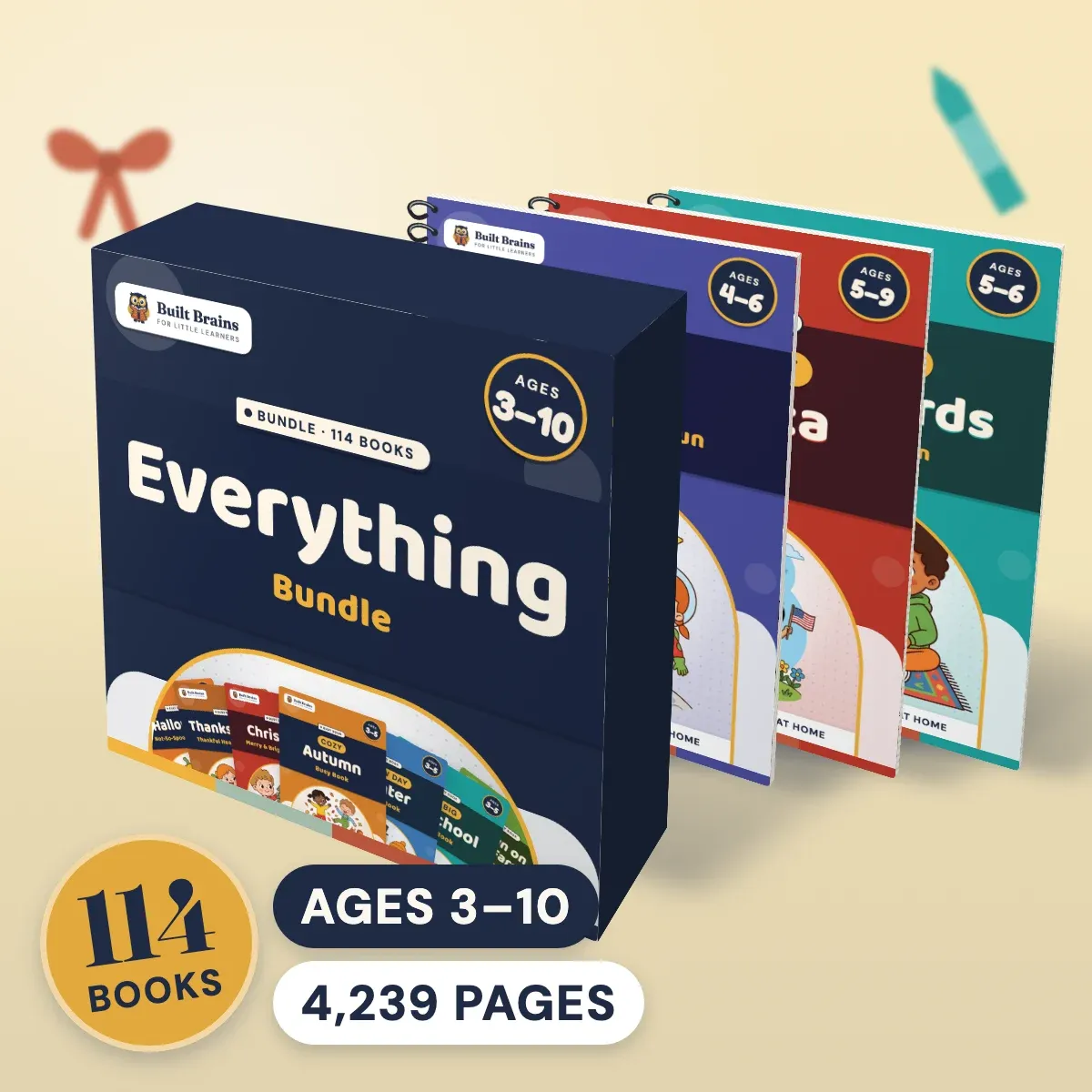
If you choose printables, our Everything Bundle is the biggest library in one download: 113 printables and 3,420 pages for ages 3 to 7, worth $777 if bought separately, for $97. It includes every busy book, holiday and seasonal pack, workbook (alphabet tracing, sight words, CVC words, numbers, shapes, adding and taking away, telling time, scissor skills), science and our-world unit, craft kit, pretend-play pack and coloring book, plus every new printable we add later at no extra cost.
To be clear about what it is not: the grade-level curriculums are sold separately. The Everything Bundle is your practice, theme and enrichment library; a grade curriculum or bundle is the day-by-day spine. Like all our products, it is an instant PDF download in black and white that prints on US Letter or A4, with a 14-day money-back guarantee.
Homeschool curriculum types compared
| Boxed | Online | Printable | Library / unit studies | |
|---|---|---|---|---|
| Typical cost | Highest; often several hundred dollars or more per child per year | Ongoing subscription | Low; often under $100 per grade, plus printing | Very low |
| Prep time for you | Low | Very low | Low to medium (printing, organizing) | High |
| Arrives as | Bound books, readers, guides | Website or app | PDF files | Whatever you gather |
| Screen time | Little | High | Little | Little |
| Flexibility | Low to medium | Medium | High (print only what you need) | Very high |
| Needs a printer | No | Sometimes | Yes, or a print shop | Sometimes |
| Resale value | Often some | None | None | None |
| Best for | Families who want everything ready | Older or independent learners | Budget-conscious families who like control | Confident planners with lots of time |
Costs here are deliberately described in general terms. Prices change, and the same type can range widely depending on grade, number of subjects and whether teacher guides are included.
What printable homeschool curriculum really costs
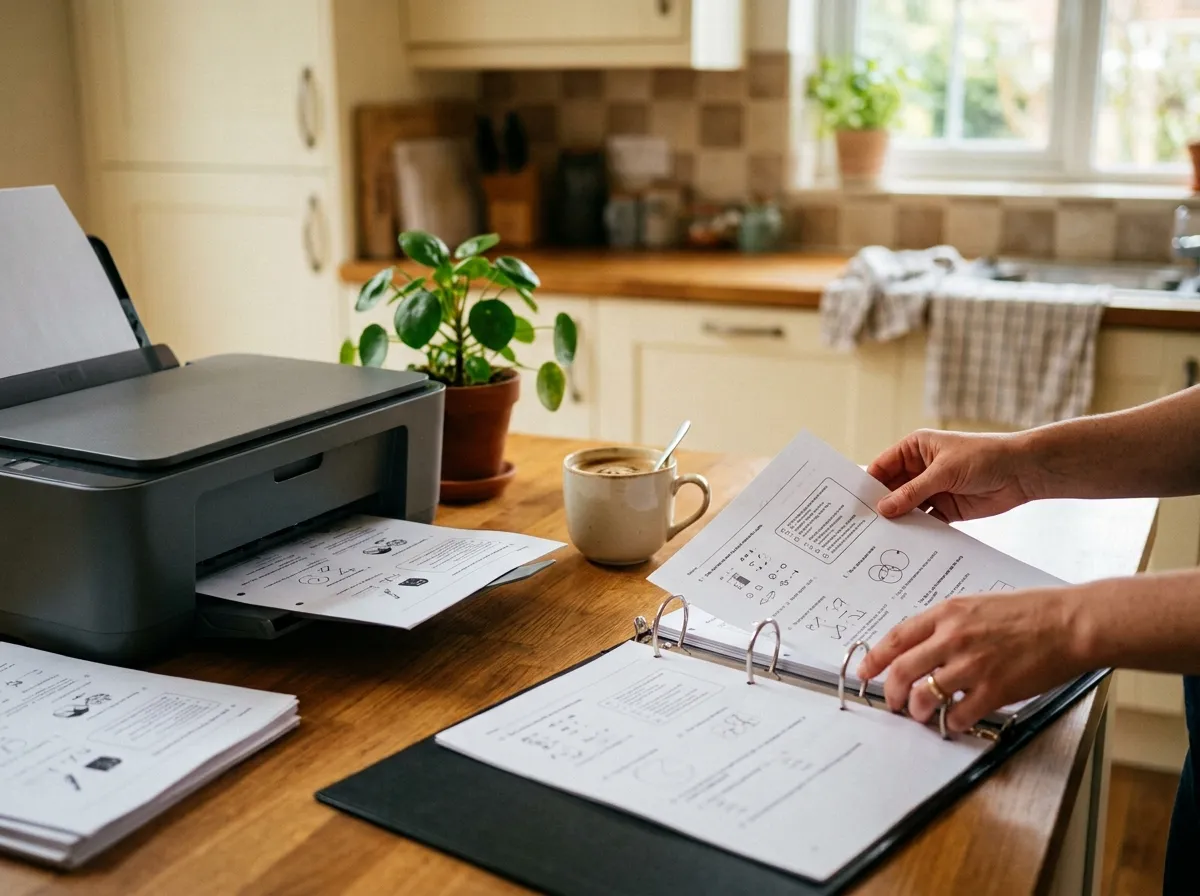
Printable curricula look cheap at checkout, and they usually are, but printing is a real cost and it is fair to count it. Here is a simple way to estimate.
The printing math
Cost per page = (ink or toner price ÷ pages it yields) + paper cost per page.
- Paper: a 500-sheet ream of basic copy paper usually works out to about 1 to 2 cents a page.
- Black toner in a basic laser printer: often roughly 2 to 4 cents a page, sometimes less with high-yield toner.
- Black ink in a cartridge inkjet: often roughly 4 to 10 cents a page, sometimes more with standard-size cartridges.
- Ink tank printers: usually at the low end, often around a cent or two of ink per page.
These are estimates. Check the page yield printed on your own cartridge box and do the division for your actual number.
Worked example: one grade of curriculum
Our 1st grade curriculum is 635 pages, Parents' Guide included. Printed in black and white:
| Printer | Approx. cost per page (ink + paper) | Approx. cost for 635 pages |
|---|---|---|
| Laser, black toner | 3–6 cents | $19–$38 |
| Ink tank | 2–4 cents | $13–$25 |
| Cartridge inkjet | 5–12 cents | $32–$76 |
Spread across a 36-week year, that is often less than a dollar or two a week. You can also bring it down:
- Print a week at a time. You will skip pages your child already knows.
- Read plan pages on screen instead of printing them.
- Print double-sided where nothing needs cutting.
- Slip reusable pages into sheet protectors and use dry-erase markers.
Our homeschool kindergarten supply list covers which printer types suit worksheets best, if you are deciding what to buy.
When boxed curriculum is the better choice
Printables are our thing, but they are not the right fit for every family. Boxed is often the better choice if:
- You have no printer and no easy, cheap print shop nearby.
- You want scripted teacher manuals that tell you exactly what to say for every lesson.
- You want real bound readers and chapter books included rather than borrowed from the library.
- You plan to reuse or resell non-consumable books across several children.
- Printing and organizing would be the thing that stops you. If a stack of pages will sit unprinted, a box on the shelf is worth the extra cost.
- Your child is older and works best from a physical textbook.
Online programs make sense for older or independent learners, for a parent who works during the day, or as a supplement in a subject you feel less confident teaching. For ages 3 to 7, though, most children learn best with an adult, a pencil, real objects and short sessions, which is where printables shine.
When printable curriculum is the better choice
Printables tend to win if:
- Budget matters. You can cover a full grade for well under the cost of a typical boxed set.
- You like flexibility. Skip pages, repeat pages, slow down or speed up without wasting a bound book.
- You want it now. Download today and start tomorrow; no waiting for shipping.
- Your child needs extra practice. Print a page twice.
- You teach young children, where much of the work is tracing, coloring, cutting and short reading and math practice.
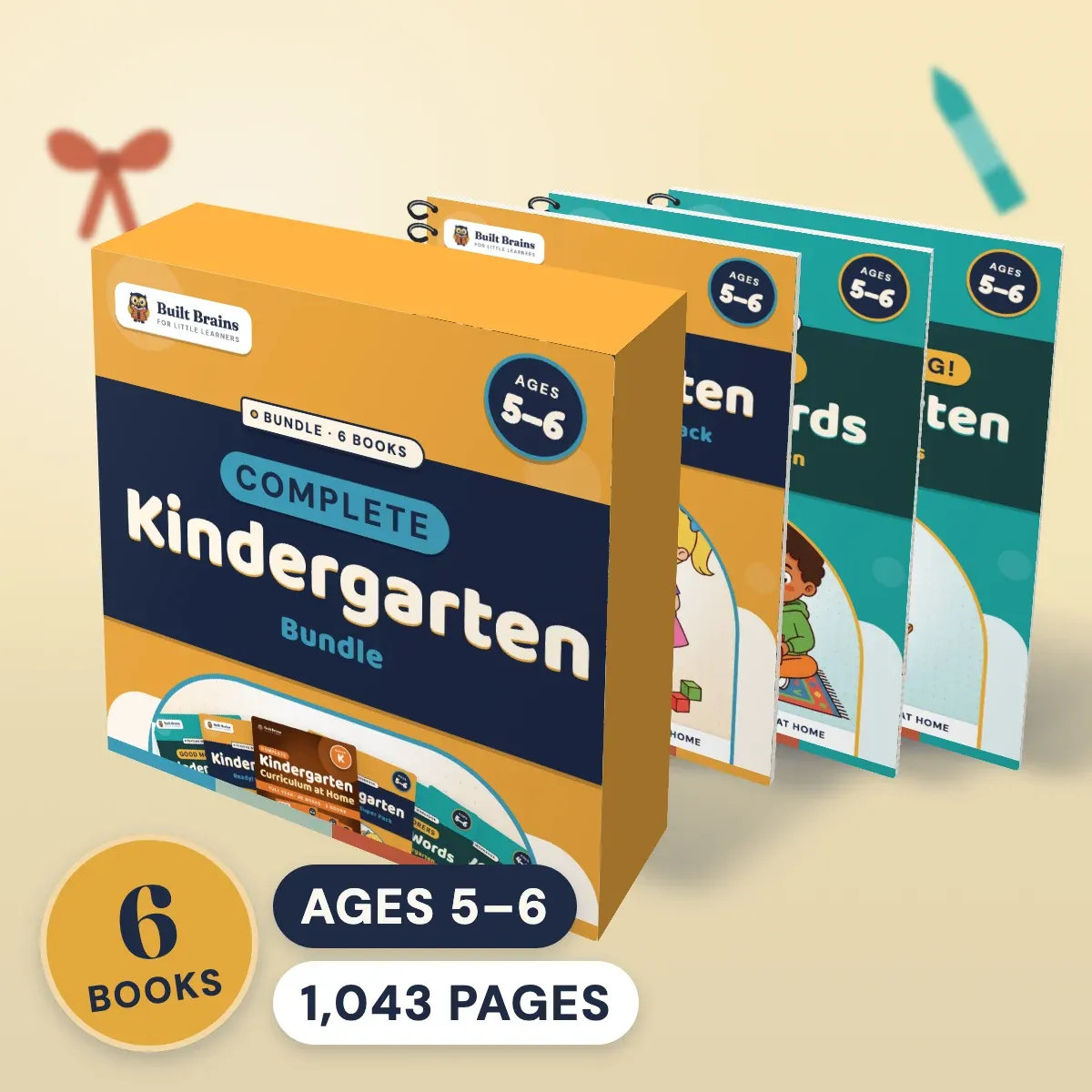 Best valueSave $32
6 books · 1043 pages
The Complete Kindergarten BundleCurriculum, warm-ups, sight words and enrichment
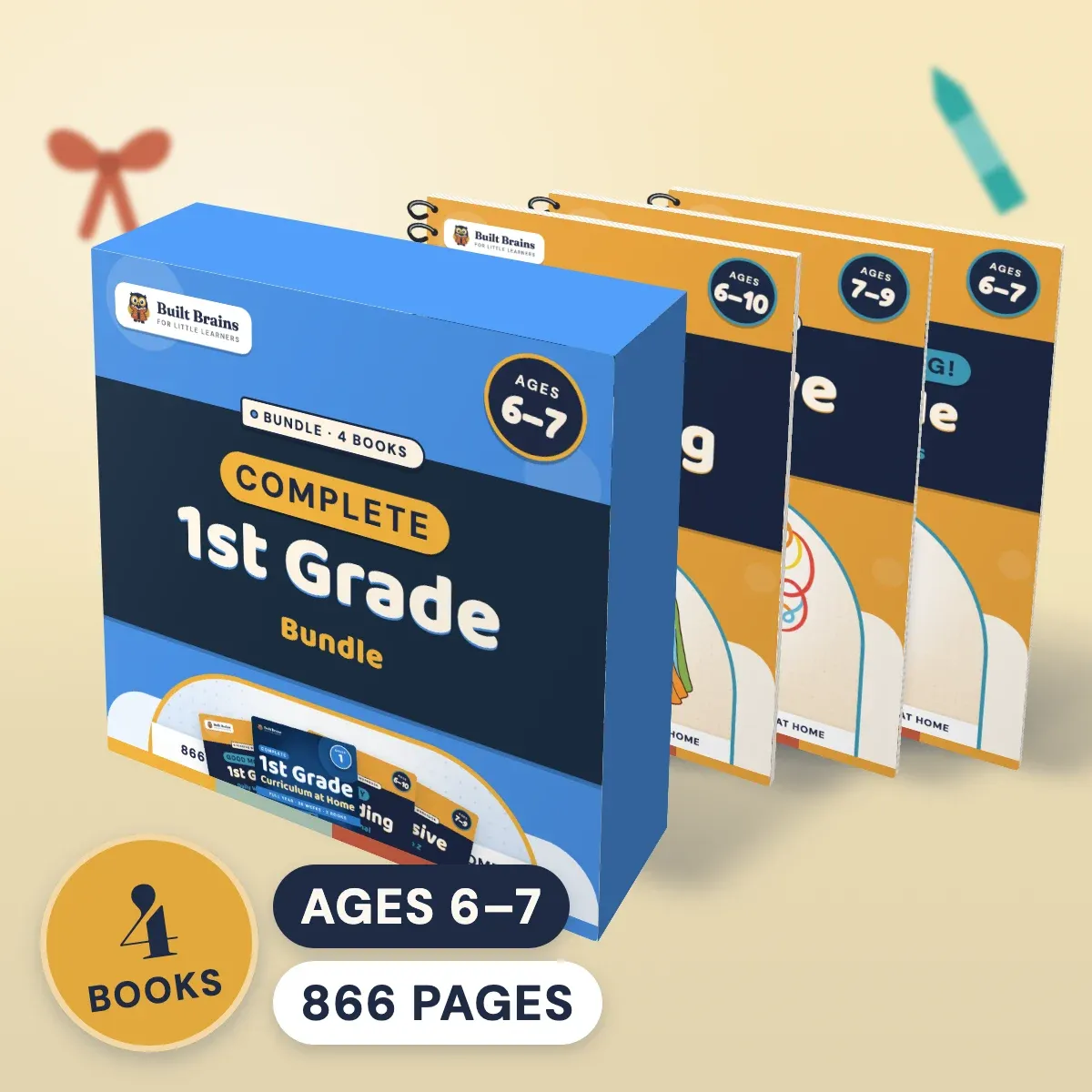 Save $20
4 books · 866 pages
The Complete 1st Grade BundleCurriculum, warm-ups, reading journal and cursive
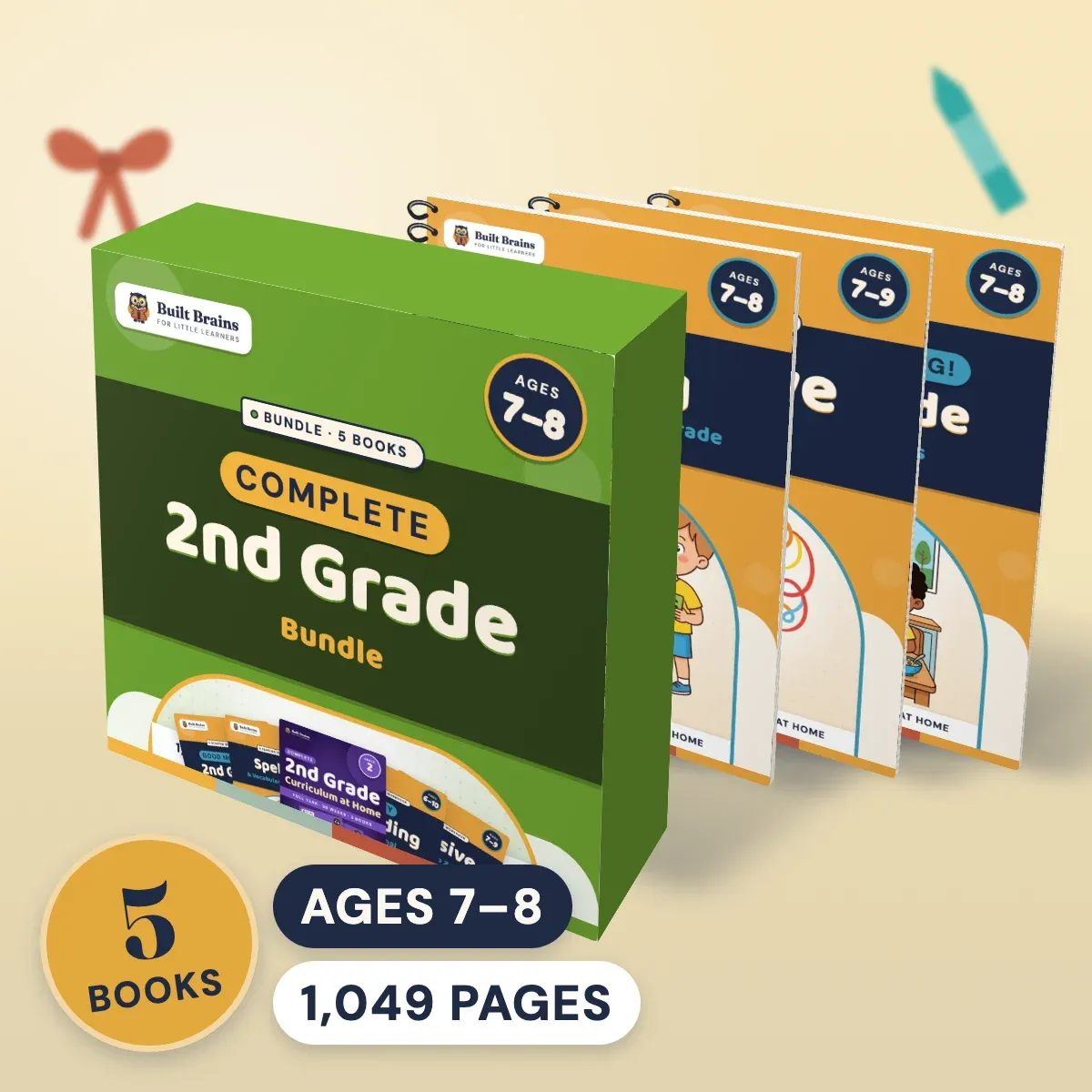 Save $27
5 books · 1049 pages
The Complete 2nd Grade BundleCurriculum, warm-ups, spelling, journal and cursive
How to choose: questions to ask yourself
- How much time can I give to planning each week? Under an hour points to a ready-made plan, boxed or printable. Several hours points to unit studies.
- Will I actually print? Be honest. If yes, printables save money. If no, buy boxed or online.
- How much screen time do I want? For young children, most families aim for little.
- Do I need everything in one place, or am I happy to mix? Mixing is normal and often works best.
- What do I already own? A printer, a library card and a shelf of picture books change the math a lot.
If you are just starting out with a young child, our guides on choosing a homeschool preschool curriculum and how to homeschool kindergarten go deeper on what to look for at those ages.
A low-cost printable setup for a full year
For a complete year with printables, pair a grade-level spine with a practice library:
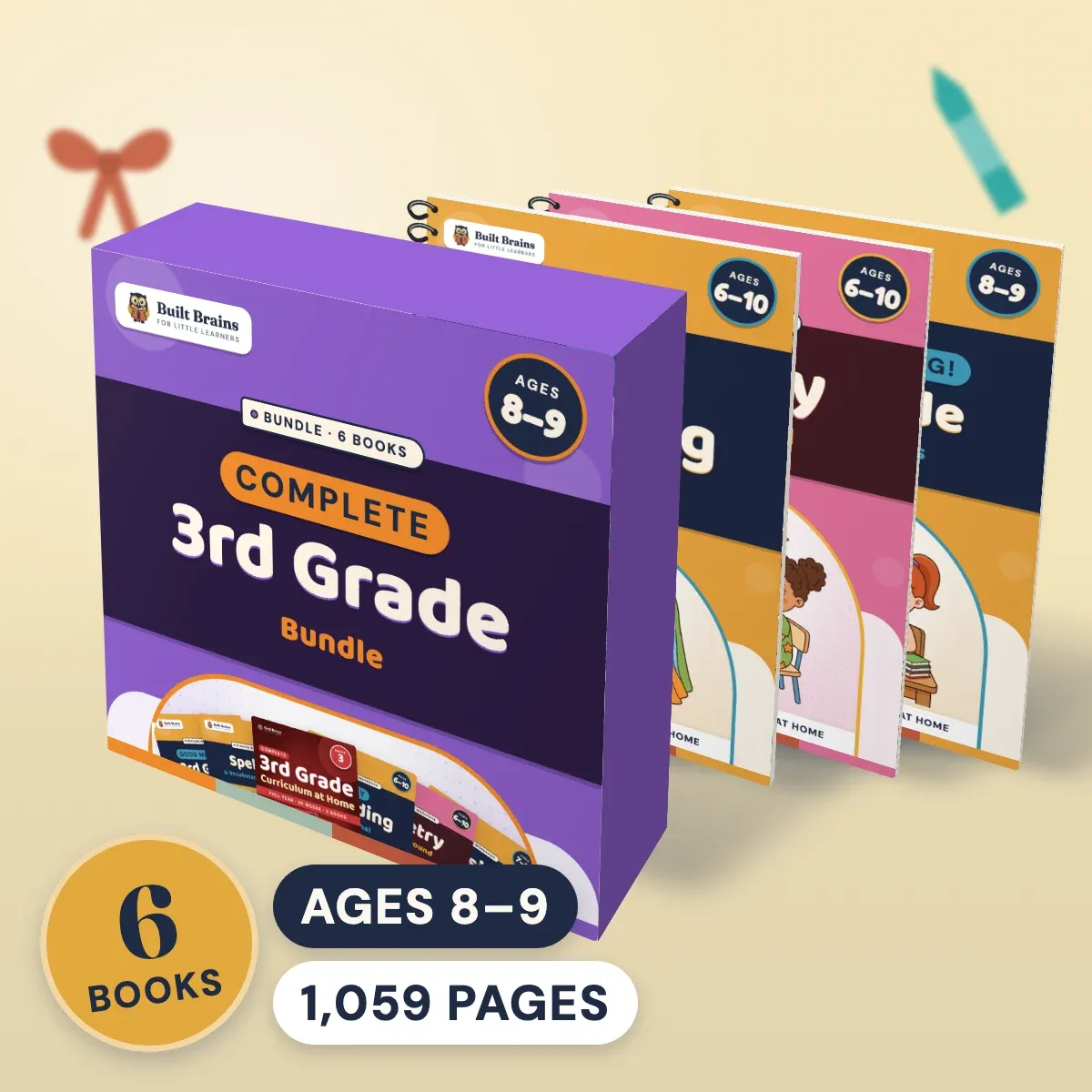
- The spine: a grade curriculum or bundle with 36 weekly plans. Our grade bundles are $59 for kindergarten, $45 for 1st grade, $59 for 2nd grade and $59 for 3rd grade; you can compare them in our bundles collection.
- The library: the Everything Bundle for seasonal packs, science units, crafts, extra workbooks and quiet-time busy books across ages 3 to 7.
- The extras: library books for read-alouds, a few math objects, and outings.
Not ready to buy? Try our free printable book first, print it at home, and see how your child and your printer get on.
Every Built Brains product is an instant PDF in black and white that prints on US Letter or A4, with a 14-day money-back guarantee, so you can check it suits your family before committing to a year of it.
Questions parents ask
A library card plus free or low-cost printables is the cheapest route, and it can work well. The trade-off is time: you plan the sequence, find materials and fill gaps. A low-cost printable curriculum costs a little more but gives you the order and weekly plans, which is where most families get stuck.
It varies widely. Library-based homeschooling can cost close to nothing. Printable curricula often cost under $100 per grade plus printing. Online programs are usually monthly or yearly subscriptions. Complete boxed sets commonly run to several hundred dollars or more per child per year, especially with teacher guides, readers and manipulatives included.
In black and white, most home printers cost roughly 2 to 10 cents a page including paper, depending on the printer and whether you buy high-yield toner or ink. A 600-page year therefore costs very roughly $15 to $60 to print. Printing a week at a time and skipping pages you do not need lowers that further.
Not better, just different. Boxed curriculum suits families who want everything physical and ready, have no printer, want scripted teacher manuals, or plan to resell or reuse non-consumable books. Printable suits families watching their budget who want flexibility and do not mind printing a week of pages at a time.
Yes, especially in the early years, where much of the learning is tracing, cutting, counting and short reading practice. Add plenty of library books, read aloud daily, and use real objects for math. As children get older, chapter books and a few hands-on kits become more important alongside the printed pages.