What name tracing is for, and when to start
Tracing is how a child's hand learns a path before the eyes and memory can produce it alone. For a name, that means learning where each letter starts, which way it goes and how the letters sit together on a line, with the shape already provided so all the effort goes into the movement.
It is a stage, not the destination. The full journey from first scribbles to writing a name from memory is covered in our guide to how to teach a child to write their name; this article is about getting the tracing part right, because done well it makes the later steps short, and done badly (a page of scribbled-over letters every day) it teaches very little.
Most children are ready to trace their name somewhere between 3 and 4, when they:
- hold a crayon with their fingers rather than a fist, at least some of the time;
- can trace a straight line and a circle roughly along the path;
- recognize their name on a label or a drawing;
- are interested: they ask what letters say, or "write" lists and cards.
If your 3-year-old is not there yet, nothing is lost by waiting. Spend the time on lines, curves and hand strength (see fine motor activities for preschoolers) and try again in a couple of months.
Set it up right: capital first letter, then lowercase
Four decisions before you make the first sheet:
- Capital first letter, lowercase after it. "Noah", not "NOAH". That is how the name is written everywhere your child will see it, and lowercase is what they will need for every other word. The reasons are spelled out in the name-writing guide.
- A plain print font. The letters should look like handwriting: a single-storey a, a g with a simple tail, no serifs. Century Gothic, Comic Sans and most fonts labeled "school" or "print" do this.
- Big letters. About an inch (2.5 cm) tall for a 3-year-old, two-thirds of that for a 4-year-old. Small letters demand finger control a preschooler does not have yet.
- A start dot on every letter. A green dot where the letter begins, and ideally a small arrow, so your child learns top-to-bottom and left-to-right from the first trace. Nearly every print letter starts at the top; the exceptions, d and e, are worth pointing out.
Make a name tracing sheet at home in 2 minutes
You do not need a printable. Three ways, fastest first:
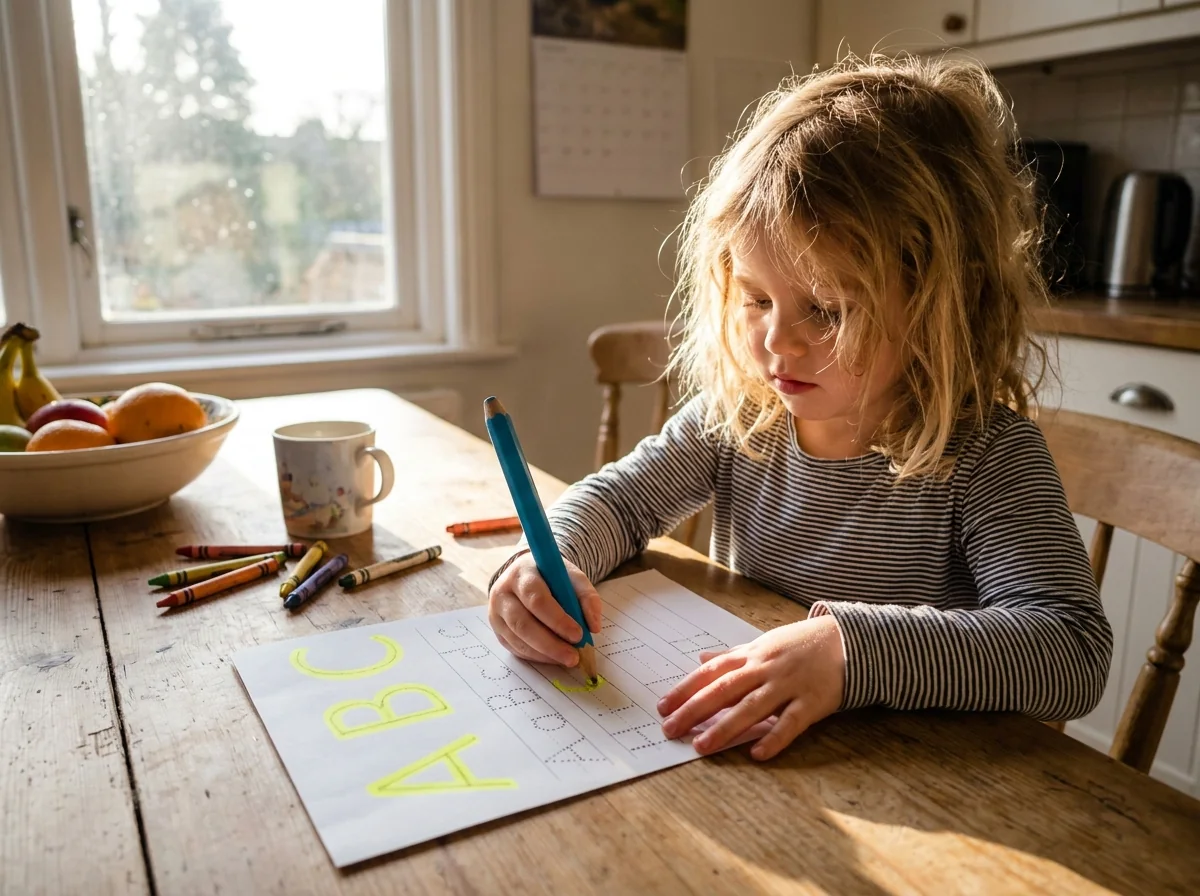
The highlighter sheet (30 seconds). Take a sheet of paper, turn it landscape, and write your child's name three times down the page in yellow highlighter, big, with a green start dot on each letter. Your child traces over the yellow with a pencil or crayon. The wide, pale line forgives wobbles.
The dotted sheet (1 minute). Write the name in small pencil dots or short dashes instead of a solid line. Dots ask your child to make the path rather than follow a ribbon, so this comes after the highlighter version. Put the green start dot on, and number the strokes of letters that take more than one (1 for the down-stroke of a T, 2 for the top).
The printed sheet (2 minutes). Open any document program, type the name at a very large size (around 100 point), set the text to light gray or an outline style, and print three or four lines. Slip it into a plastic sheet protector and your child can trace it with a dry-erase marker, wipe, and go again all week.
Whichever you make, leave an empty line under the last traced name. That is where the fade (below) will happen, and seeing it from day one makes the move to copying feel ordinary.
Four tracing methods, from most help to least
Finger tracing first
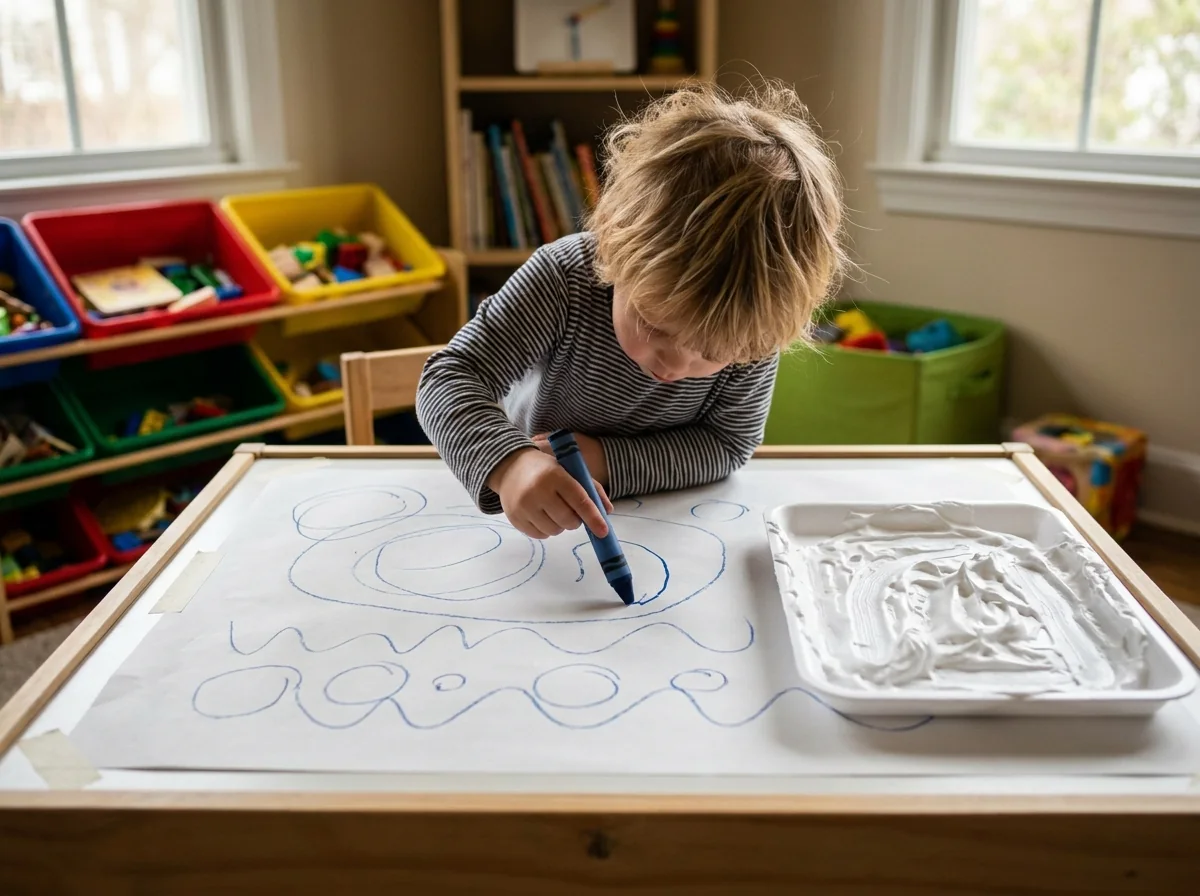
Before the crayon, trace the name with a finger: on the highlighter sheet, on letters cut from sandpaper, in a tray of salt, or on a name written in glue and left to dry into raised lines. The arm learns the big movement first, and there is no pencil grip to worry about. Thirty seconds is enough.
Highlighter trace
The solid yellow path described above. The pencil can drift and still be "on" the line, so this is the right starting point for 3-year-olds and for any child who finds dots frustrating.
Dot-to-dot
Dotted or dashed letters, with start dots. This is the standard worksheet style, and it is a genuine step up: the child has to steer between the dots rather than ride along a ribbon. Keep the dots close together at first and space them out as control improves.
Rainbow writing
Trace the same name three or four times in different colors, one over another. Each pass is another repetition, but it feels like coloring rather than drill, and the finished rainbow name goes on the fridge.
ABC Tracing Adventure: A to Z uses the same green-dot, step-by-step tracing for every letter, with a big letter to color, a letter hunt and a beginning-sounds hunt for each one, over 60 pages for ages 3 to 5. If one letter of the name keeps going wrong, its page is a good place to practice that letter on its own. Our alphabet tracing tips cover formation habits in more detail.
The fade: trace, then copy, then write
Tracing only helps if it leads somewhere, so plan the fade from the start. Each stage removes a little help:
| Stage | What the sheet shows | Move on when |
|---|---|---|
| 1. Solid trace | Name in highlighter, start dots | Traces along the path and starts at the dots, three days running |
| 2. Dotted trace | Name in dots or dashes, start dots | Connects the dots without big detours |
| 3. Ghost trace | Name in very pale gray, no dots | Hardly looks at the gray |
| 4. Copy | Name written once at the top, blank line below | Copies every letter, even if wobbly |
| 5. First-letter cue | Only the capital written, then blank | Writes the rest unprompted |
| 6. Write | Blank line, or a real reason: sign a drawing | Writes it from memory |
The "three days running" rule is the useful one: do not move on after one good day, and do not stay on a stage your child finds easy. Most children take one to three weeks per stage, and it is normal to spend longest at the copy stage, because that is the first time the letter has to be held in mind. Going back a stage on a tired day costs nothing.
Long names get a shorter fade. For "Alexandra", trace the whole thing but start fading "Alex" first, and let the rest stay traced until the first four letters are solid.
How many repetitions?
Fewer than most worksheets suggest. A good session is:
- two or three careful traces of the whole name, once a day, four or five days a week;
- three to five goes at a single letter if one letter needs extra work;
- under five minutes, stopping while it is still going well.
A page covered in ten copies of a name is too much for a 3- or 4-year-old. By the fourth repetition attention drifts, the grip collapses and the last six names teach bad habits rather than good ones. Short, daily and correct beats long and occasional. If you want more practice in a day, change the medium (a finger in salt after lunch, chalk outside later) rather than adding rows.
The Good Morning! Preschool Warm-Ups are built on the same short-and-daily idea: one short page per preschool morning, 180 in all, rotating playdough and dot-marker mats, mazes, patterns and letter and number pages, so tracing is one of many small things rather than the whole session.
When tracing isn't helping
Tracing can turn into a ritual that produces a tidy sheet and no learning. Watch for these:
- Scribbling over the letters rather than following the path, or starting letters at the bottom.
- No carry-over: after three or four weeks of tracing, your child still cannot copy a single letter of the name.
- A collapsing grip: the fist grip returning, pressing hard, the whole arm moving.
- Tears or avoidance whenever the sheet appears.
What to do, in order:
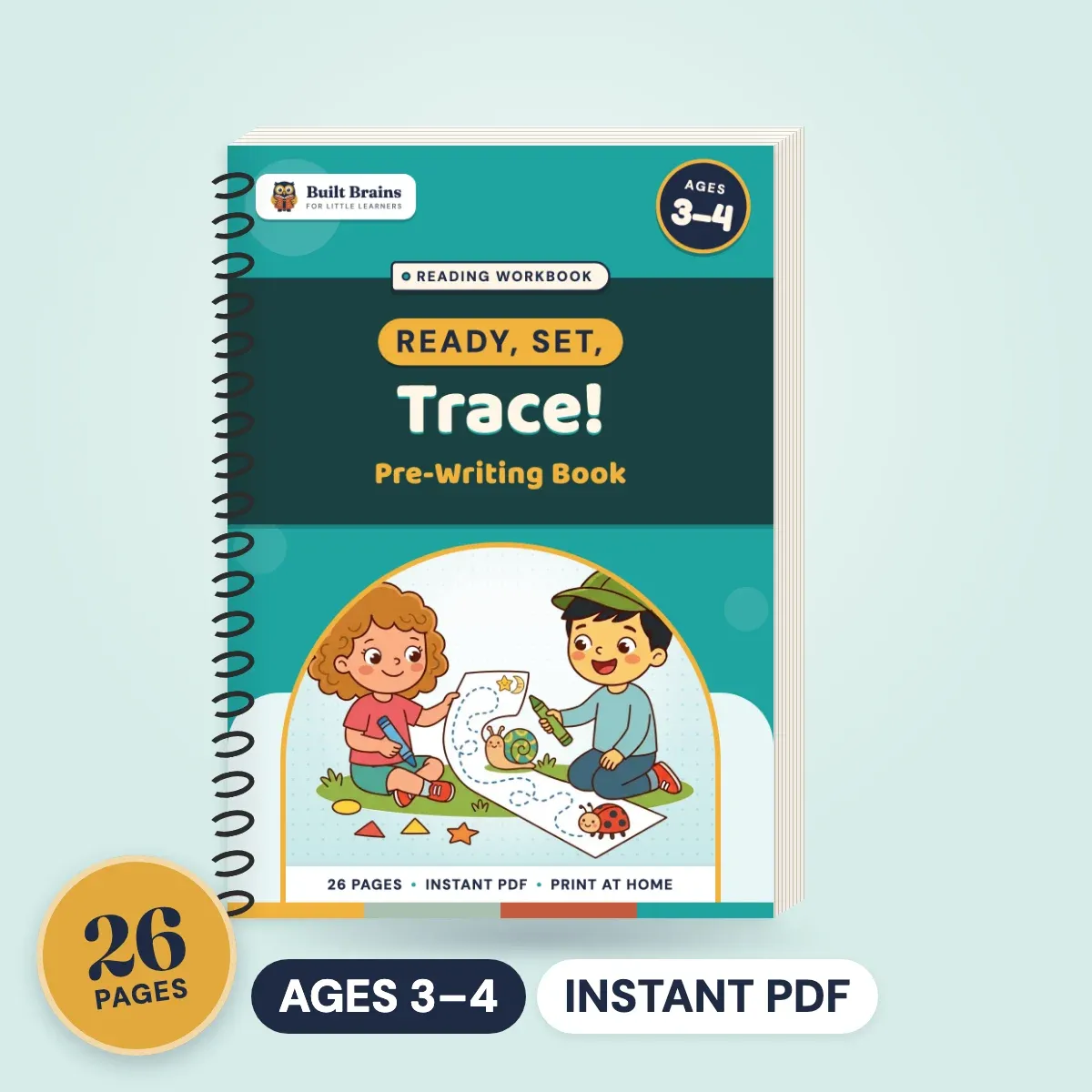
- Go back to strokes. If lines, circles and curves are not steady, letters cannot be. The Ready, Set, Trace! Pre-Writing Book works through straight lines, waves, zigzags, bumps and loops, then mazes and shape tracing, over 26 pages for ages 3 to 4. A week or two there usually fixes "scribbling" tracing.
- Build the hand. Scissors, playdough, tongs, stickers and tearing paper strengthen the small muscles tracing needs. The Snip Snip! Scissor Skills Book goes from first snips to loops over 23 pages for ages 3 to 5.
- Make it bigger and vertical. Tape the sheet to a wall or use an easel; writing at shoulder height steadies the wrist. Double the letter size.
- Trace with a finger first, every time, then the crayon, and say the path words together.
- Shorten the name. Trace just the first two or three letters for a week, then add one at a time.
- Take a break. Two weeks off, with plenty of drawing and play, often resets the mood.
Wobble, uneven sizes and the occasional backward letter are all normal through age 5 and often beyond; Reading Rockets summarizes what typical handwriting looks like at each age (Handwriting: What's Normal, What's Not). If your child is 5 or older, has had months of relaxed practice and still cannot trace along a path or hold a crayon with their fingers, mention it to their teacher or pediatrician. For where name tracing sits among everything else at this age, see what a 4-year-old should know.
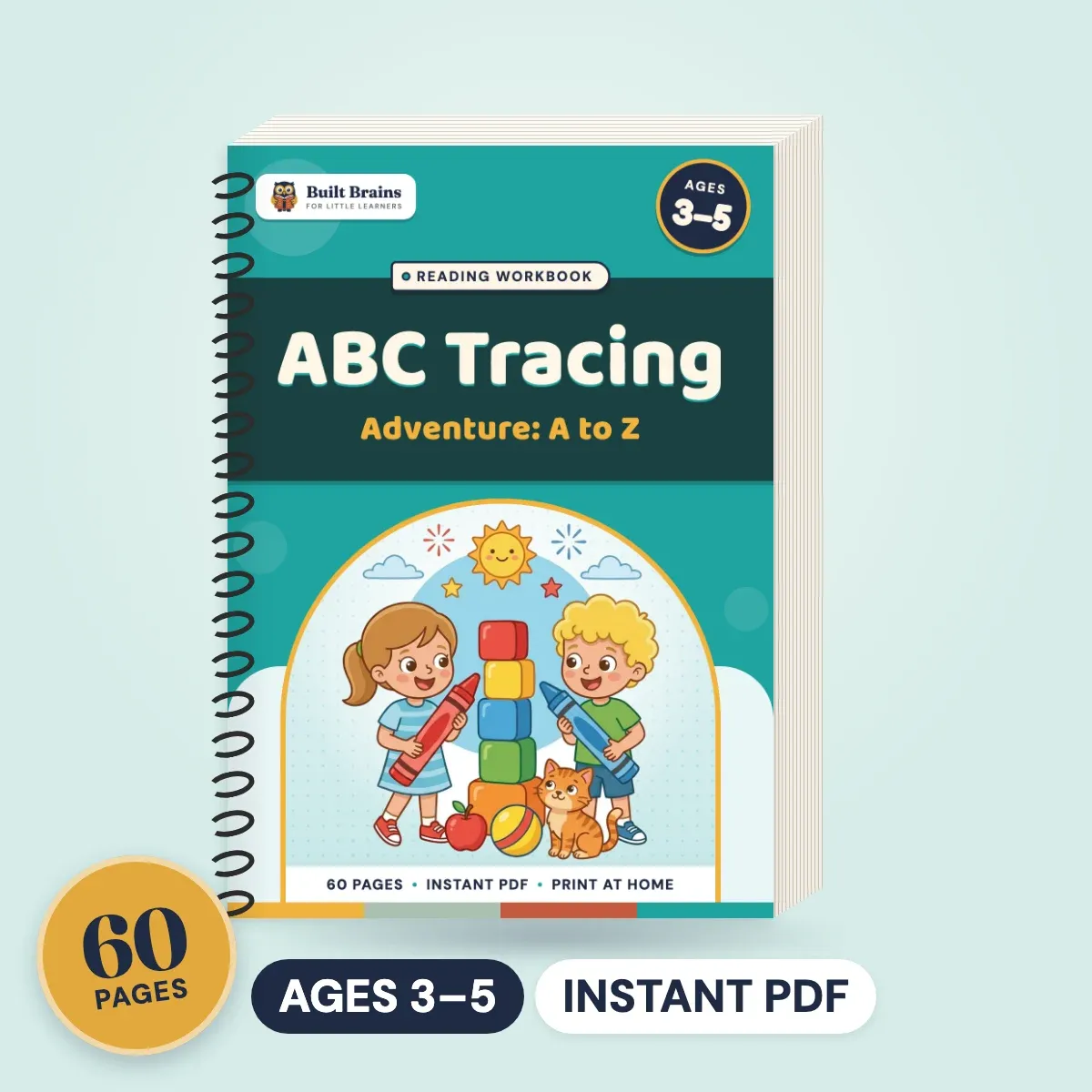
Ages 3–5 · 60 pages
ABC Tracing Adventure: A to ZLearn every letter the right way — trace, find, color
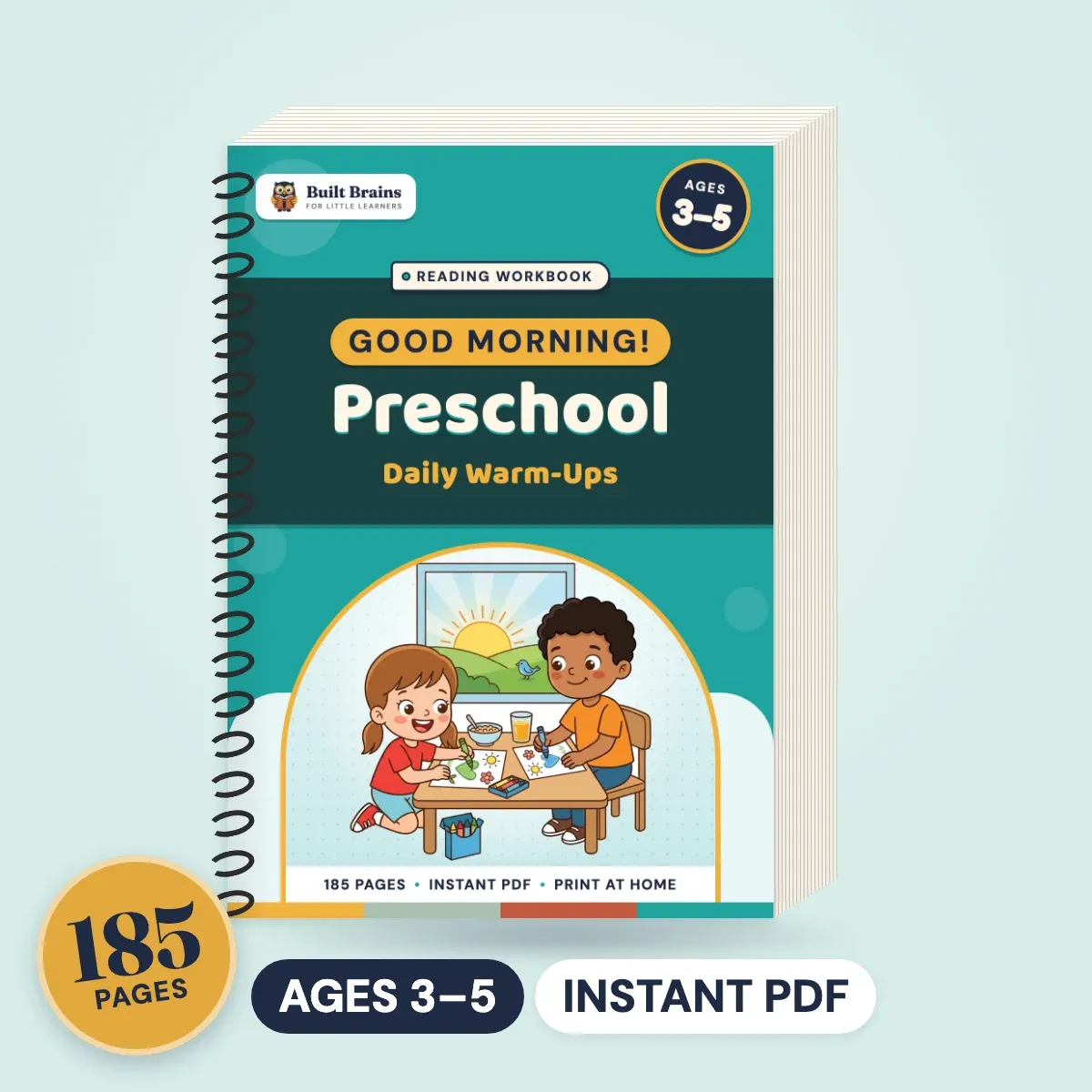
Ages 3–5 · 185 pages
Good Morning! Preschool Warm-Ups180 five-minute pages, one for every school day
Sources
- Reading Rockets – The Importance of Teaching Handwriting: explicit instruction in letter formation, with the strokes named aloud, beats unguided copying and tracing.
- Reading Rockets – Handwriting: What's Normal, What's Not: what typical handwriting and pencil skills look like at each age, and when to seek help.
Questions parents ask
Most children are ready between 3 and 4, once they hold a crayon with their fingers, can trace a line and a circle, and recognize their name. Some 3-year-olds manage the first letter only, and that is fine. By 4 to 5 most children move from tracing to copying, and many write their name from memory by kindergarten.
Write the name in yellow highlighter three times on a landscape sheet, big, with a green dot where each letter starts, and let your child trace over it. For a dotted version, write it in pencil dots. Or type the name at around 100 point in a plain font, set it to light gray, print it and slip it into a sheet protector for dry-erase use.
A capital first letter followed by lowercase, as in "Noah" rather than "NOAH". That is how your child will write it at school and how it appears on labels and cards, and lowercase letters make up almost everything else they will write. If a lowercase letter is hard, practice it alone on its own page for a few days first.
Two or three careful traces once a day, four or five days a week, in a session under five minutes. A page of ten names tires the hand and teaches sloppy habits by the fourth row. If you want more practice, change the medium instead, such as a finger in salt or chalk outside, rather than adding rows.
Tracing is a useful bridge, as long as the path is shown (start dots, arrows) and named aloud, and as long as it fades into copying and then writing within a few weeks. Tracing on its own, with no plan to remove the help, can become a habit that produces neat sheets and very little learning.
Scribbling over the letters means the pencil control is not there yet, not that your child is being careless. Go back to pre-writing lines and curves for a week or two, trace with a finger before the crayon, make the letters bigger, tape the sheet to a wall, and keep sessions to two minutes.
Reviewed by
Maternelle (Kindergarten) Teacher
Clara Tremblay is a Maternelle educator in Quebec focused on French early literacy, fine motor development, and inquiry-based play.
More about Clara →