
The best educational gifts for 4 year olds
Here are the gifts that most 4 year olds use often and learn from, with the skill each one builds:
- Magnetic letters and a fridge or baking tray: letter names, sounds, spelling their name.
- A preschool activity bundle or workbook: letters, numbers, shapes, tracing and cutting in short daily pages.
- A 24 to 48 piece jigsaw puzzle: problem solving, patience, spatial thinking.
- Child safety scissors and a craft kit: hand strength and control for writing.
- A simple board or dice game: counting, turn-taking, coping with losing.
- A play kitchen or shop set: language, storytelling, early money and counting.
- Picture books and first early readers: vocabulary, listening and rhyme.
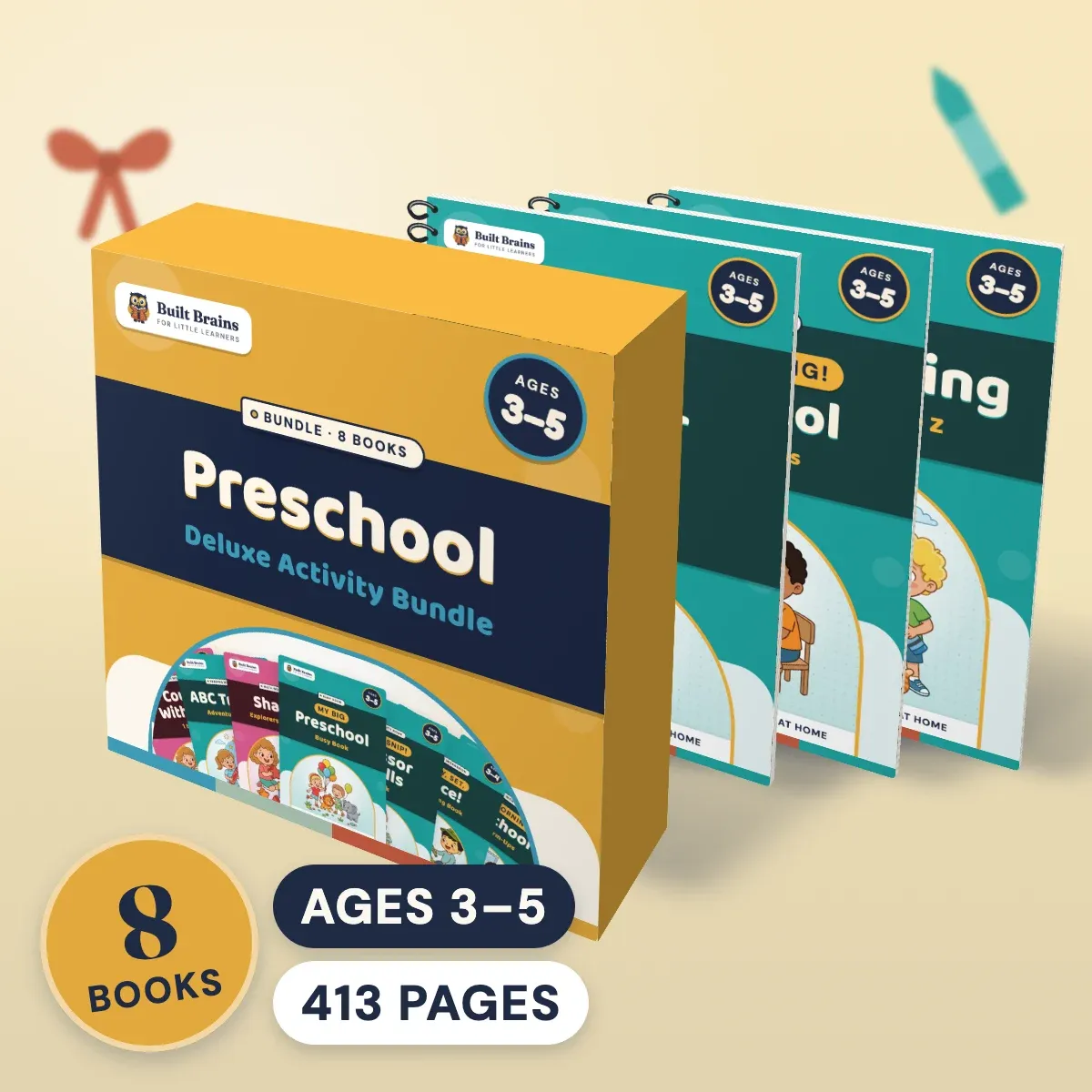
If you want one gift that covers letters, numbers, shapes and fine motor skills in one go, our Preschool Deluxe Activity Bundle brings eight preschool favorites together.
What's inside the Preschool Deluxe Activity Bundle: eight printables, 281 pages, for ages 3 to 5:
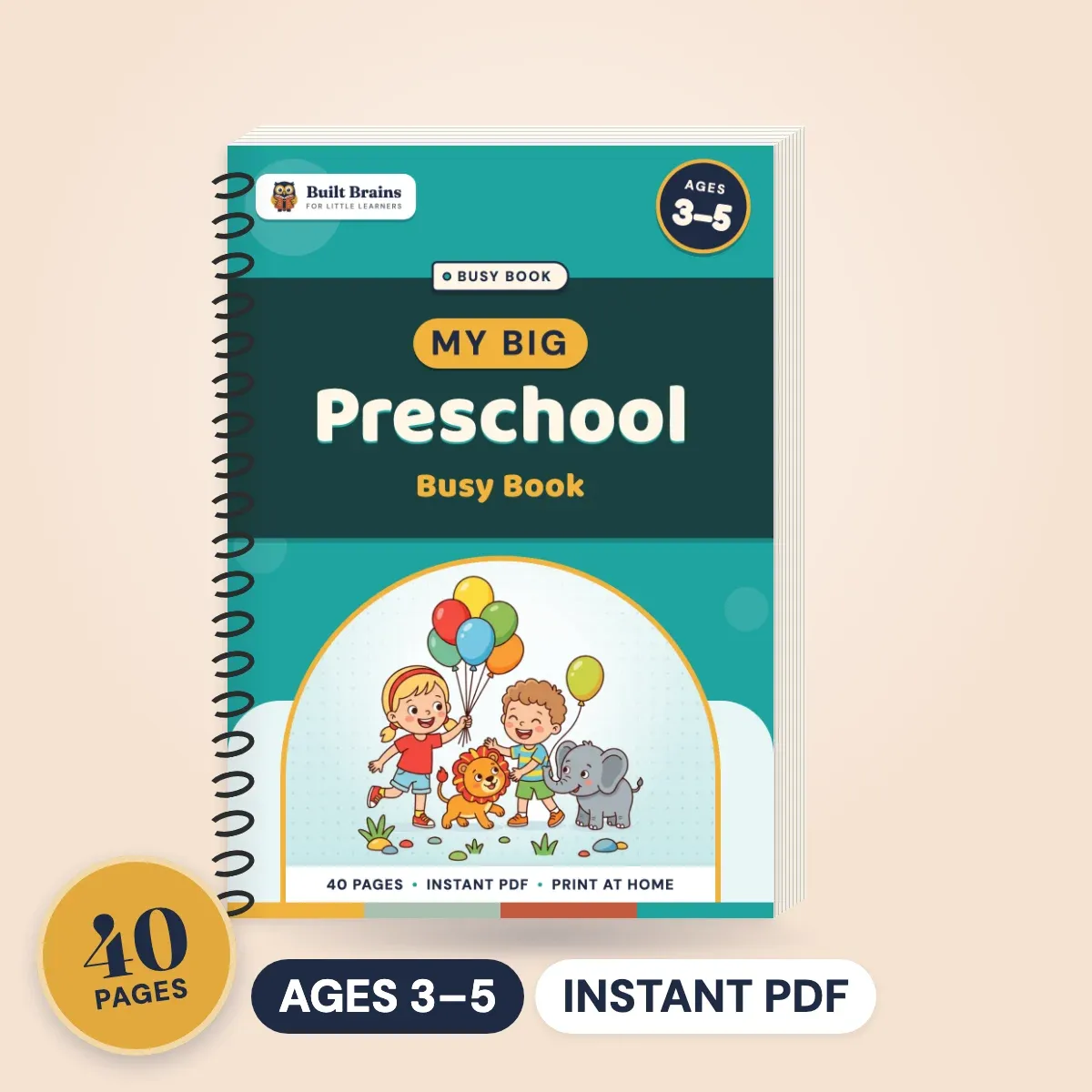
- My Big Preschool Busy Book
- Count With Me! 1 to 10
- ABC Tracing Adventure: A to Z
- Shape Explorers Workbook
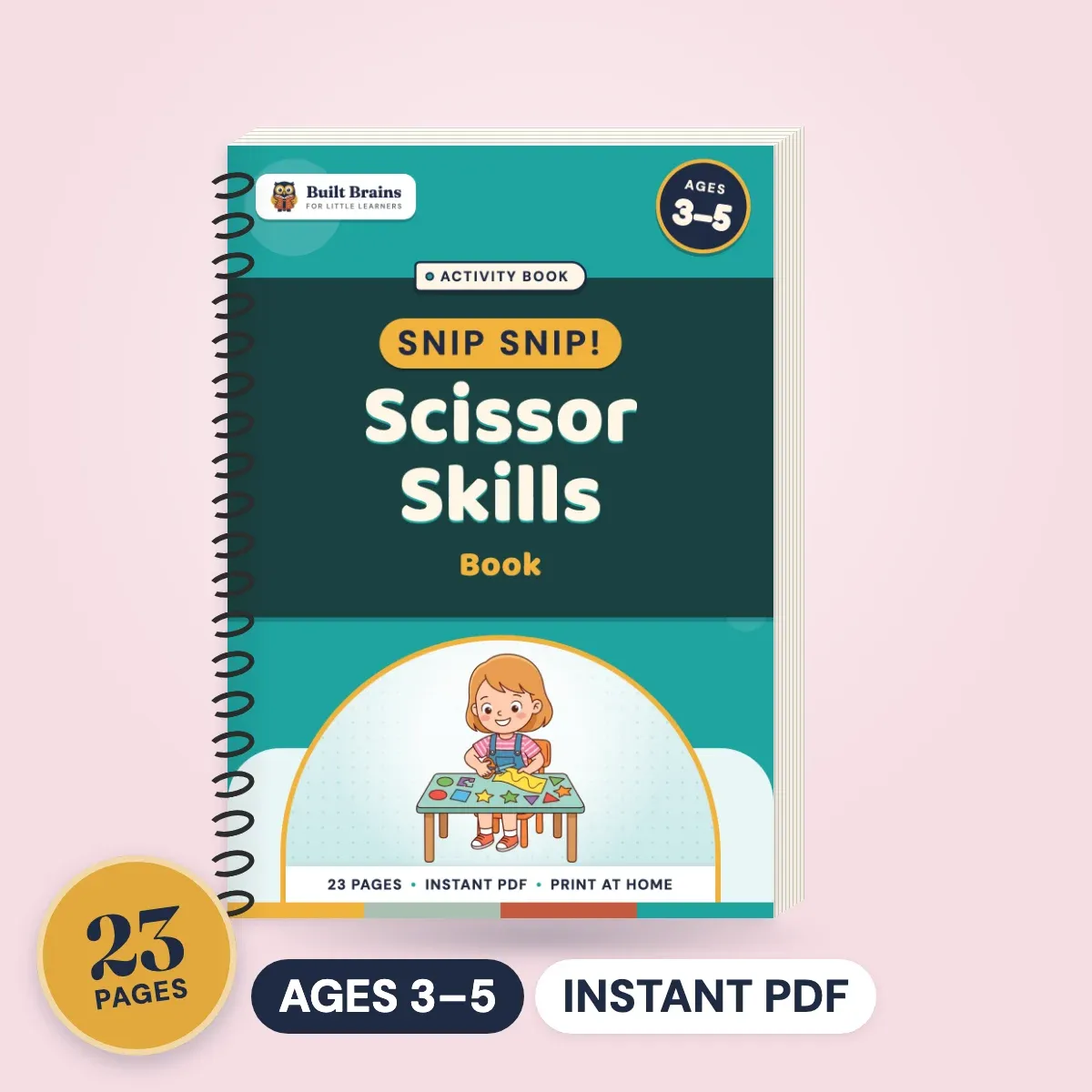
- Snip Snip! Scissor Skills Book
- Ready, Set, Trace! Pre-Writing Book
- Good Morning! Preschool Warm-Ups
- A–Z Letter Crafts: Uppercase
It's an instant PDF in black and white that prints on US Letter or A4, with a 14-day money-back guarantee. If you'd like to test the style first, try our free printable book.
What 4 year olds are learning (and what makes a gift "educational")
Four is a big year. The CDC's milestone checklists for age 4 include things like naming some colors, drawing a person with three or more body parts, telling what comes next in a familiar story and catching a large ball most of the time. Children reach these at different times, so use them as a guide, not a scorecard. Our article on what a 4 year old should know goes into more detail.
A gift is educational when it gives your child lots of short, playful practice at something they're on the edge of doing. That means:
- It's hands-on. Four year olds learn by moving things, building, cutting and talking.
- It grows with them. Easy at first, with room to get harder.
- It doesn't need a screen. Apps can be fine in small doses, but the skills that matter most now (hand strength, conversation, sharing) come from real objects and real people.
- An adult can join in. The best learning at four happens when you play alongside and talk about it.
Learning gifts for 4 year olds, by skill
| Skill | Gift ideas | What it builds |
|---|---|---|
| Letters and sounds | Magnetic letters, alphabet tracing book, letter puzzles, rhyming picture books | Letter names, first sounds, writing their name |
| Numbers and math | Dice games, dominoes, counting workbook, shape sorter, a toy cash register | Counting objects, recognizing numbers, comparing more and less |
| Fine motor | Safety scissors, play-dough tools, lacing cards, a craft kit, stickers | Hand strength and control needed for holding a pencil |
| Thinking | Jigsaws, matching games, mazes, pattern blocks | Problem solving, memory, patience |
| Language and pretend | Play kitchen, dress-up clothes, puppets, a doctor's kit | Vocabulary, storytelling, social skills |
| Big body | Balance bike, ball, hopscotch mat, movement cards | Coordination, balance, burning energy before focus time |
Letters and early reading
Magnetic letters on a baking tray are one of the best-value learning gifts there is. Start with the letters in your child's name. Say: "This is m. It says /m/, like Mia." Pair them with a tracing book such as ABC Tracing Adventure and the letter recognition activities in our guide.
Numbers and counting
Simple dice games (roll and move, roll and collect) are brilliant counting practice without feeling like lessons. See our math activities for preschoolers for more.
Fine motor and art
Scissors are often the most exciting "grown-up" gift at four. Add a craft kit or the Snip Snip! Scissor Skills Book, which gives them lines and shapes to cut.
Non-product gifts that teach just as much
Not everything educational comes as a book or a kit. Some of the best gifts for 4 year olds are classic play things, and we'd honestly put them on the list before most "learning toys":
- A play kitchen or a cardboard shop. Pretend play is where 4 year olds practice longer sentences, take turns and use numbers ("That's three dollars, please"). Printable menus, signs and play money make it go further.
- Wooden blocks or magnetic tiles. Open-ended building teaches balance, shape and planning. They last for years.
- A real art kit: watercolors, oil pastels, glue sticks, a hole punch and a stack of paper in a caddy.
- Jigsaw puzzles in a step up from what they can already do.
- A library card and a book bag, plus a weekly library trip.
- An experience: a class, a children's museum membership, or a day out tied to their interests.
Gifts for pre-K: getting ready for kindergarten
In the year before kindergarten, many families want something a little more structured. These gifts suit a child who is curious and ready for a short daily "school time":
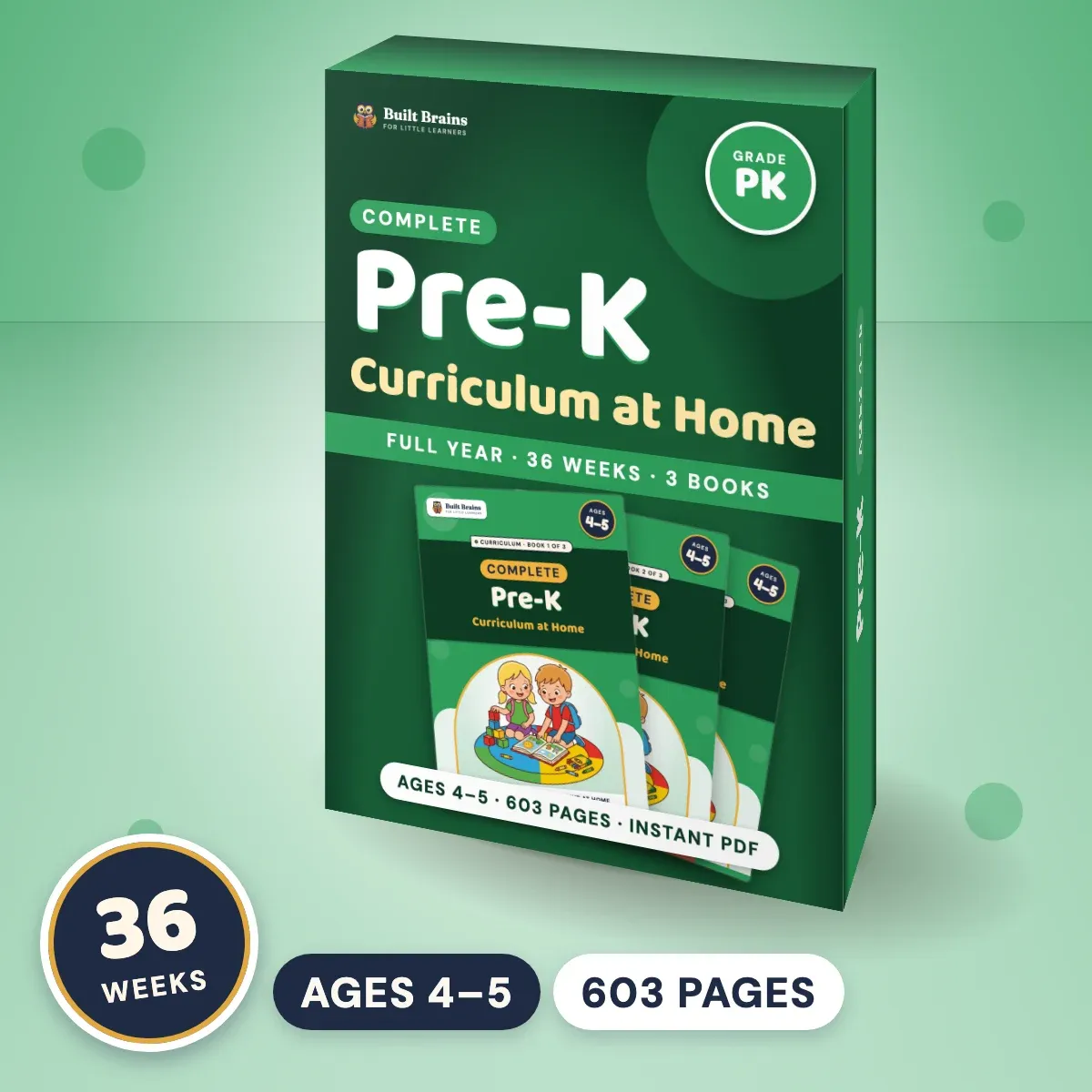
- Pre-K at Home Curriculum ($32, 572 pages, ages 4 to 5): 36 weekly plans in about 20 minutes a day covering every letter and its sound, first blending with three-letter words, first sight words and sentences, numbers to 20, shapes, patterns, comparing, and adding and taking away within 5, with a theme each week. Best for a family that has decided to do pre-K at home; ask the parents first.
- Kindergarten Ready! Skills Kit ($12, 27 pages, ages 4 to 6): cutting, pencil control, shapes, patterns, rhymes, beginning sounds, counting and first letters, plus a "my first day" drawing page.
- A pencil case, crayons and their own scissors to go with either one.
 New
NewAges 4–5 · 603 pages
Complete Pre-K Curriculum at Home36 weeks to kindergarten-ready — letters, first reading and numbers to 20


Ages 3–5 · 60 pages
ABC Tracing Adventure: A to ZLearn every letter the right way — trace, find, color
Our kindergarten readiness checklist shows which skills teachers notice most on day one, which helps you pick.
Best gifts for 4 year olds by budget
- Under $15: a jigsaw puzzle, magnetic letters, a single workbook, a dice game, a craft kit, the Kindergarten Ready! Skills Kit.
- $15 to $40: an art caddy, a set of blocks, dress-up clothes, the Preschool Deluxe Activity Bundle or the Pre-K at Home Curriculum.
- $40 and up: a play kitchen, magnetic tiles, a balance bike, a class or membership, a larger gift card.
Prices vary by store and season, so use these as rough guides.
How to give a printable or a gift card
You don't have to wrap a box to give a learning gift:
- Send it as a gift. Any book can be sent from our gifts page with a message and the date you choose. The family gets an email that morning (US time), and you get a printable gift certificate for the card.
- Give a gift card. Built Brains gift cards go from $25 to $500, or a custom photo card, never expire, and work on any book, so parents can choose the right age level.
- Print and wrap. Print the first week of pages, put them in a binder with a pencil case and crayons, and tie on a ribbon.
How to choose the right educational gift
Before you buy, ask:
- What is my child into right now? Dinosaurs, cooking, cutting everything in sight? Start there.
- What can they almost do? A gift slightly ahead of their skills is motivating. Too far ahead is frustrating.
- Will an adult need to sit with them? Great for one-to-one time, but pick something they can also do alone.
- Does the family have a printer? If not, a physical workbook, a puzzle or an experience is the better pick. Printables are not the right fit for every home.
For a curious 4 year old who loves coloring, tracing and cutting, a bundle of preschool books gives months of short, playful practice across every early skill.
The Preschool Deluxe Activity Bundle includes eight preschool printables (281 pages) for letters, numbers, shapes, pre-writing, scissor skills, morning warm-ups and A to Z letter crafts. It's an instant black-and-white PDF for US Letter or A4, sendable as a gift on the date you choose, with a 14-day money-back guarantee.
Questions parents ask
Pick one skill your child is excited about right now and choose a gift that practices it through play. Magnetic letters and a tracing book for letters, a simple dice game for counting, scissors and a craft kit for hand strength, or a 24 to 48 piece puzzle for thinking. One well-chosen gift used often beats a pile of flashcards.
Pre-K children (about 4 to 5) enjoy gifts that feel grown up: their own pencil case and scissors, a workbook with their name on it, early reader books, board games with simple rules, and craft kits. A full pre-K curriculum suits families teaching at home. Choose things they can do with a little help, then alone.
Most 4 year olds are not reading yet, and that is normal. At this age children are learning letter names and sounds, noticing rhymes and recognizing their own name. Some begin blending simple words like c-a-t toward five. If you have concerns about speech or language, talk with your pediatrician or health visitor.
They can be, if the pages are big, varied and short. A good preschool workbook mixes coloring, tracing, cutting, mazes and counting, so each page takes five to ten minutes. Avoid books that are page after page of the same drill, and never push a child to finish a page they've lost interest in.
Fewer than most homes have. A small set of open-ended things (blocks, art supplies, a pretend play area, puzzles, books and a ball) covers nearly every kind of play. Rotating toys every couple of weeks keeps them interesting, so a non-toy gift like an experience or activity book is often the most welcome.