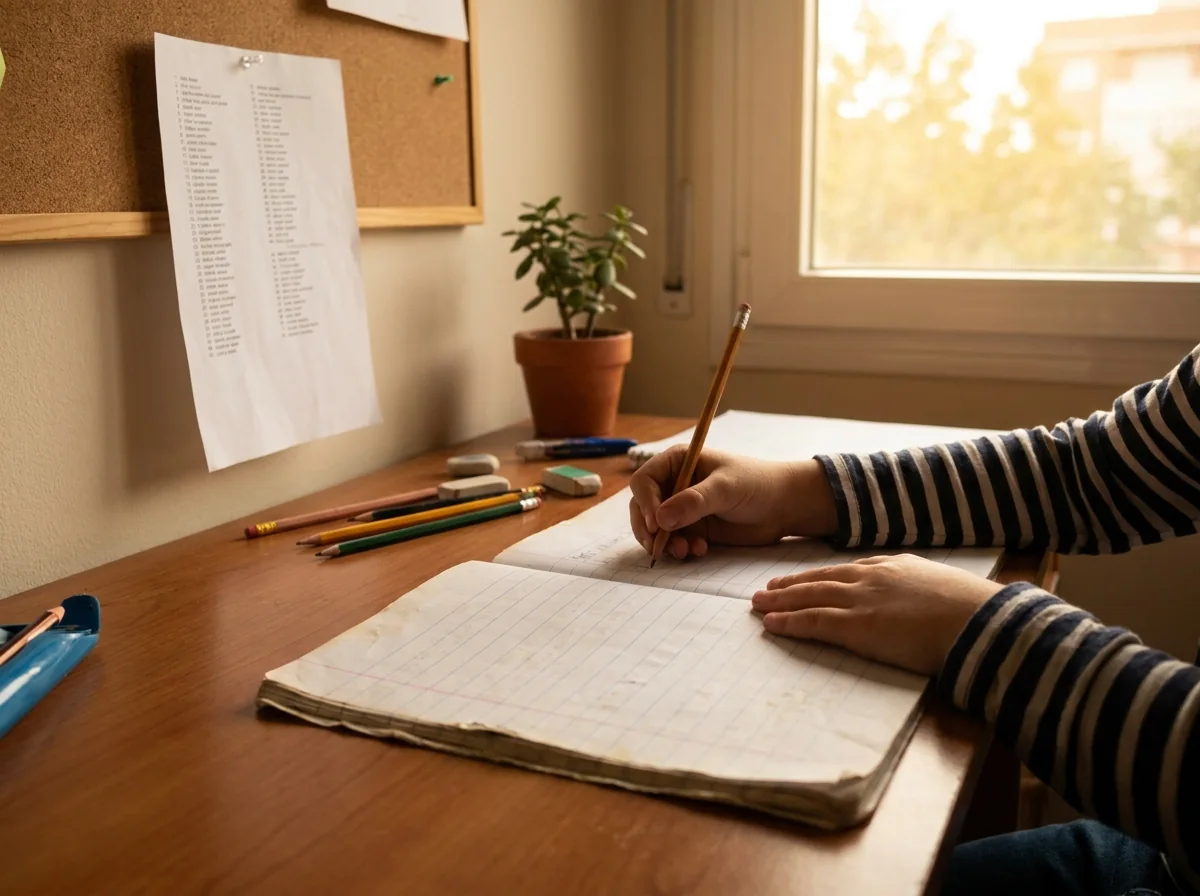
What 2nd grade spelling words should cover
In 1st grade, spelling is mostly short vowels and the first long vowel patterns. Second grade is the year the big patterns get locked in: the ways to spell long a, e, i, o and u; r-controlled vowels (car, for, her); the two-sound vowel teams (ou, ow, oi, oy, oo); silent letters; soft c and g; and the endings that change a word (-ed, -ing, -er, -est, -ful, -ly). The Common Core puts it plainly: by the end of 2nd grade children should "generalize learned spelling patterns when writing words" (L.2.2), which is a different skill from memorizing a list for Friday.
That is why a good 2nd grade list is organized by pattern. When all 10 words share one spelling pattern, a child who learns the pattern can spell the other hundred words that use it, instead of 10 words that happen to be about pumpkins. Spelling taught this way also feeds reading: knowing how words are built makes them faster to recognize on the page (Reading Rockets – Choose Your Words (and Techniques) Carefully in Spelling Instruction).
The list below runs from the easiest review (short vowels) to the hardest new work (suffixes, homophones, irregular words), with a review week at the end. If your school uses its own list, use this one as the map of patterns to make sure nothing is skipped. For where spelling sits in the whole year, see the 2nd grade homeschool curriculum guide.
The 36-week 2nd grade spelling list (10 words a week)
| Week | Pattern | Words |
|---|---|---|
| 1 | Short a | cat, map, bag, jam, hand, last, flag, glad, snap, plan |
| 2 | Short i and short o | pig, sit, hill, swim, trip, hot, dog, stop, frog, pond |
| 3 | Short u and short e | bug, cup, jump, duck, drum, bed, nest, step, tent, help |
| 4 | Digraphs sh, ch, th, wh | ship, shop, fish, chin, much, lunch, that, thin, bath, when |
| 5 | Beginning blends | black, clap, flip, grab, skip, snack, stand, trust, plant, crab |
| 6 | Ending blends -nd, -nt, -mp, -st, -sk | band, send, hunt, went, camp, lamp, fast, best, desk, mask |
| 7 | Floss rule -ff, -ll, -ss, -zz | off, cliff, stuff, bell, fill, smell, miss, dress, grass, buzz |
| 8 | -ck and -tch | back, neck, sick, clock, truck, catch, match, pitch, witch, fetch |
| 9 | -ng and -nk | ring, sing, long, song, hang, bank, pink, think, drink, junk |
| 10 | Long a with silent e | cake, name, gate, late, made, same, wave, plate, shape, brave |
| 11 | Long i with silent e | bike, time, nine, hide, ride, line, kite, smile, white, prize |
| 12 | Long o and long u with silent e | home, bone, nose, rope, stone, cute, mule, rule, tune, huge |
| 13 | Long a: ai and ay | rain, mail, wait, paint, train, day, play, stay, away, today |
| 14 | Long e: ee and ea | see, tree, feet, green, sleep, eat, read, mean, team, clean |
| 15 | Long o: oa, ow; long i: igh | boat, road, soap, coat, snow, grow, show, high, light, night |
| 16 | y as a vowel (long e, long i) | happy, funny, baby, candy, puppy, very, fly, sky, why, try |
| 17 | r-controlled: ar | car, farm, hard, park, star, dark, barn, card, start, sharp |
| 18 | r-controlled: or | for, corn, fork, born, short, storm, sport, north, horse, story |
| 19 | r-controlled: er, ir, ur | her, fern, bird, girl, first, dirt, turn, hurt, burn, nurse |
| 20 | air and ear | chair, hair, pair, fair, stairs, ear, hear, near, year, dear |
| 21 | Diphthongs ou and ow | out, loud, house, mouth, found, cow, down, town, brown, flower |
| 22 | Diphthongs oi and oy | oil, coin, join, boil, point, voice, boy, toy, joy, enjoy |
| 23 | oo (moon) and oo (book) | moon, food, room, zoo, school, book, look, good, foot, wood |
| 24 | aw, au and al | saw, draw, lawn, straw, crawl, haul, fault, salt, talk, walk |
| 25 | Silent letters kn, wr, mb | knee, know, knot, knife, write, wrong, wrap, lamb, comb, climb |
| 26 | Soft c and soft g | city, cent, face, ice, race, nice, page, cage, giant, large |
| 27 | Compound words | into, upon, inside, outside, bedroom, sunset, rainbow, cupcake, football, birthday |
| 28 | Contractions | can't, don't, isn't, didn't, I'm, it's, we're, they're, you'll, let's |
| 29 | Endings -s, -es, -ed, -ing | jumps, wishes, boxes, played, wanted, hopped, running, sitting, baking, hoping |
| 30 | Suffixes -er and -est | faster, slower, taller, bigger, hotter, fastest, tallest, biggest, happier, happiest |
| 31 | Prefixes un- and re- | unhappy, unlock, untie, unfair, undo, redo, replay, retell, reread, refill |
| 32 | Suffixes -ful, -less, -ly | helpful, careful, useful, hopeful, careless, helpless, slowly, quickly, softly, kindly |
| 33 | Final -le | little, apple, table, purple, bubble, middle, puzzle, candle, turtle, uncle |
| 34 | Homophones | to, too, two, there, their, one, won, hole, whole, sea |
| 35 | Tricky high-frequency words | because, does, always, both, goes, around, before, pull, would, which |
| 36 | Review | catch, train, horse, found, knife, giant, birthday, happiest, careful, because |
Weeks 1–9 are review and consolidation; most 2nd graders move through them quickly. Weeks 10–26 are the heart of the year. Weeks 27–35 are word building, where spelling starts to turn into grammar. Spelling & Vocabulary: 2nd Grade follows the same kind of plan: 36 weekly lists built on one pattern each, with a word sort, a practice page, vocabulary in context and a Friday check every week, for ages 7–8.
How to run a weekly spelling routine
Ten minutes a day, Monday to Friday. The routine matters more than the list.
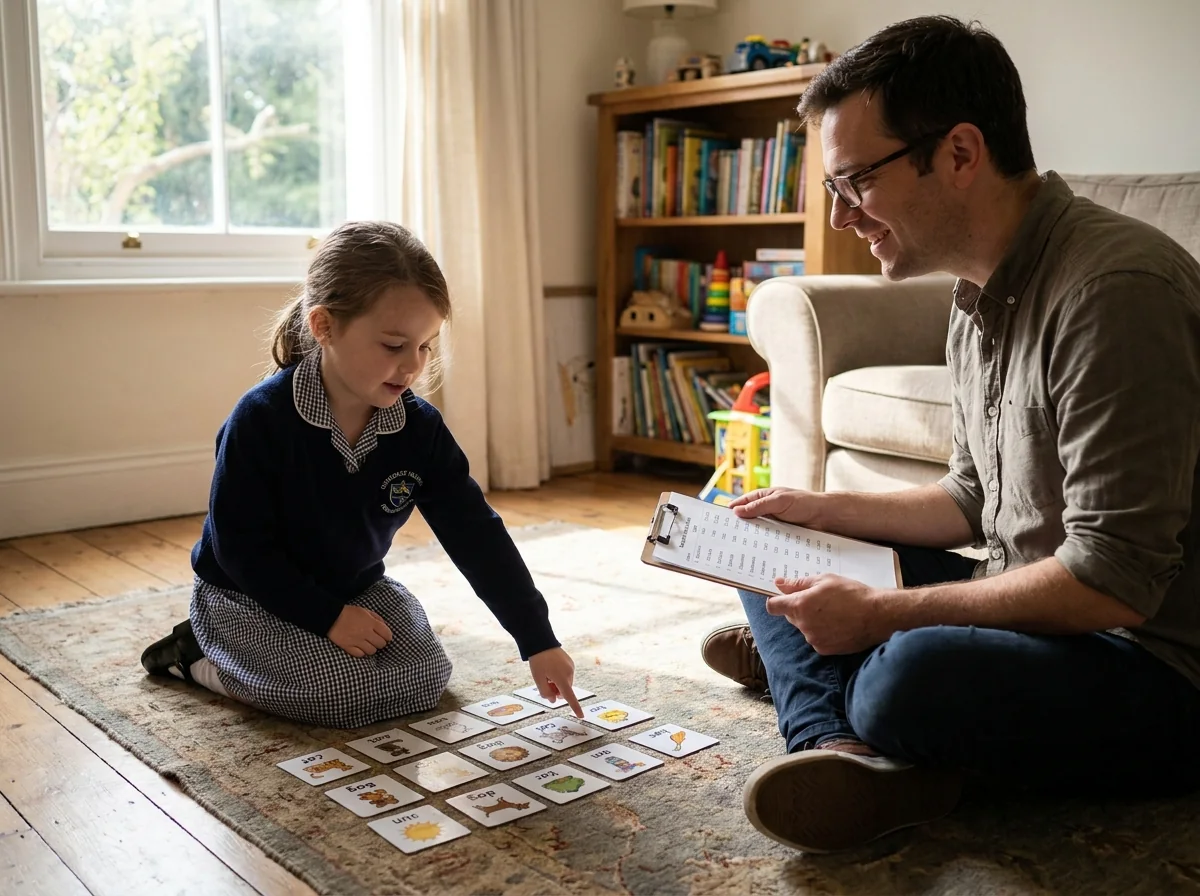
Monday: pretest (5 minutes). Read the 10 words aloud, each in a sentence; your child writes them cold. Mark together. Words spelled correctly on Monday need only light review; the rest are the week's real work. Then name the pattern: "Every word this week has a-i or a-y for the long a sound. a-i goes in the middle, a-y goes at the end."
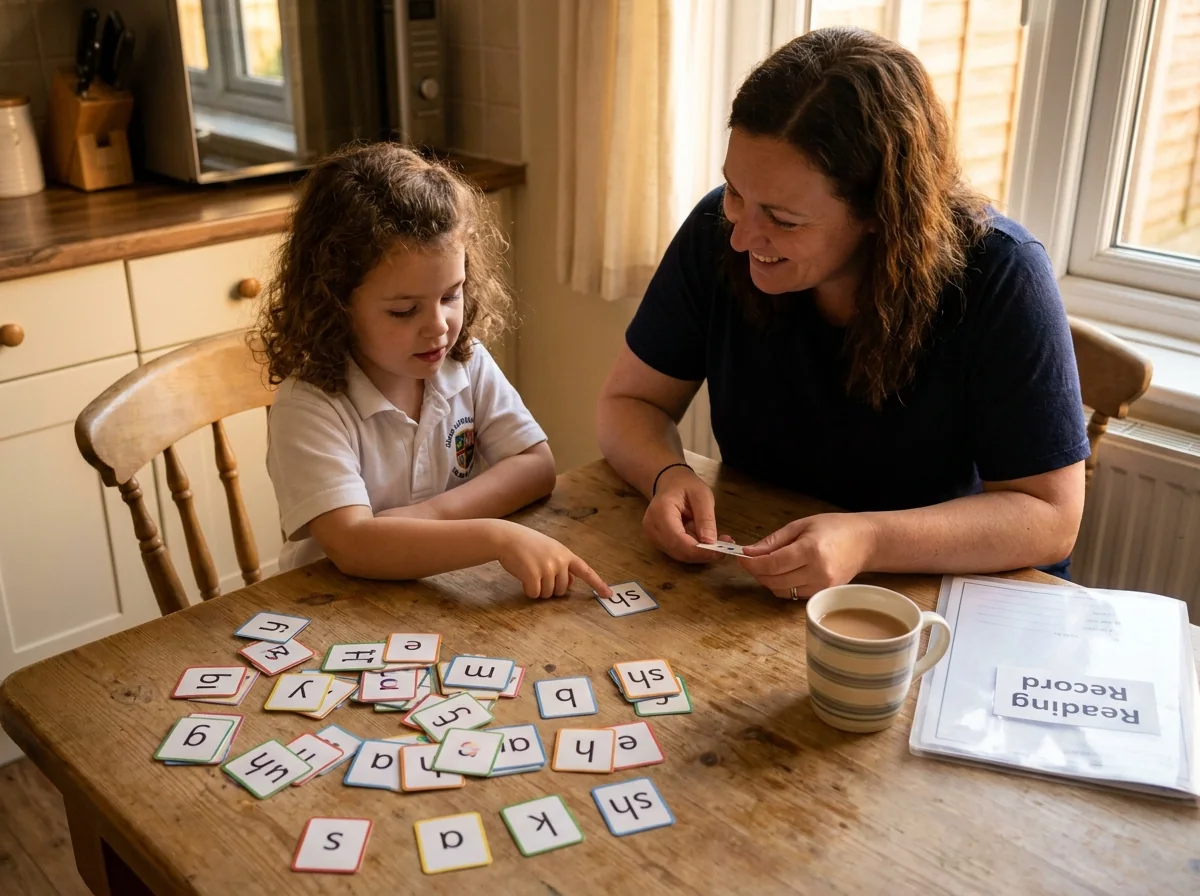
Tuesday: sort (10 minutes). Write the words on cards and sort them by the pattern inside the pattern: ai words in one column, ay words in another. Read each column aloud. Add two words of your own to each column.
Wednesday: write and build (10 minutes). Say each word, tap its sounds, write it, check it against the card, fix it. For the missed Monday words, do it twice. Then put the word in a sentence: "The train was late."
Thursday: use it (10 minutes). Dictate three sentences that use six of the words. Underline the pattern in each word. If time allows, a one-minute speed round: you say the word, they write it, no checking until the end.
Friday: test (5 minutes). Ten words in sentences, same format as Monday. Score it, celebrate the jump from Monday, and move any word still wrong onto a come-back list to be slipped into a later week.
Five practice activities that are not "write it three times"
Copying a word three times teaches the hand, not the brain. These work better:
- Sound boxes. Draw one box per sound and write the letters that spell each sound: train is four sounds, four boxes, with ai sharing one. Children see that a vowel team is one sound.
- Word hunt. Find five words with the week's pattern in tonight's reading book. Write them under the list.
- Change the pattern. Turn rain into ray, pain into pay, main into may. Then ask which position each spelling likes (ai in the middle, ay at the end).
- Look, say, cover, write, check. Look at the word, say it, cover it, write it from memory, check. One round through the list beats three rounds of copying.
- Teach it back. Your child explains the week's rule to you, a sibling or a stuffed animal, with two example words. If they can teach it, they have it.
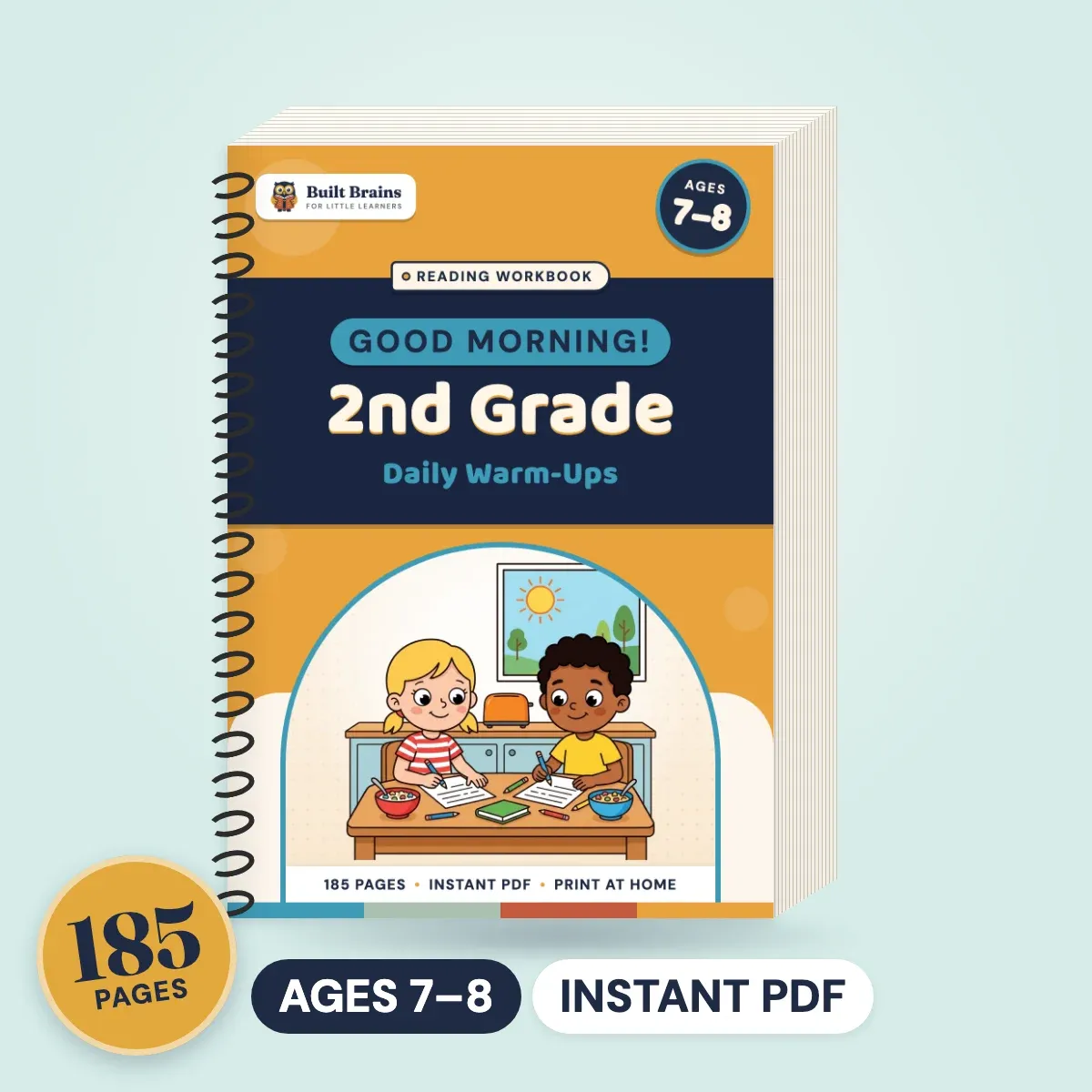
The Good Morning! 2nd Grade Warm-Ups rotate spelling, grammar and puzzle pages through the week, which is an easy way to get the hunt and the use-it steps done without planning.
2nd grade sight words that do not follow the rules
Some of the most common words a 2nd grader writes refuse to fit any pattern: because, does, always, been, both, around, before, their, would, which, goes, pull, again, friend. These are the Dolch second grade and Fry words that still trip children up in their own writing even when the Friday tests are perfect.
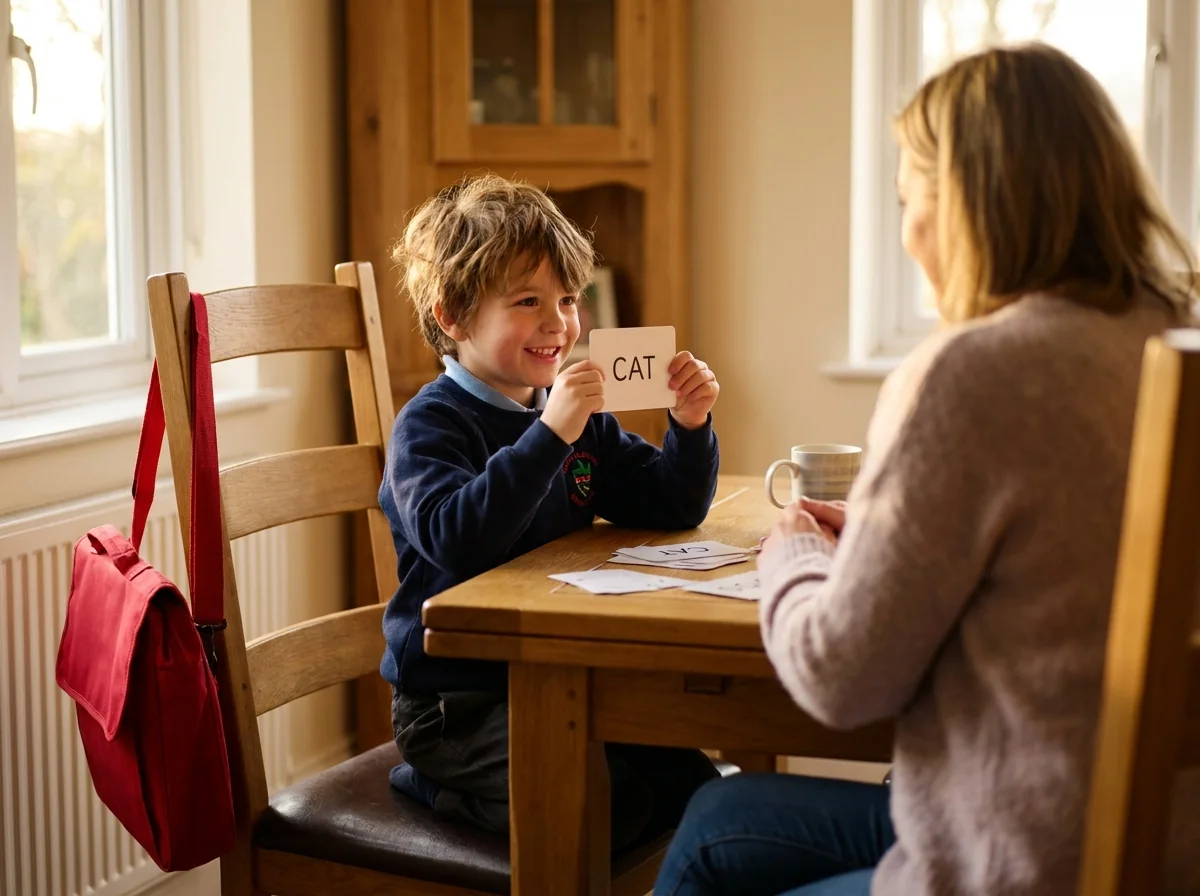
Teach them the way you taught sight words in kindergarten (kindergarten sight words): say the word, tap the sounds, spell the regular parts, and name the one part to remember. In because, the b-e-c and the s-e are fine; the au is the odd part. In does, the oe says /u/. Weeks 34 and 35 give these words their own slot, but the best time to fix one is the moment it appears wrong in your child's own writing: circle it, map it, add it to the week.
When your child is behind or ahead
Behind. If weeks 1–9 produce Monday scores below 5 out of 10, stay on short vowels, digraphs and blends until they are automatic; spelling cannot run ahead of phonics. Run two weeks on each pattern, cut each list to six words, and use sound boxes every day. The What Works Clearinghouse recommends exactly this kind of explicit work on sounds and word parts for children who are struggling (IES – Foundational Skills to Support Reading for Understanding in K–3). If a 2nd grader still confuses short vowels in spoken words (pin and pen), mention it to their teacher. Our guide to phonics phases shows the usual teaching order.
Ahead. If Monday pretests are 9 or 10 out of 10 for three weeks running, do not add more words; add harder ones with the same pattern (for long a week, complain, explain, delay, holiday), or start a 3rd grade sequence a term early. The goal is the pattern, not the list.
Complete 2nd Grade Curriculum at Home builds a spelling list on one pattern into each of its 36 weekly plans alongside reading, grammar, writing and math, and The Complete 2nd Grade Bundle adds the warm-ups, the full spelling and vocabulary program, a reading journal and cursive.
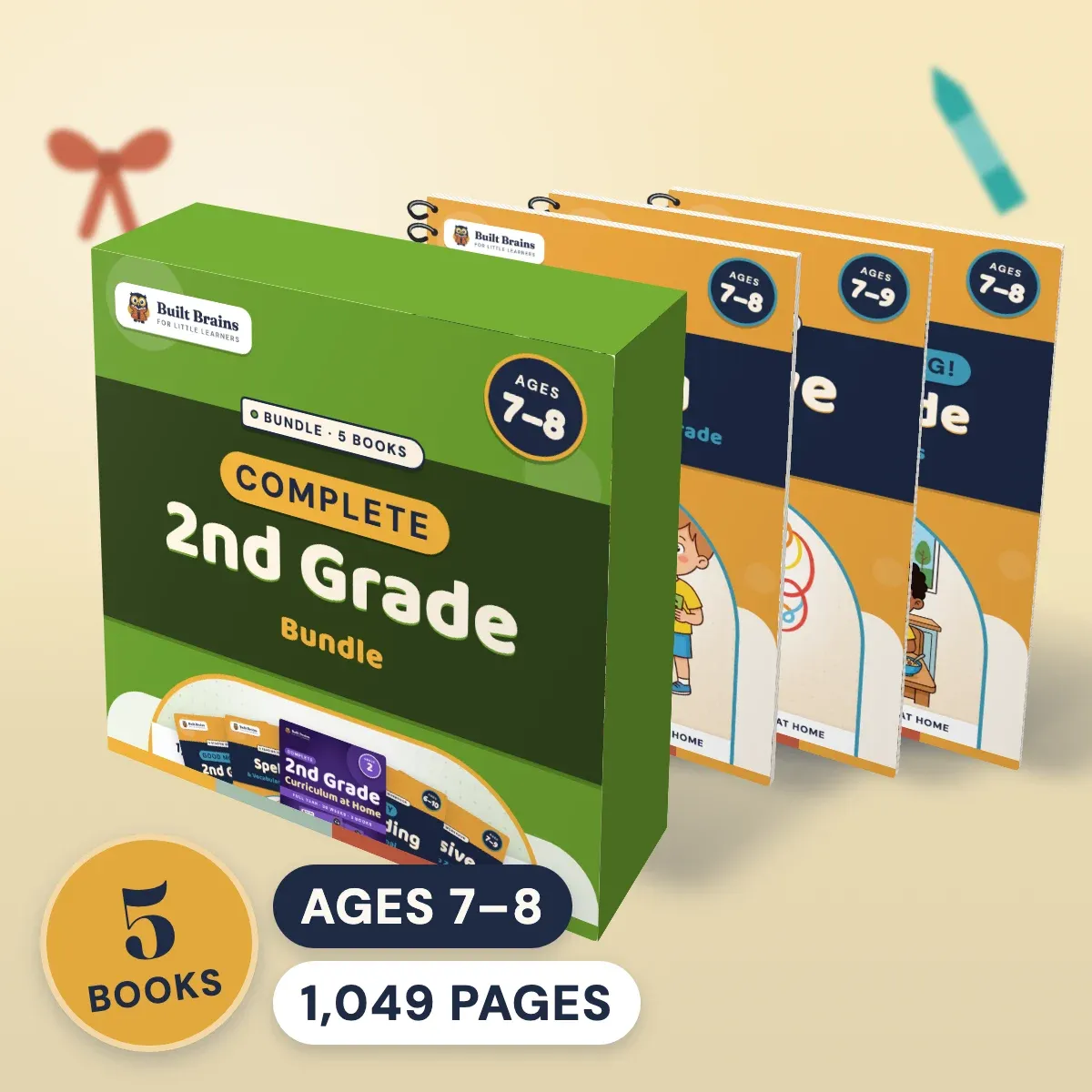 Save $27
5 books · 1049 pages
The Complete 2nd Grade BundleCurriculum, warm-ups, spelling, journal and cursive
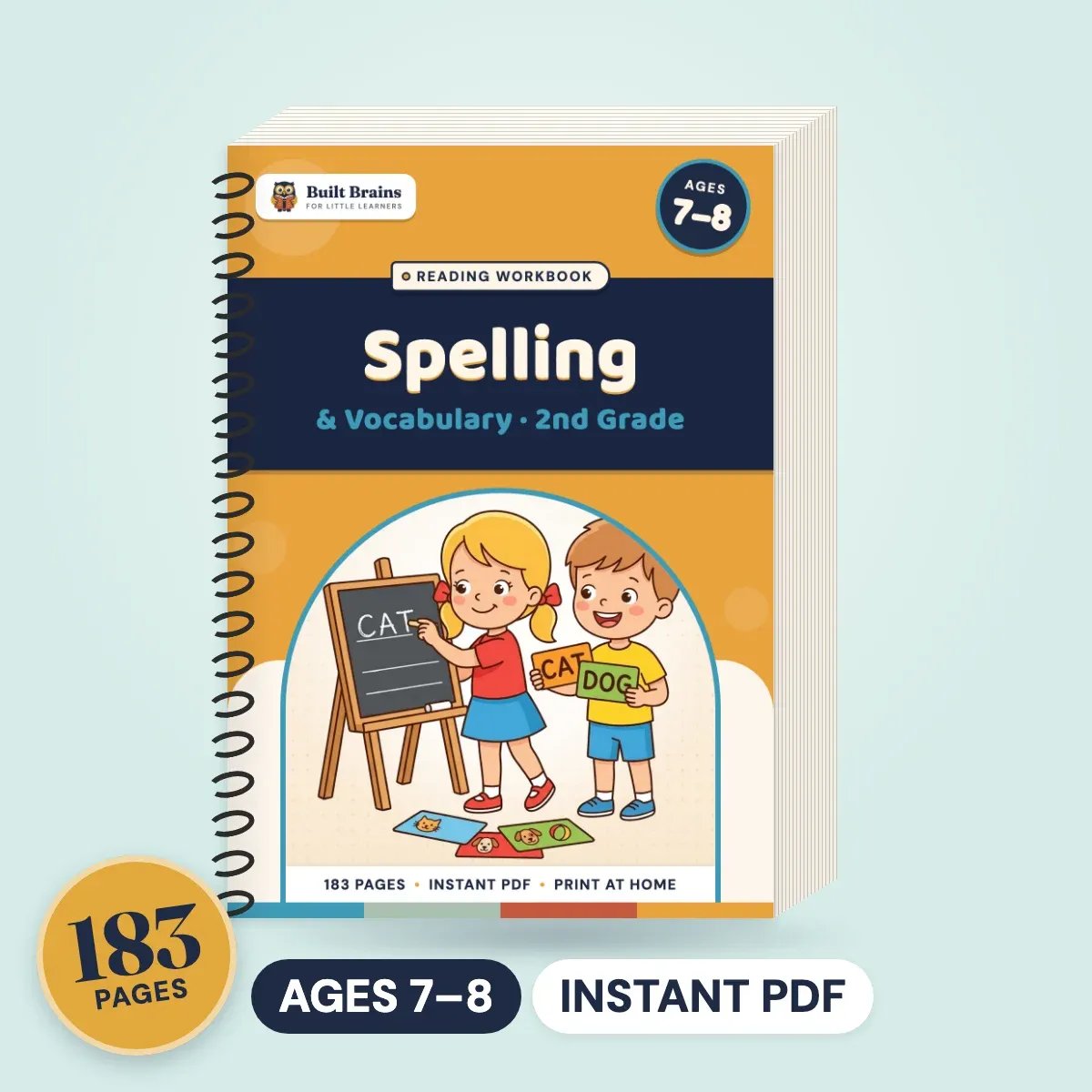
Ages 7–8 · 183 pages
Spelling & Vocabulary: 2nd Grade36 weekly lists with sorts, practice, vocabulary and checks
Sources
- Common Core State Standards Initiative – Language Standards, Grade 2: the 2nd grade expectation to generalize learned spelling patterns when writing words.
- Reading Rockets – Choose Your Words (and Techniques) Carefully in Spelling Instruction: why spelling instruction organized around patterns strengthens word reading.
- Institute of Education Sciences, What Works Clearinghouse – Foundational Skills to Support Reading for Understanding in Kindergarten Through 3rd Grade: explicit instruction in sounds, spelling patterns and word parts, including for struggling readers.
Questions parents ask
By the end of 2nd grade a child should spell words with short vowels, blends and digraphs, the common long vowel spellings (cake, rain, day, tree, boat), r-controlled vowels (car, for, her), vowel teams such as ou, oi and oo, simple endings (-ed, -ing, -er, -est) and the most common irregular words such as because and friend.
Ten is the usual number and it is enough. The words should share one pattern so that the week teaches a rule, not ten separate facts. A child who finds ten easy should get harder words with the same pattern rather than more words; a child who is struggling can drop to six.
Pretest on Monday, then practice only the missed words with sound boxes, sorting, look-say-cover-write-check and dictated sentences from Tuesday to Thursday, and test on Friday. Ten minutes a day is plenty. Copying each word three times is the least effective method; anything that makes your child think about the sounds works better.
Spelling words are chosen because they share a pattern a child can learn and apply to other words, such as ai for long a. Sight words are chosen because they are very common, and some of them, like because and does, break the patterns. A good 2nd grade list includes both, with the irregular words taught by their tricky part.
Yes, a few at a time. To, too and two, there and their, and one and won are among the most common errors in 2nd grade writing. Teach each pair with a sentence it owns ("I want to go too") and keep the pair apart for a week or two before practicing them side by side.

Reviewed by
Year 1 Teacher & KS1 Phase Lead
Tom Evans is a Key Stage 1 Phase Lead dedicated to smoothing the transition from EYFS play-based learning to structured Year 1 curriculum.
More about Tom →