
How to use these CVC words worksheets
Plan on one page a day, 10 minutes at most. You need a pencil, crayons and child-safe scissors for the cards.
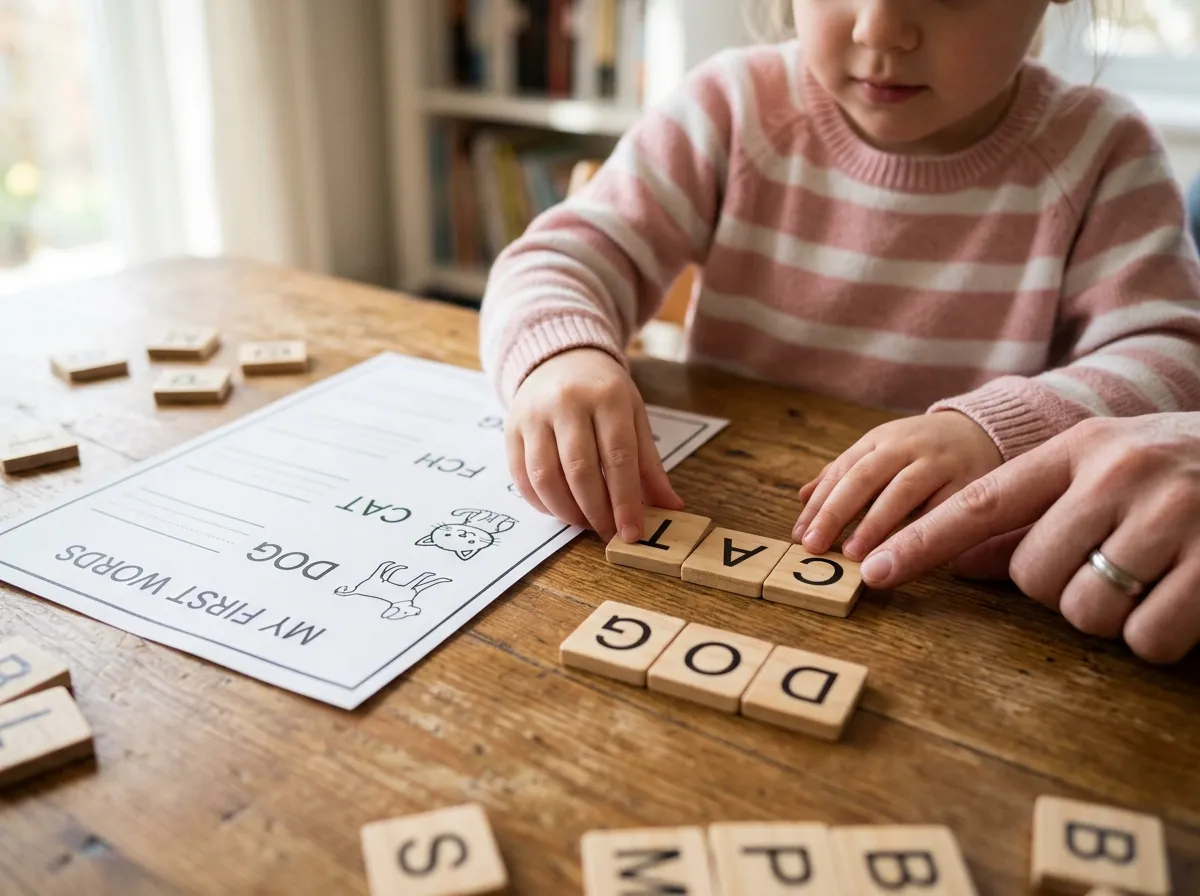
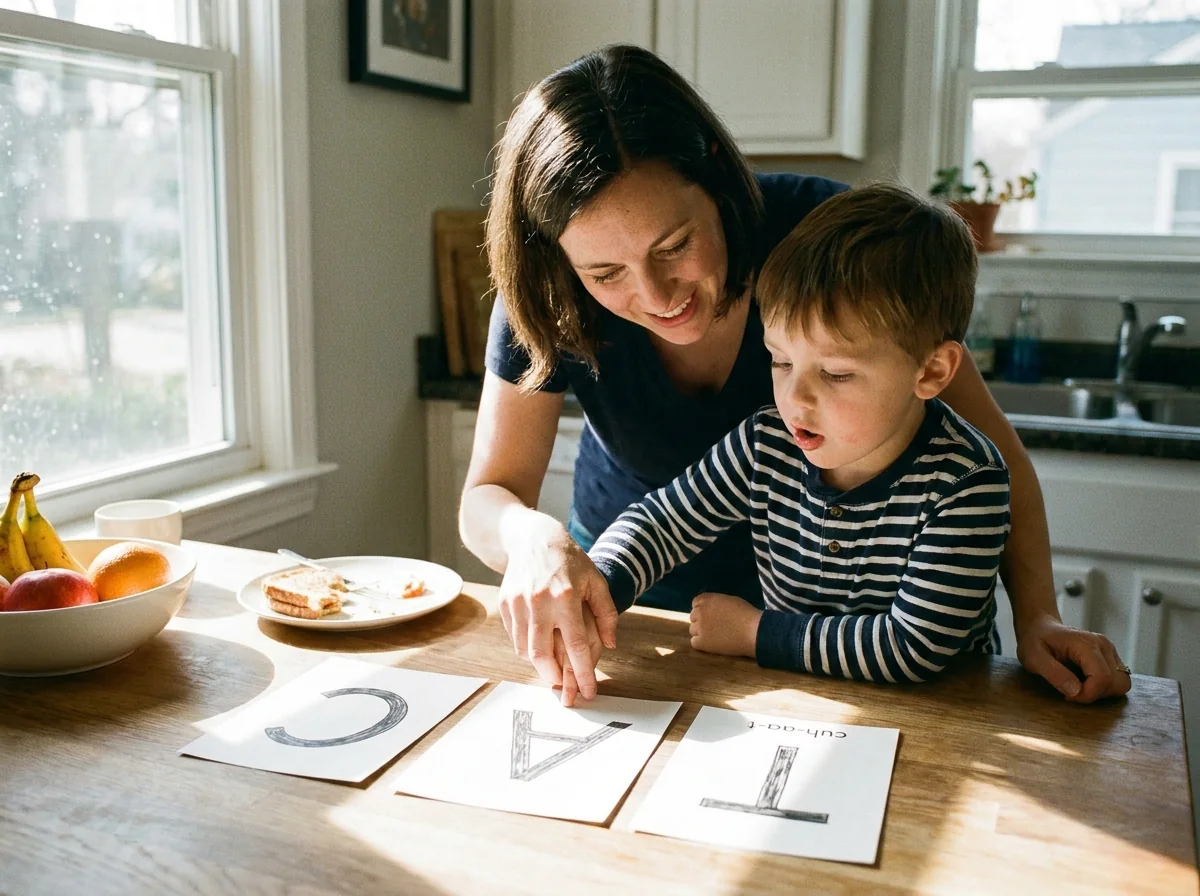
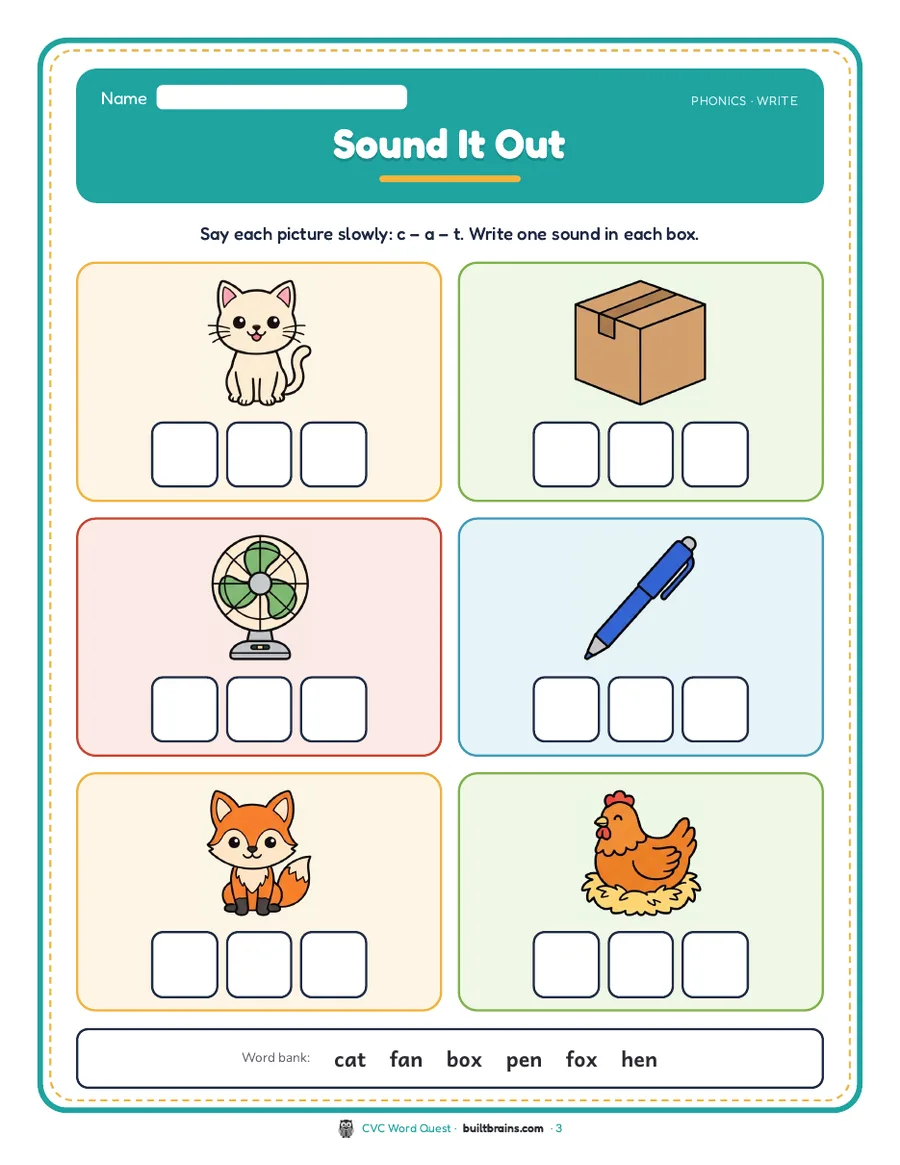
- Sound it out (page 1). Say the first picture slowly together, stretching each sound: "c... a... t." Your child writes one letter in each box. Use the word bank only if they get stuck.
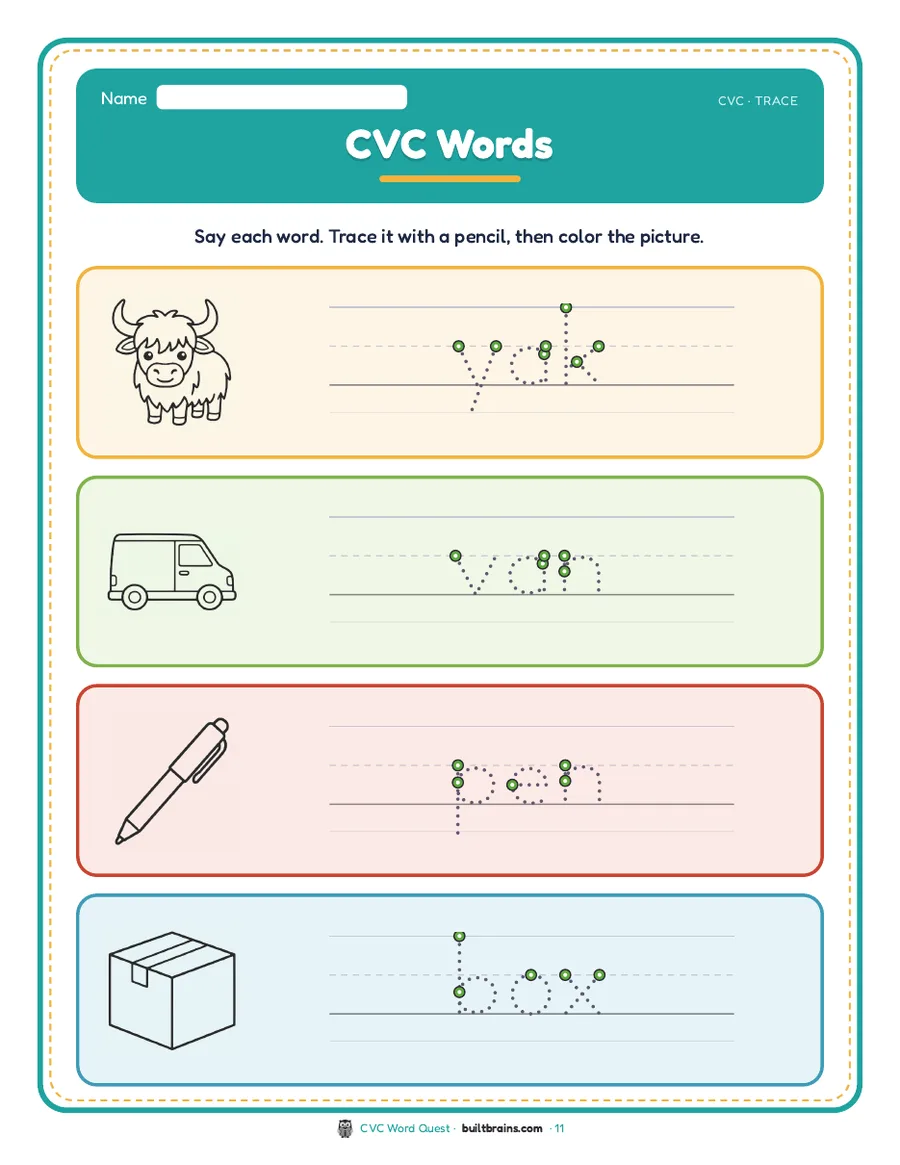
- Trace CVC words (page 2). Say the word, trace it while saying each sound, then read it back fast. Color the picture as a reward.
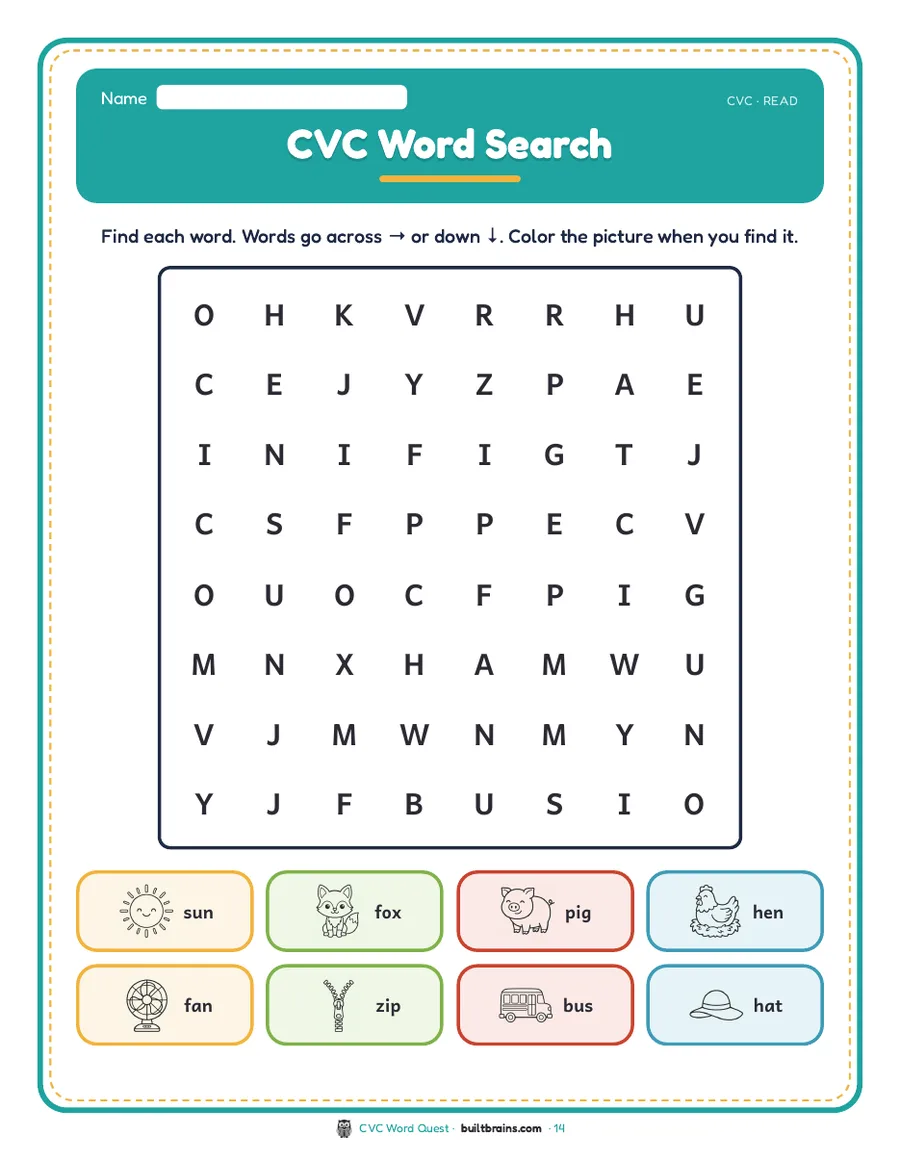
- Word search (page 3). Read each word in the list first. Words run across or down only, which keeps it fair for a beginner. When a word is found, color its picture.
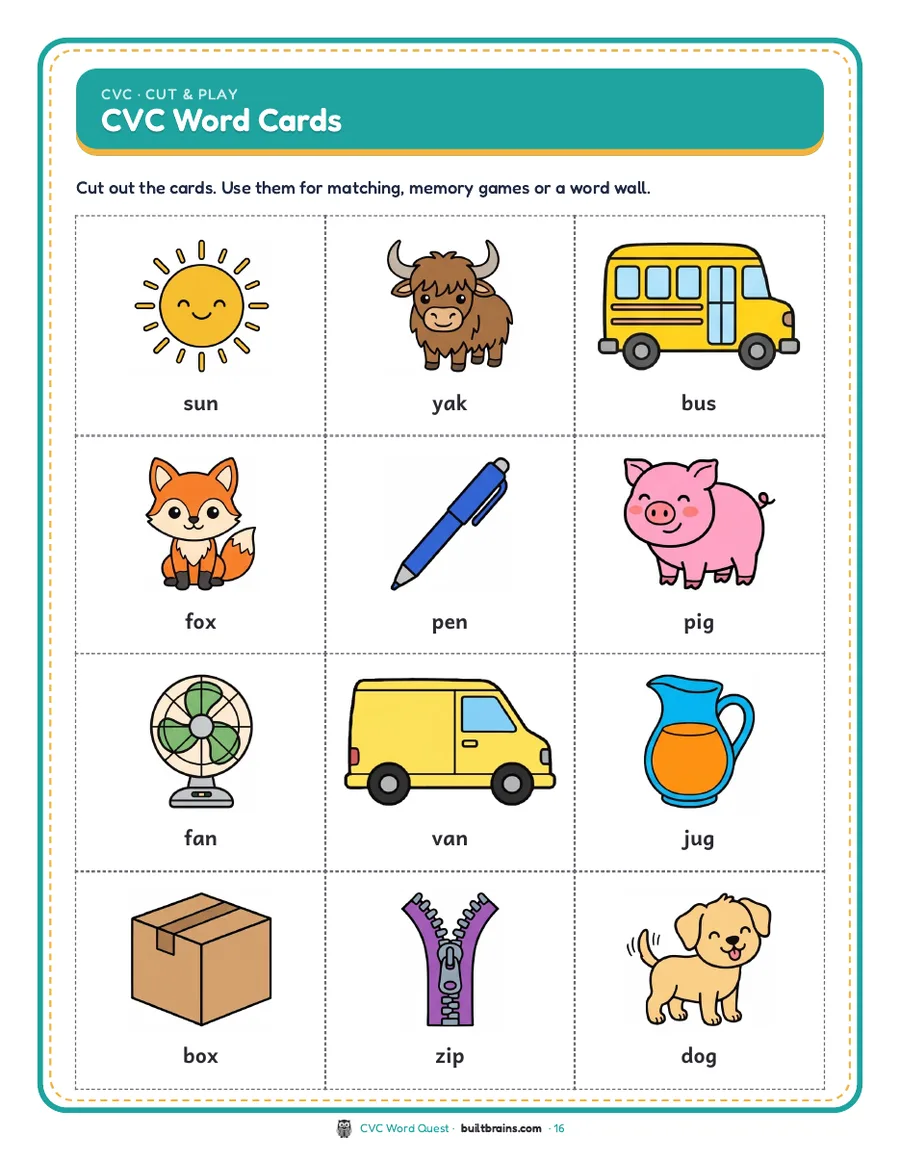
- Word cards (page 4). Cut out the 12 cards. Read through them once, then use them for the games below.
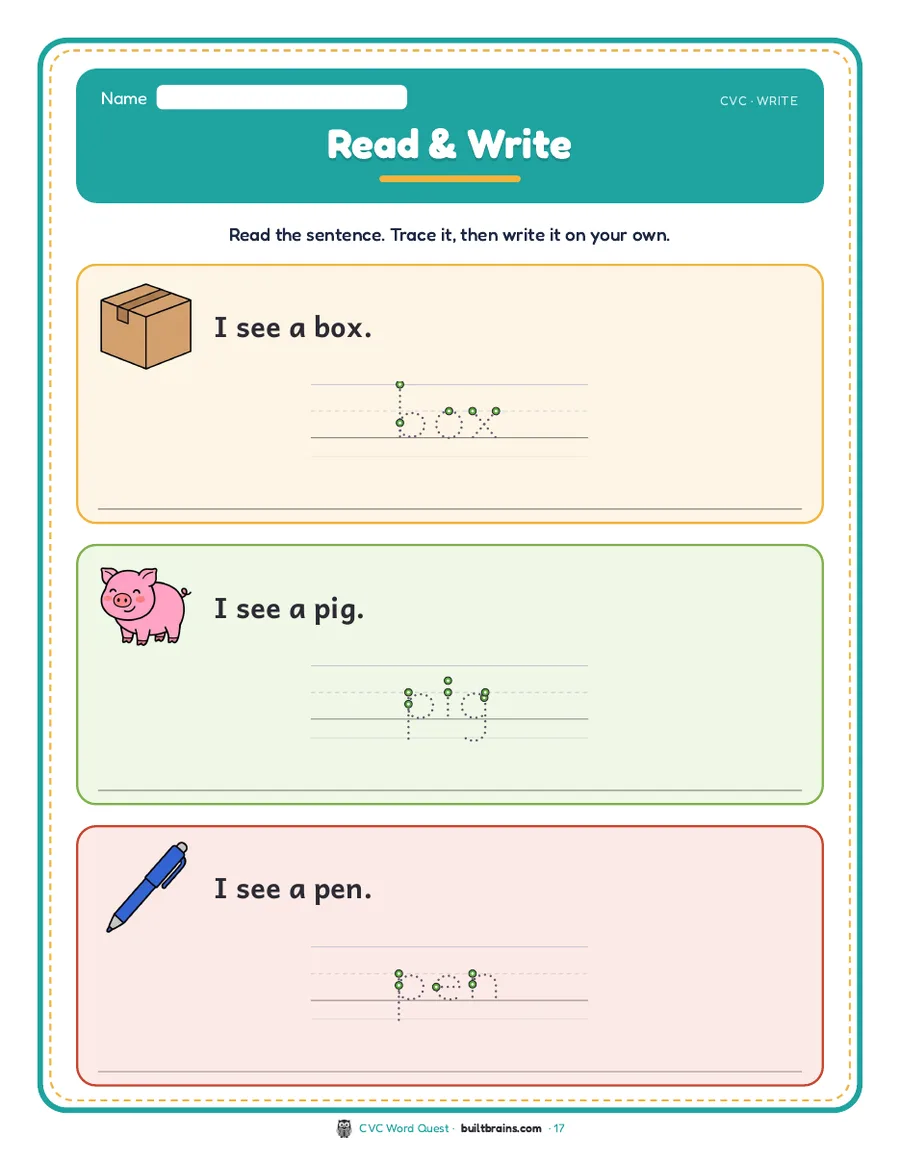
- Read and write (page 5). Read "I see a box" together, pointing under each word. Trace the sentence, then write it on the empty line.
Our CVC words list groups more words by vowel if you want extra ones to practice.
Tips by age
Age 4. Do the sound boxes together and say the sounds for them if needed. Many 4 year olds can hear and write the first and last sounds before the middle vowel. That is normal.
Age 5. Let them do the sound boxes alone, then check by reading each word back. Point out that the middle sound is always a vowel, and ask "which vowel do you hear?"
Age 6. Skip the word bank. After the sentence page, ask them to write a new sentence using a word card: "I see a van."
Games to play with the pages
- Card match. Print a second copy of the cards. Spread them face down and play memory, reading each card as it flips.
- Change one sound. Take the card for pig. Ask "what if p becomes d?" and write the new word on paper. Then try fan to van, box to fox.
- Word hunt. Hide the 12 cards around the room. Your child finds one, reads it, and brings it back to make a pile.
- Silly sentences. Use the sentence page as a model: "I see a ___." Fill the blank with any card and draw it on the back.
- Sort by vowel. Make five piles for a, e, i, o and u. Sorting the cards makes your child look at the middle letter every time.
If blending is still hard, our guide on how to teach blending sounds has step-by-step games and three checks to try.
When your child is ready for more
After a few weeks of short words, your child will start reading them without stretching every sound. That is the signal for more practice across all five vowels, then words with blends like stop and frog, and then digraphs like ship and chat.
The full CVC Word Quest workbook is built for that next stretch: 10 writing pages for sounding out and sentences, tracing pages, word searches, cut-out word cards and a certificate to finish. It is short enough to complete in a month at one page a day.
Questions parents ask
CVC stands for consonant, vowel, consonant. They are three-letter words where every letter makes its usual sound, like cat, pen, pig, box and sun. Because nothing is tricky, they are the first words most children learn to sound out and blend on their own.
Most children are ready between 4 and 6, once they know the sounds of most letters and can hear the first sound in a word. If your child knows the letter names but not the sounds yet, spend a few weeks on letter sounds first, then come back to these pages.
Yes. Choose Colourful or Black & White and US Letter or A4, and the PDF downloads at once. There is nothing to sign up for. The five pages are taken straight from our CVC Word Quest workbook, so you can try the style before deciding whether you want the whole book.
Follow the order in the PDF. Sounding out comes first because it trains the ear, then tracing, then finding whole words in the search. Cut the cards out on day four for games, and save the sentence page for last, since it asks your child to read and write a full sentence.
The full workbook has 19 pages: 10 writing pages (sound it out and read and write sentences), 3 tracing pages, 2 reading pages with word searches, a page of cut-out word cards and a certificate of completion at the end.