How to use these beginning sounds worksheets
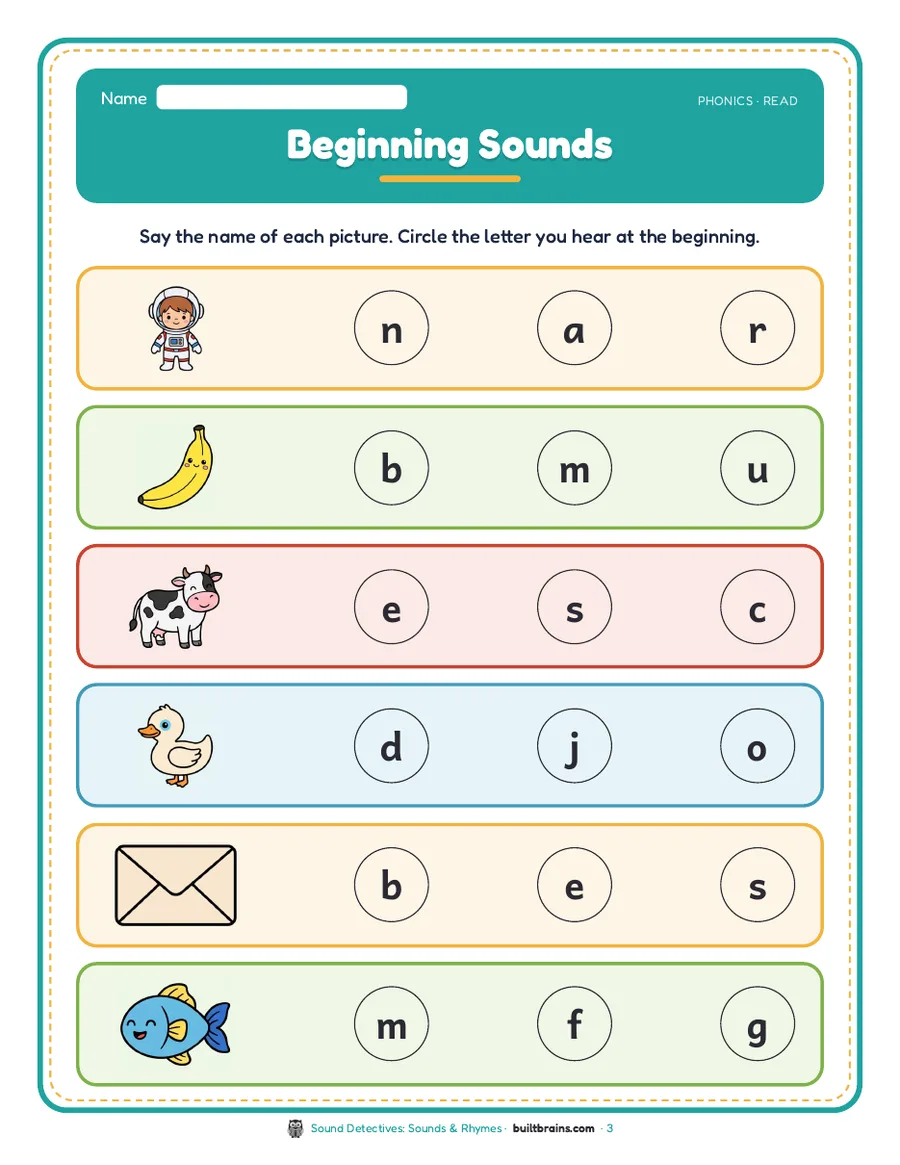
Each page takes 5 to 10 minutes. You need a pencil and a few crayons. Sit beside your child, because the most important part happens out loud.
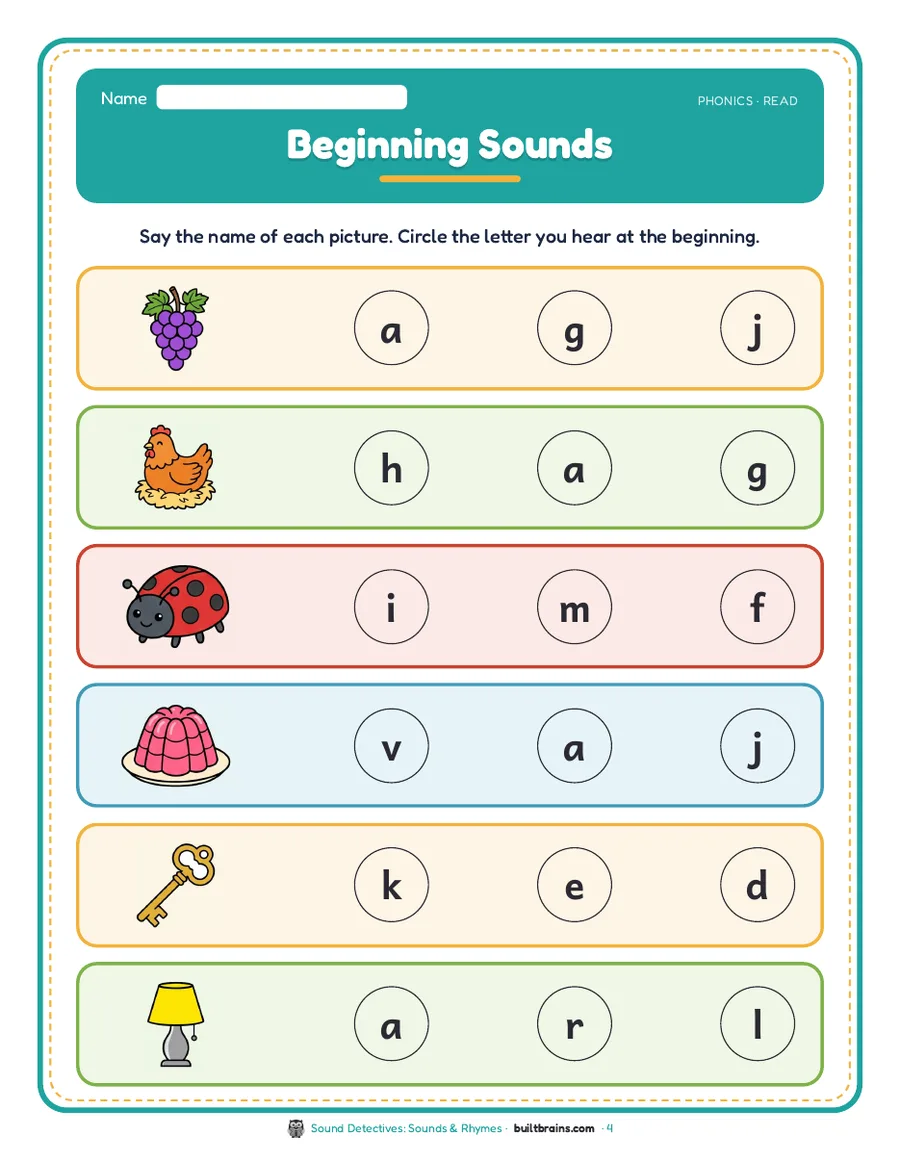
- Name every picture first. Before any circling, go along the row and name each picture together. A child who calls a picture "kitty" when you meant "cat" will circle the wrong letter for a good reason.
- Say it slowly, then circle. Stretch the first sound: "sssun." Ask "what sound do you hear first?" and then "which letter makes that sound?" Your child circles one of the three letters.
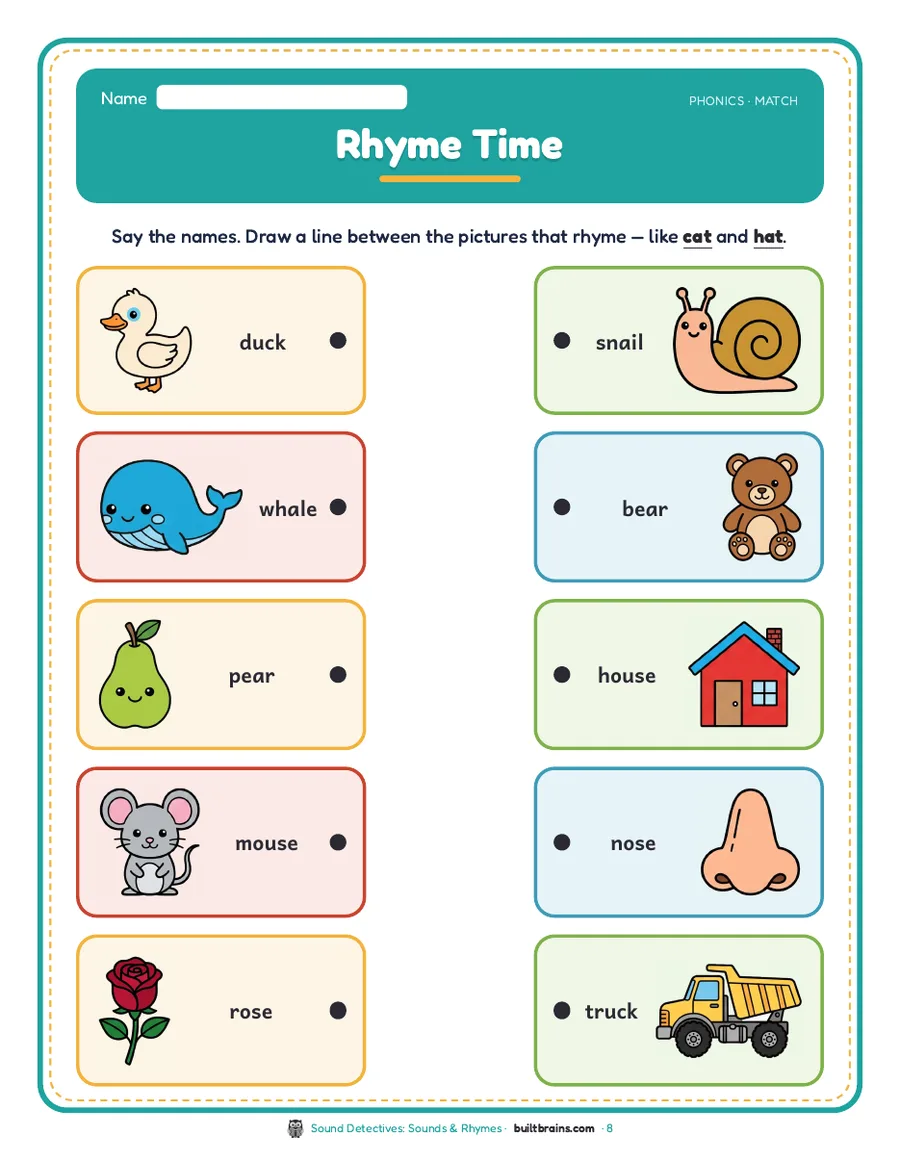
- Rhyme time. Say each pair out loud: "duck, truck." Do they sound the same at the end? Draw a line between the ones that rhyme. Say the odd ones out too, so your child hears the difference.
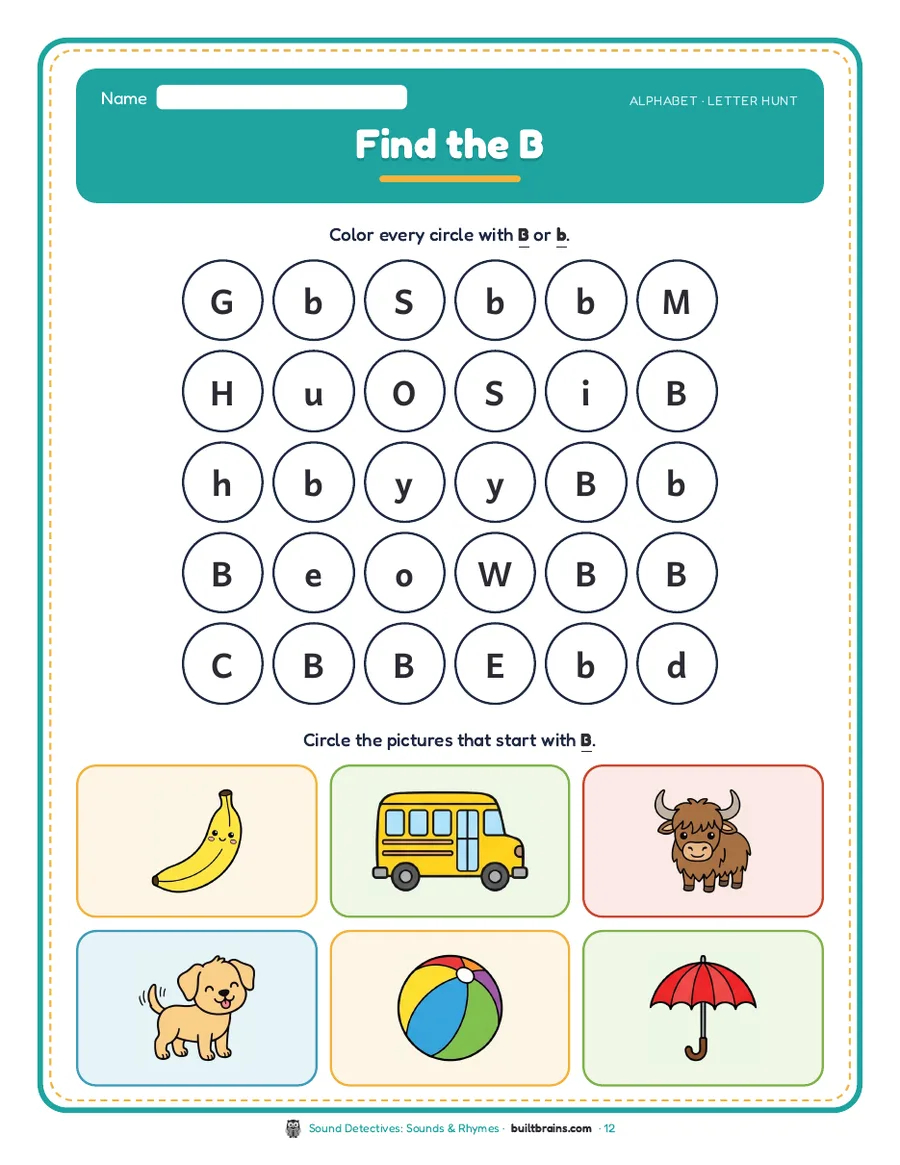
- Find the B. First color every circle with a capital B or small b. Then look at the pictures at the bottom and circle the ones that start with the "b" sound.
Do one page a day in order, or the two beginning sounds pages first and the rhyme page on a lighter day. For the order to teach letter sounds and how to say them clearly, see our parent guide on how to teach letter sounds.
Tips by age
Age 4. Do it as a talking game and let your child point instead of writing. Cover two of the letters with your fingers if three choices feel like too many.
Age 5. Let them name the pictures alone and circle without help, then check together by saying each word out loud.
Age 6. After each row, ask for one more word that starts with the same sound. On the rhyme page, ask for a third rhyme: duck, truck, ... luck?
Games to play with the pages
- I spy a sound. Use the pictures on the page: "I spy something that starts with mmm." Your child finds it and points.
- Rhyme snap. Cut the rhyme page into picture squares. Lay them face down and turn two at a time. If they rhyme, keep the pair.
- Sound hunt at home. After the B page, hunt for real things that start with "b": a ball, a book, a banana. Line them up and say them together.
- Wrong sounds. Read a picture with the wrong first sound: "tuck" for duck. Your child shouts "no!" and fixes it.
- Make a B book. Staple the B page to two blank sheets and draw more "b" things to add each day.
Our article on rhyming activities for preschoolers has 27 more listening games if your child enjoys the rhyme page.
When your child is ready for more
When your child can hear first sounds quickly and match most of them to letters, the next step is hearing all the sounds in a short word: c, a, t. That is where blending starts, and simple three-letter words come within reach.
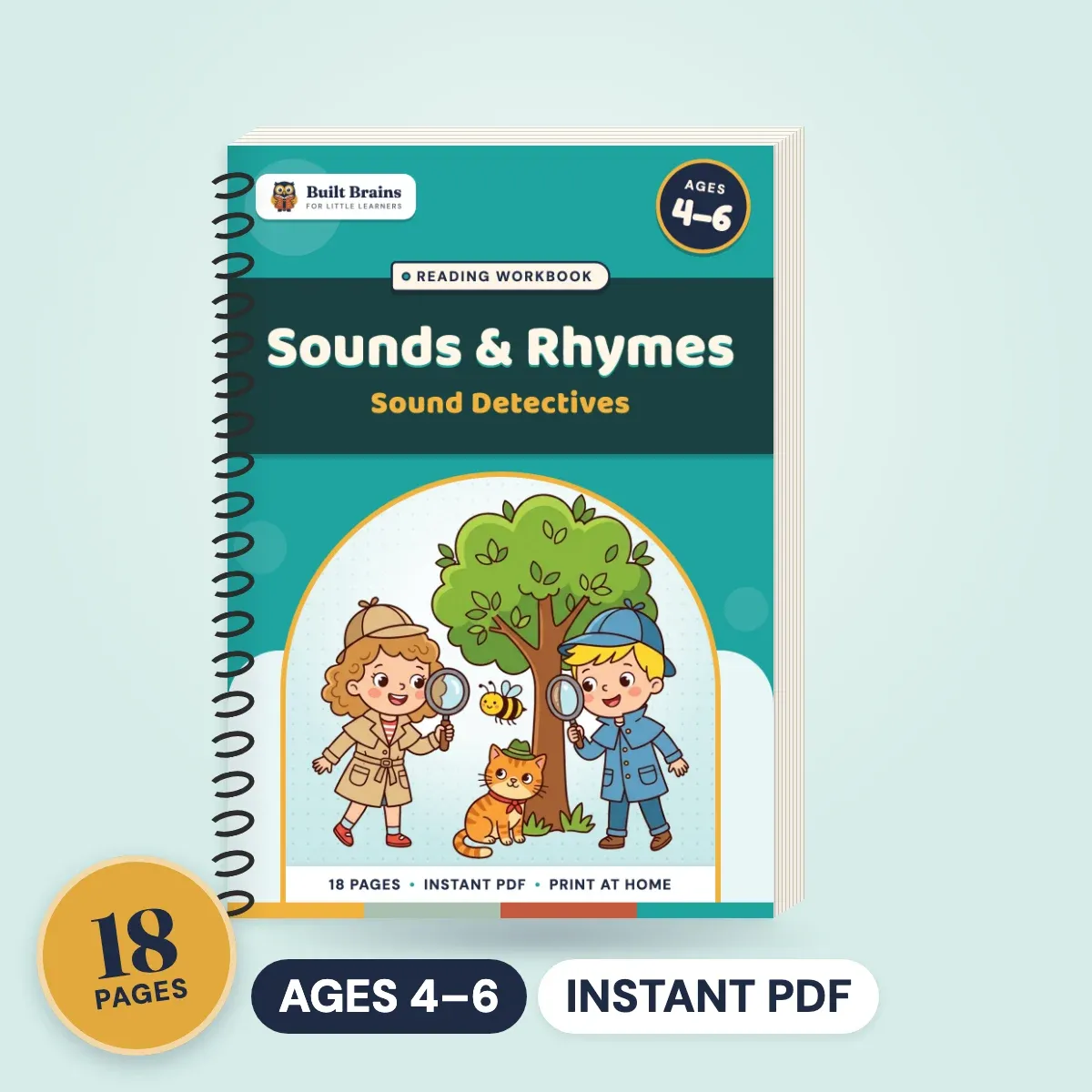
Sound Detectives: Sounds & Rhymes covers that whole stretch in 18 pages: beginning-sounds pages for every letter, more rhyme matching, letter hunts, and the first CVC words to sound out, finished with a certificate. A page a day takes about three weeks, which suits the short, regular practice that works best at this age.
Questions parents ask
The beginning sound is the first sound you hear in a word, like the "s" in sun or the "b" in ball. Hearing it, and knowing which letter makes it, is one of the first steps in learning to read and spell. Children who can pick out first sounds find blending simple words much easier later.
Most children start hearing first sounds between 4 and 5, and many are matching them to letters by 5 or 6. If your child is younger or finds it hard, play spoken sound games first and keep the paper for later. These pages work best once a child knows several letter sounds.
Yes. Choose Colourful or Black & White and US Letter or A4 and the PDF downloads straight away, with no email and no account. These are four real pages from our Sound Detectives book, so you see exactly what the full book looks like before you decide.
Rhyming and first sounds are two sides of the same listening skill. To rhyme, a child hears that duck and truck end the same way. For beginning sounds, they hear how words start. Practicing both helps children notice that words are made of separate sounds, which is the base for phonics.
Sound Detectives: Sounds & Rhymes has 18 pages: beginning-sounds pages for every letter, rhyme-matching pages, letter hunts, first CVC words to sound out and a certificate of completion. Inside you will find 5 reading pages, 4 matching pages, 4 letter-hunt pages and 2 writing pages.