
How to use these weather worksheets
Plan four short sessions of 5 to 10 minutes, ideally one each morning after you've looked out of the window together. You need crayons, a pencil, child-safe scissors and a glue stick.
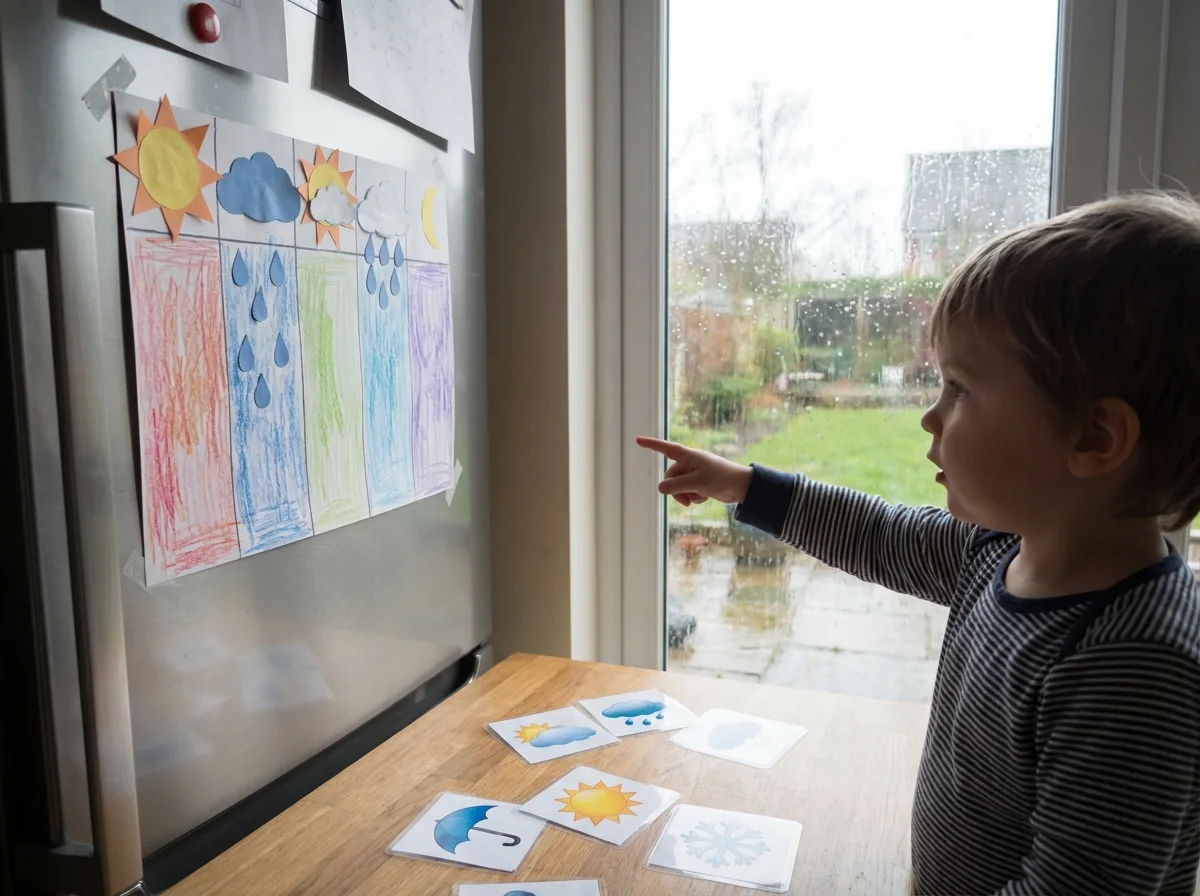
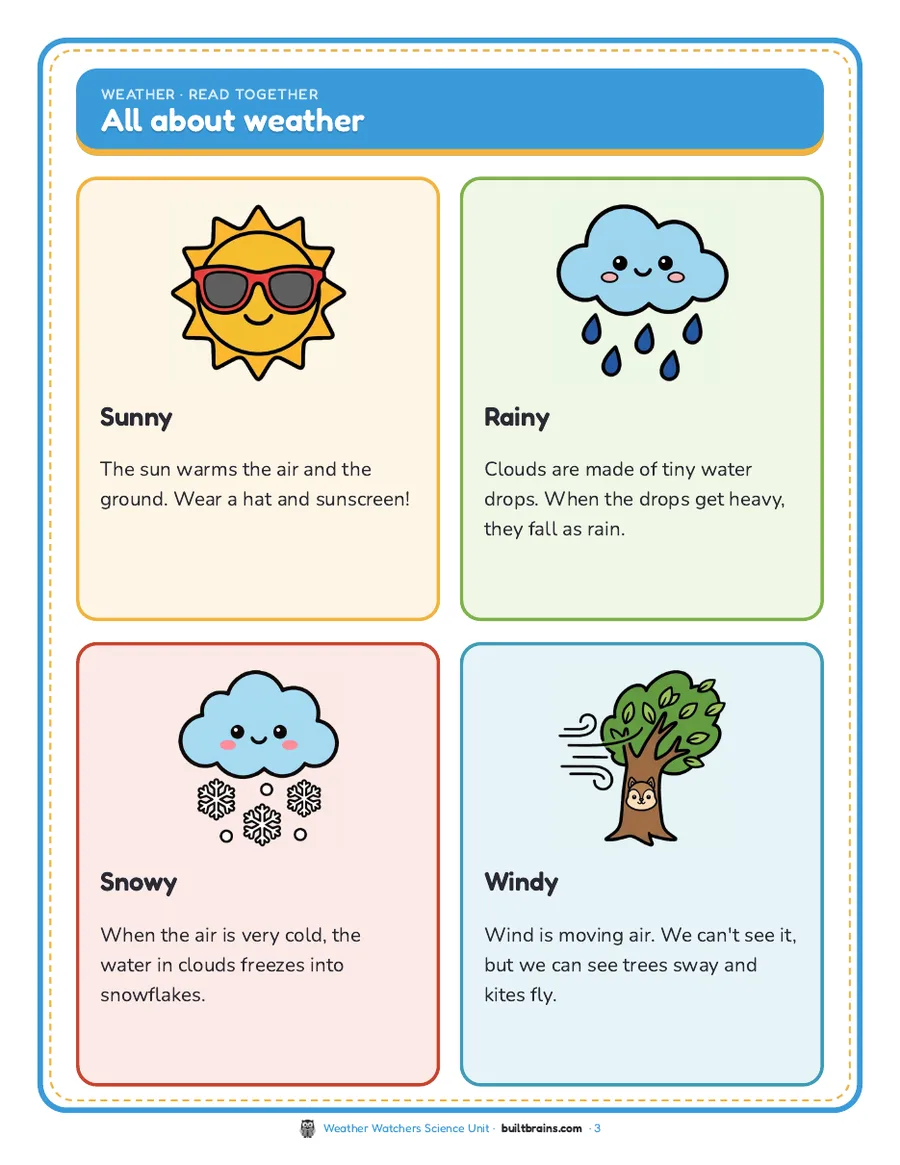
- Read together. Read "All about weather" one box at a time, then ask, "Which one is it today?" Point out the window and name what you can see: clouds, wind in the trees, puddles.
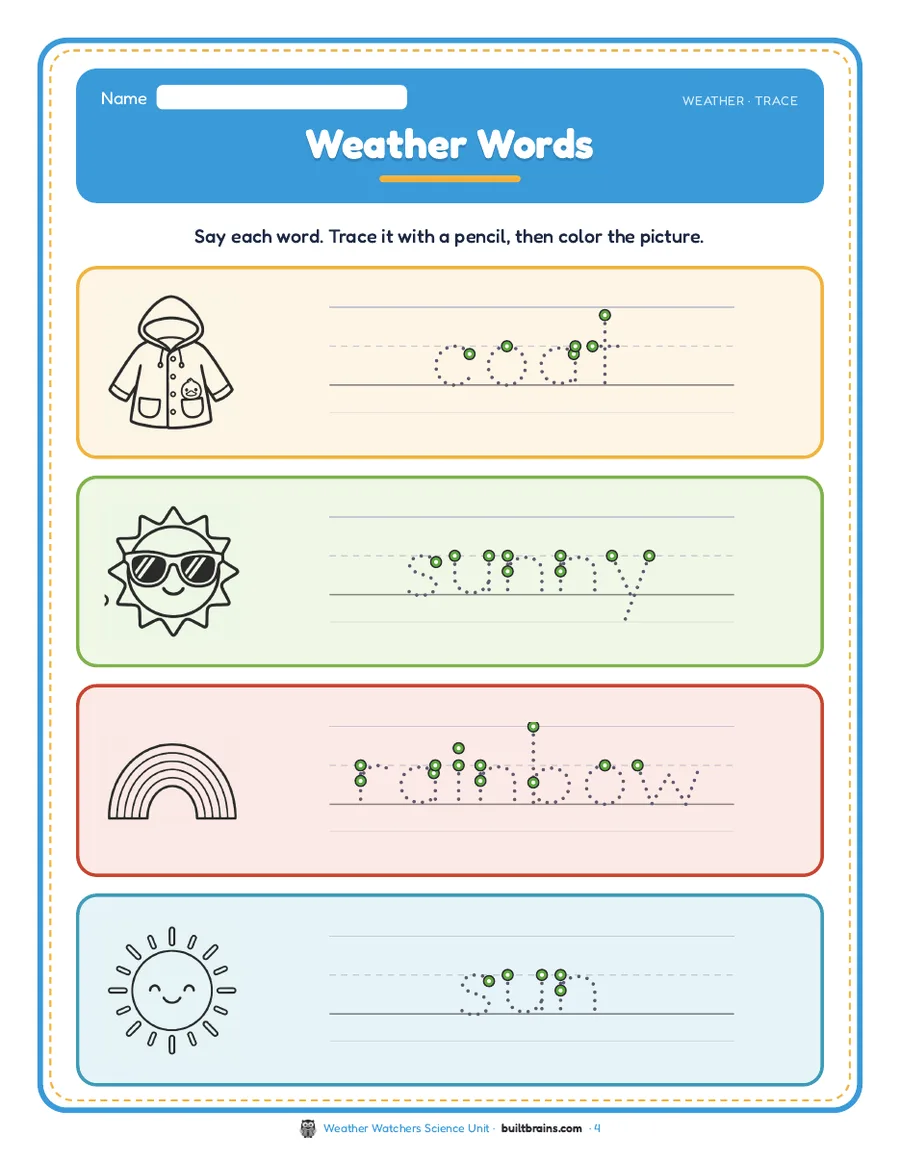
- Trace the weather words. Say each word, trace it, color the picture. Ask what you would wear in each kind of weather.
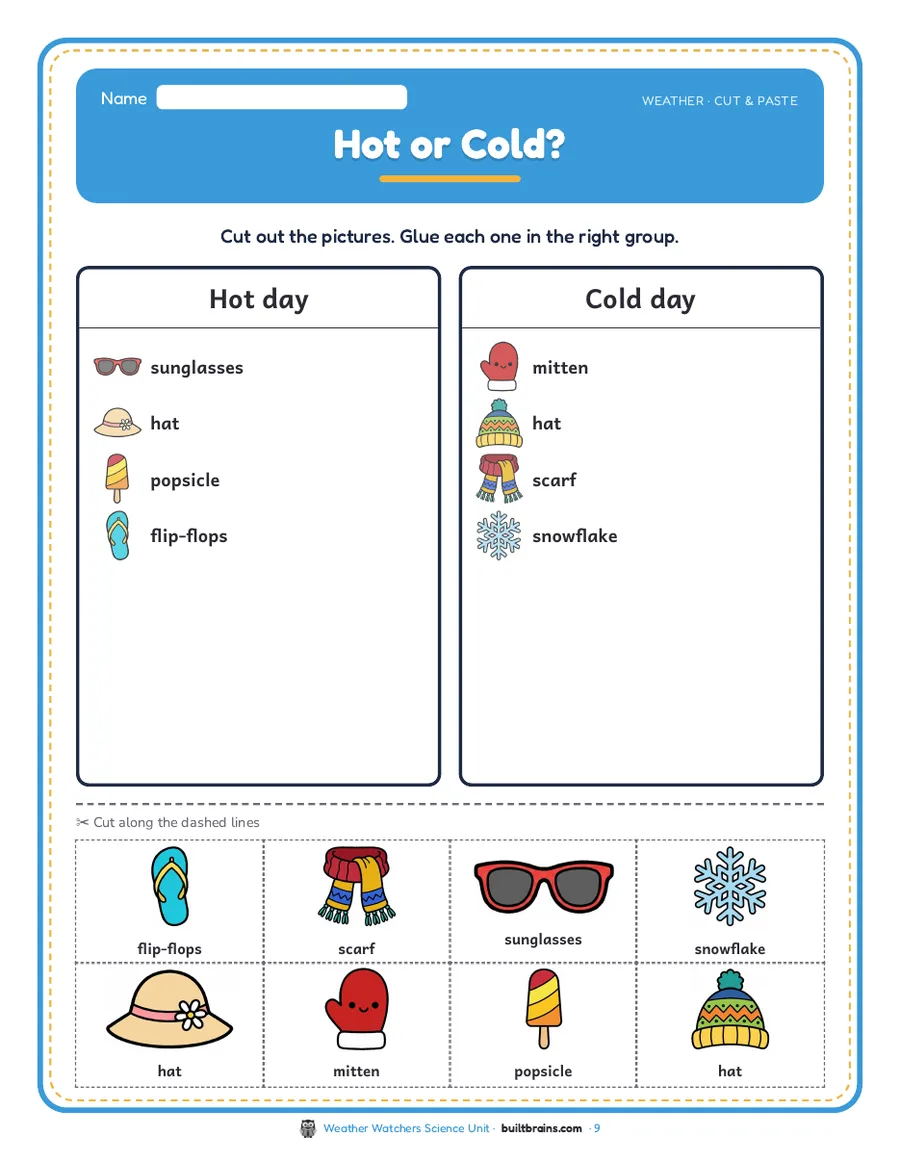
- Hot or cold? Cut out the pictures and sort them before gluing. Talk through each one: "Would you wear mittens on a hot day?"
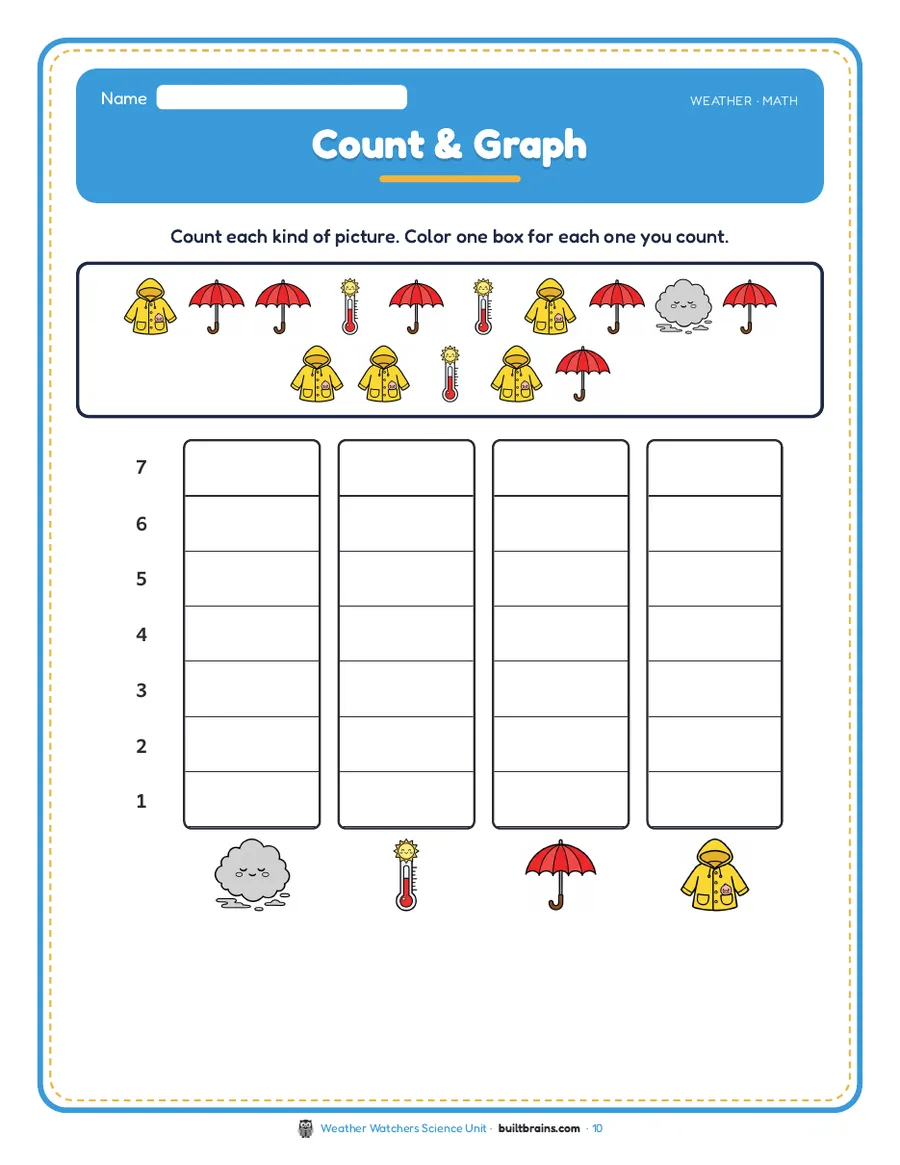
- Count and graph. Count the clouds first and color one box for each. Then the thermometers, umbrellas and raincoats. Finish by asking "Which has the most? Which has the fewest?"
For experiments, songs and outdoor ideas to go with these pages, see our weather activities for preschoolers.
Tips by age
Age 4: Count together with a finger on each picture, and cross it out once counted so nothing gets counted twice. Cut the sort pictures out for them if scissors are still tricky.
Age 5: Let your child do the counting and graphing alone, then check together. On the tracing page, ask them to find the first letter of each word.
Age 6: Start a real weather graph. Each day for a week, color one box for the day's weather on the back of the graph page, then compare at the end of the week.
Games to play with the pages
- Dress the weather. Call out a weather word from the tracing page and have your child fetch one real piece of clothing for it.
- Weather charades. Act out sunny, rainy, snowy and windy and guess each other's weather.
- Graph it again. Use the cut-out pictures from the sort page for a second mini graph: how many hot things, how many cold things?
- Wind test. On a breezy day, hold up a ribbon or a strip of paper outside and decide if it's a little windy or very windy.
- Rainbow hunt. After rain, look for a rainbow with the sun behind you, then color the rainbow on the tracing page to match.
When your child is ready for more
Once these pages feel easy, children are ready to keep a simple weather diary, notice seasons changing and read and compare bigger numbers on a graph.
The full Weather Watchers Science Unit makes a whole weather week of it, with more tracing, word cards and a word search, a look-and-count page, a matching page, a maze, big pictures to color and trace, a draw and write page and a certificate for your weather watcher.
Questions parents ask
They are made for ages 4 to 6. Four year olds can do the read-together page and the hot or cold sort with a little help, and most five and six year olds can trace the words and fill in the graph on their own after you count the first column together.
Yes. There is no email sign-up and no account. Click download and the PDF is yours. The four pages are taken from our full Weather Watchers Science Unit, so you can try them at home and see whether your child would enjoy the rest of the unit.
Color makes the pictures easier to tell apart, which helps on the graph page. Black and white saves ink and gives your child more to color. Both come in US Letter and A4; print at actual size so the graph boxes and cut lines line up.
There are two hats: a sun hat for a hot day and a warm hat for a cold day. It is a nice moment to slow down and look closely, and to talk about how the same kind of clothing changes with the weather. Let your child explain which hat goes where.
The full Weather Watchers Science Unit has 18 pages: two tracing pages, two big pictures to color and trace, a read-aloud fact page, word cards, counting and look-and-count pages, cut and paste and math pages, a reading page, a maze, a matching page, a coloring page, a draw and write page and a certificate.