
How to use these telling time worksheets
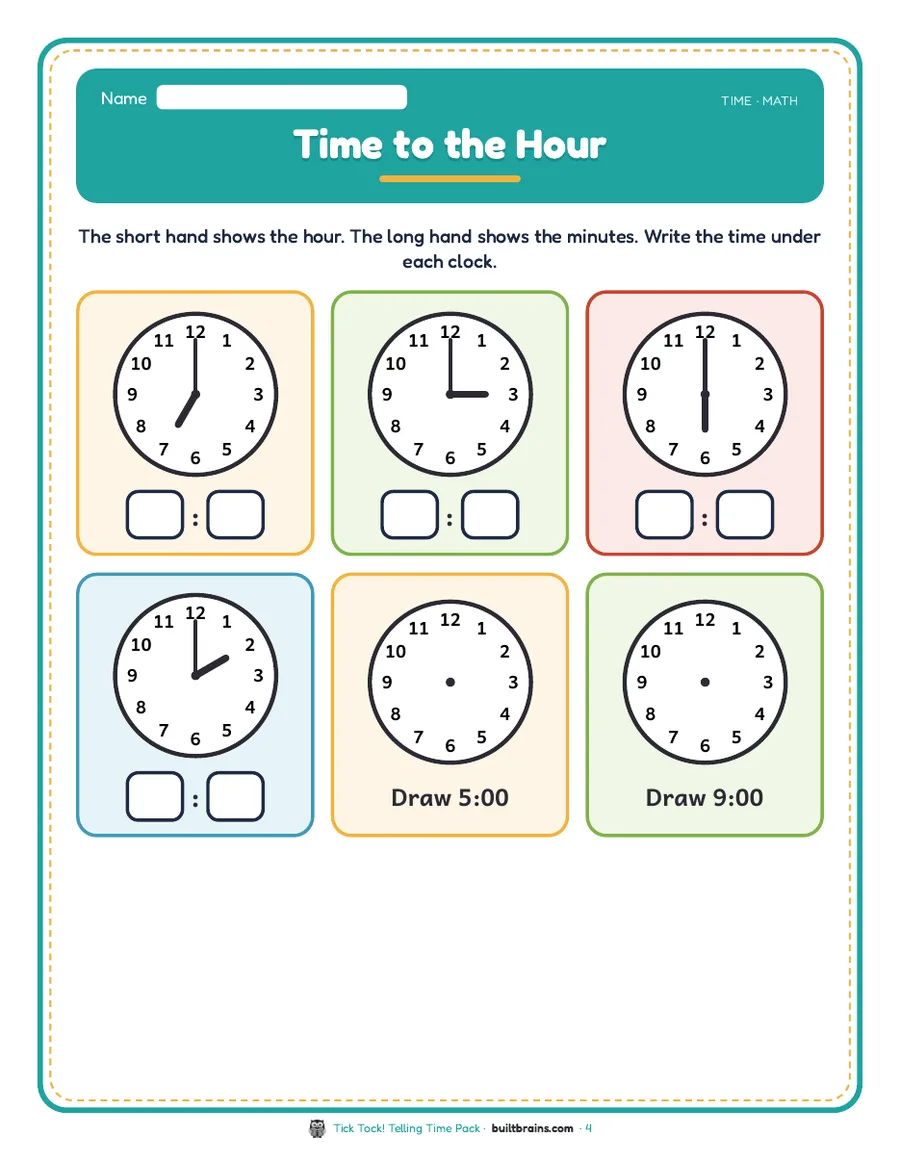
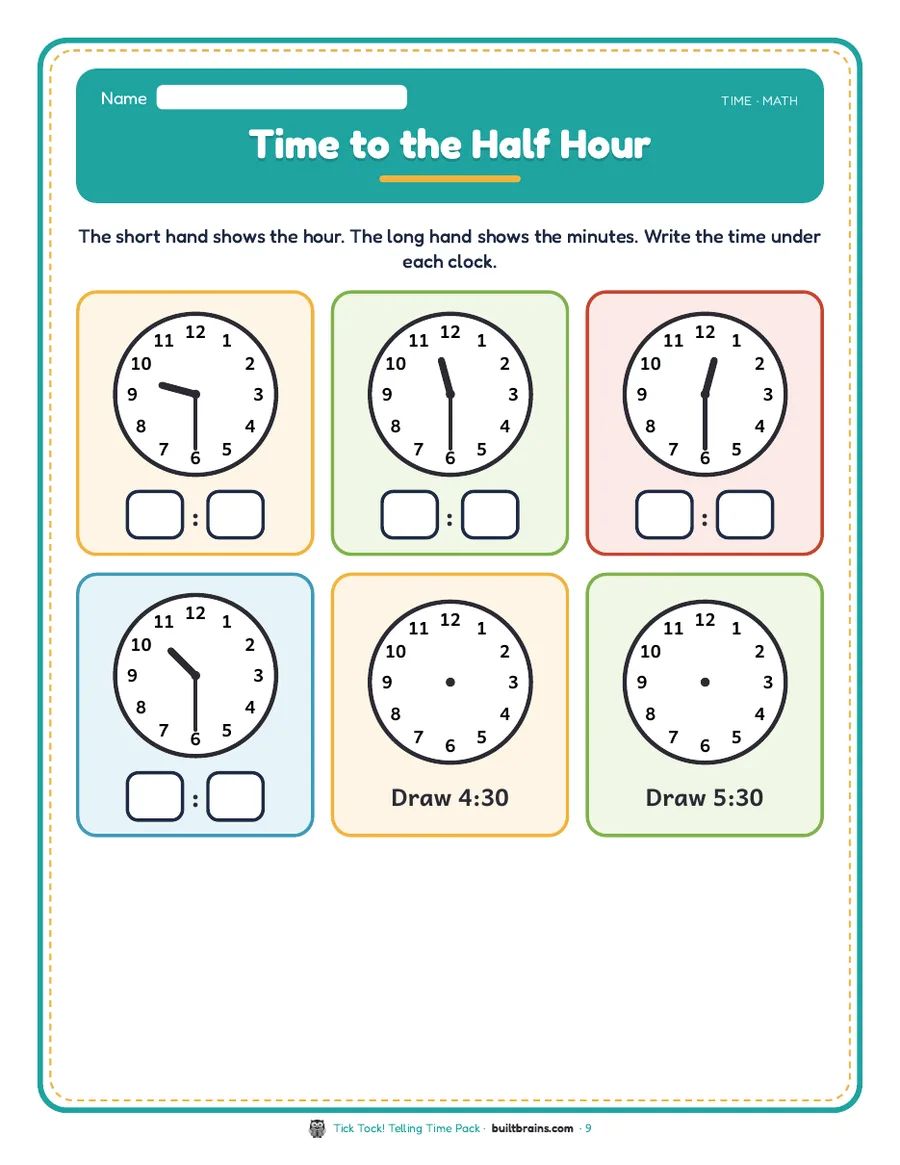
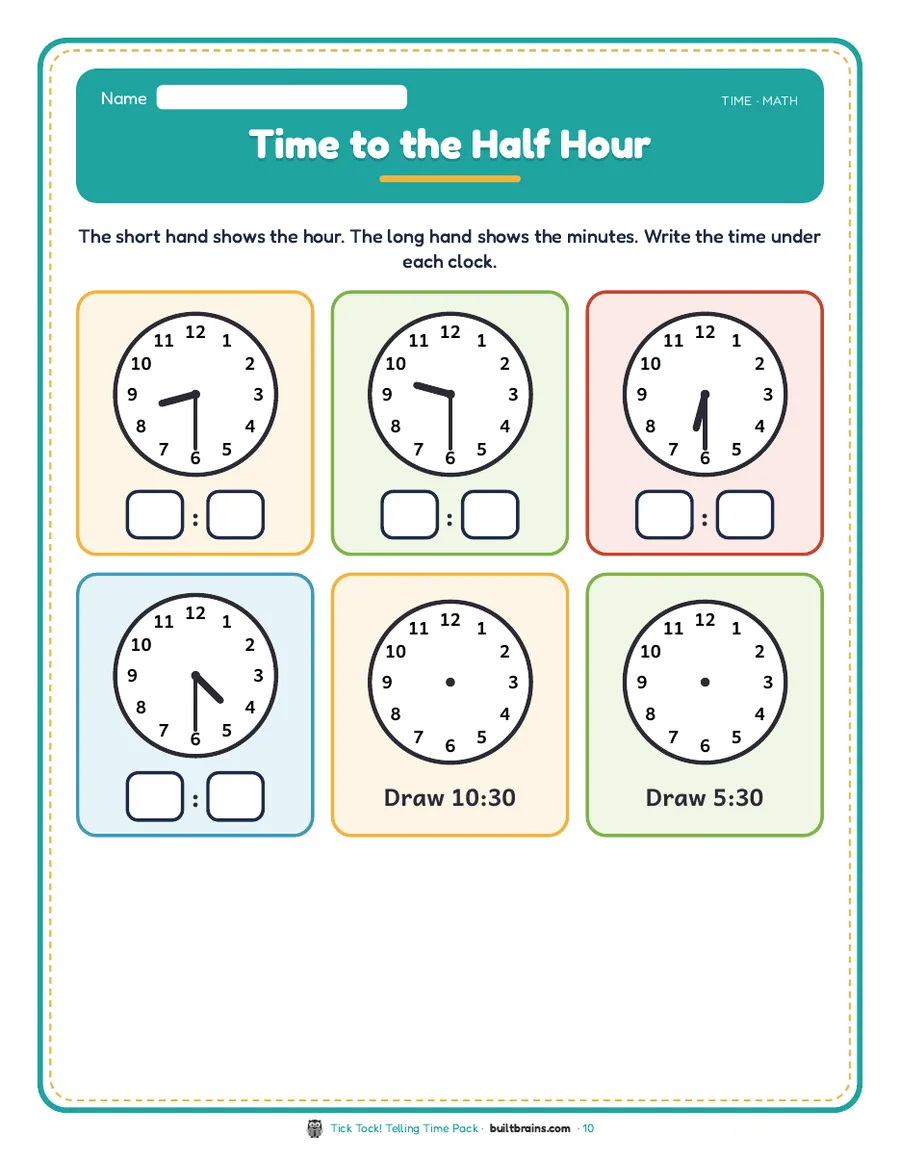
Each page takes about 10 minutes. You need a pencil, and a real analog clock or watch is a big help. Do the hour pages first, on two different days, before trying half past.
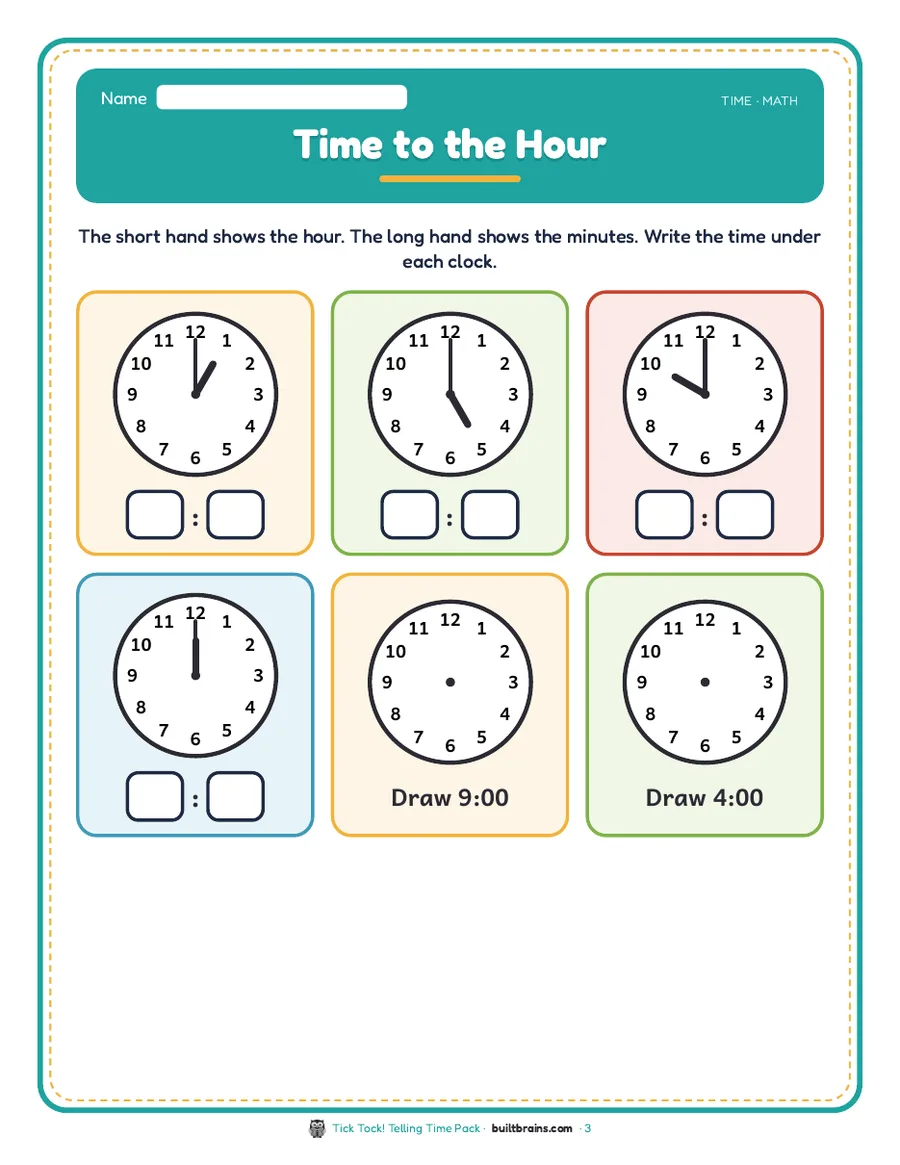
- Name the hands. Point to the short hand and the long hand. The page says it simply: the short hand shows the hour, the long hand shows the minutes.
- Read the short hand first. On each clock, find where the short hand points. That number is the hour.
- Check the long hand. If it points straight up to 12, it is o'clock, so write the hour and 00. On the half-past pages, the long hand points straight down to 6, so write the hour and 30.
- Draw the hands. At the bottom, your child draws the hands for the time given, like 9:00 or 10:30. Remind them: short hand short, long hand long.
- Check together. Say each time two ways: "4:30, or half past four."
Telling time is part of the year's math in early grade school. Our guide on what to teach in 1st grade shows where it fits alongside counting, place value and money.
Tips by age
Age 5. Stick to the hour pages for a while. Cover the long hand with your finger and ask only "what number is the short hand on?"
Age 6. Move to half past once o'clock is easy. Ask them to set a real clock to each time before writing it.
Age 7. Ask "what time will it be in one hour?" or "in half an hour?" after each clock. Adding time is the next skill after reading it.
Games to play with the pages
- Clock of the day. Each time you finish a page, pick one clock from it and set a real clock to match. Ask your child to tell you when real time catches up.
- Daily schedule. Draw clocks on the back of the page for the times of daily events: breakfast at 7:00, park at 10:30, bath at 6:30.
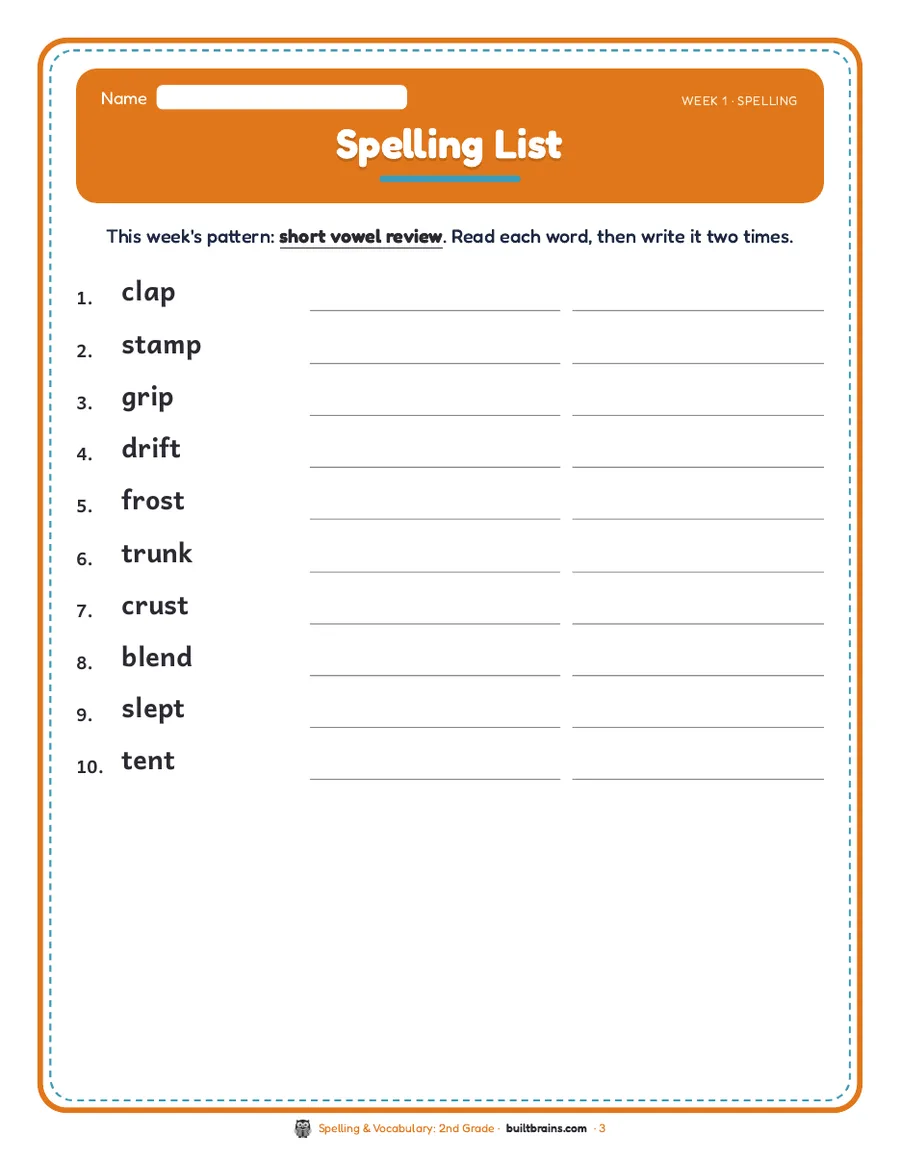
- Beat the timer. On the second hour page, time how long it takes to read all four clocks. Try again next day.
- What time is it, Mr. Wolf? Play the classic chase game and answer only with times from the pages.
- Make a mistake. Draw a clock with the hands swapped. Your child finds what is wrong and fixes it.
When your child is ready for more
When o'clock and half past are easy, the next steps are quarter past and quarter to, then five-minute times, and then working out how much time has passed between two clocks. Reading a digital clock and matching it to an analog one is a good bridge.
Tick Tock! Telling Time Pack covers the first two stages fully, with 6 o'clock pages and 6 half-past pages. Each page builds on the last, from reading the clock to drawing the hands yourself, and it ends with a certificate so the moment your child can tell the time gets the celebration it deserves.
Questions parents ask
Most children learn to read o'clock and half past between 5 and 7, usually in kindergarten or first grade. Quarter past and five-minute times come a little later. A child who can count to 12 and read numbers to 60 is ready to start with the hour hand.
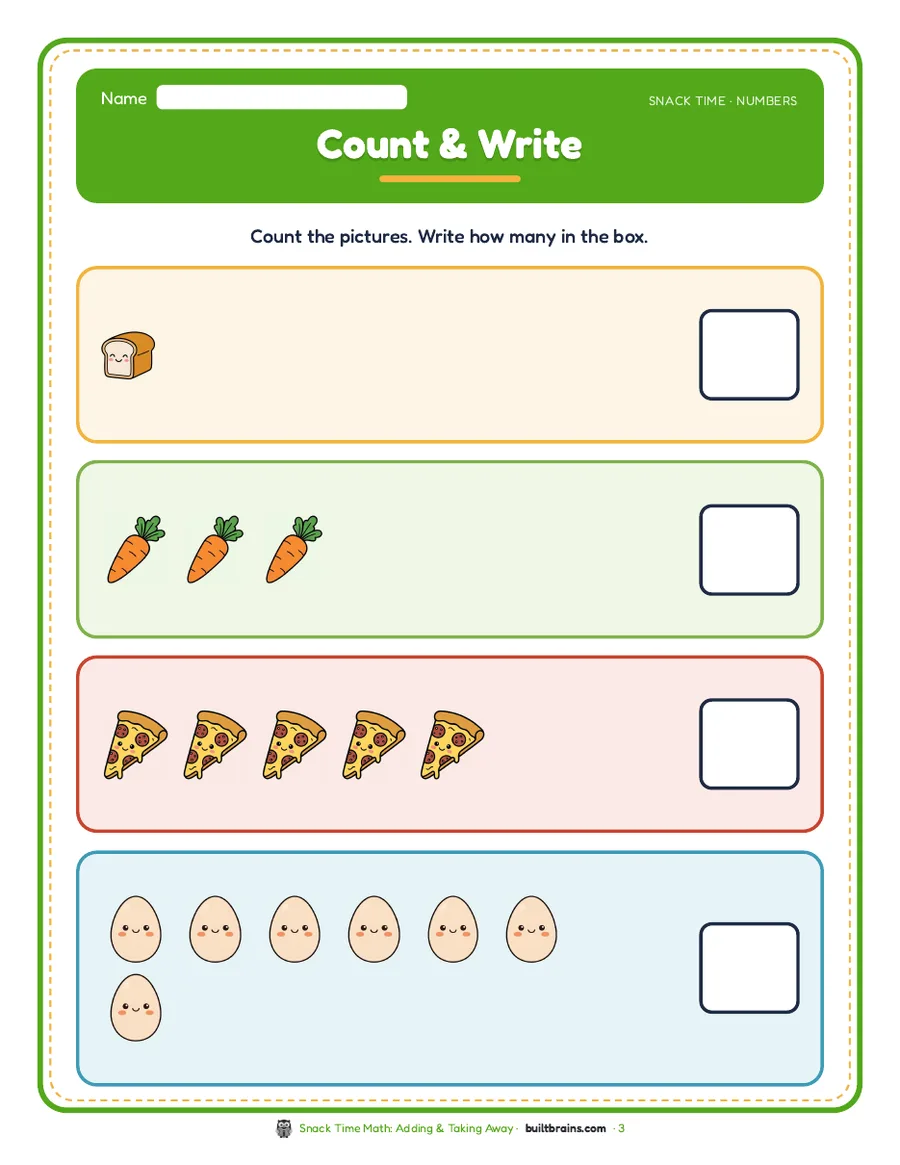
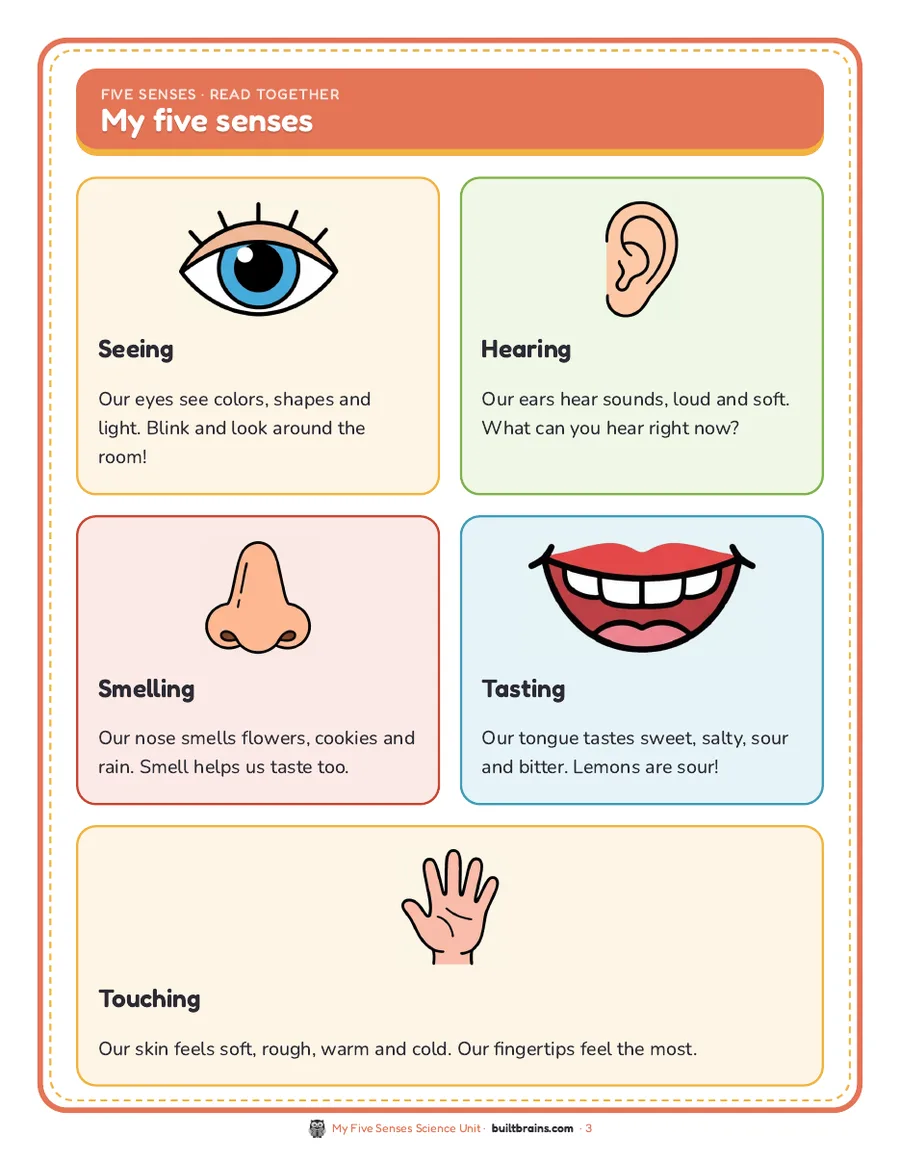
Yes. Choose Colourful or Black & White and US Letter or A4, and the download starts straight away, with no email and no sign-up. These are four real pages from our Tick Tock! Telling Time Pack, two from the o'clock section and two from the half-past section.
The short hand alone tells you roughly what time it is, so it is the key to everything else. Once a child reads the hour confidently, adding the long hand at 12 (o'clock) and at 6 (half past) is a small step. Mixing both hands too early is where most confusion starts.
That is the most common half-past mistake. At half past, the hour hand sits halfway between two numbers. Teach the rule "if it is between two numbers, the hour is the one it has just passed." Practicing on a real clock, moving the hands slowly, helps this click.
The full pack has 15 pages: 6 o'clock pages and 6 half-past pages, where your child reads the clock and draws the hands step by step, and a certificate of completion. It starts with o'clock and moves on to half past only when the hour feels easy.