
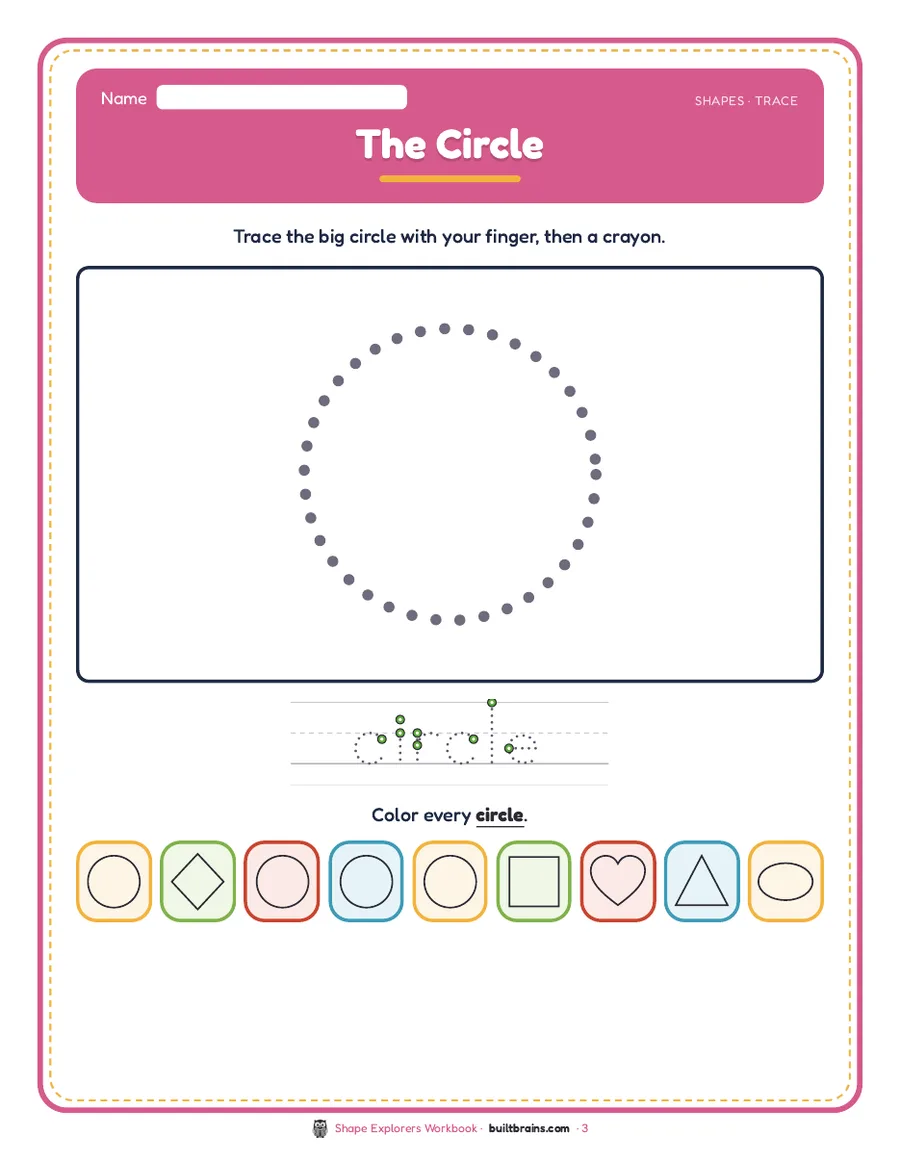
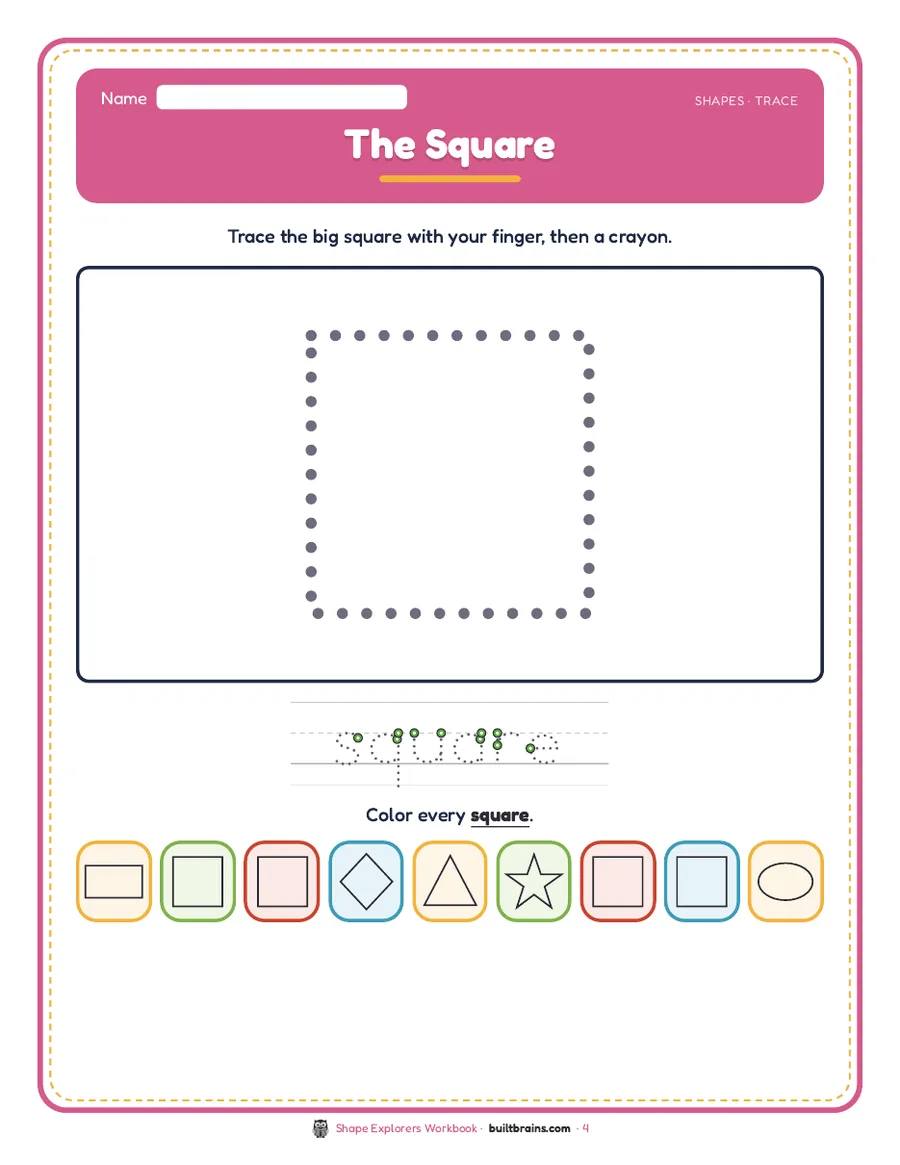
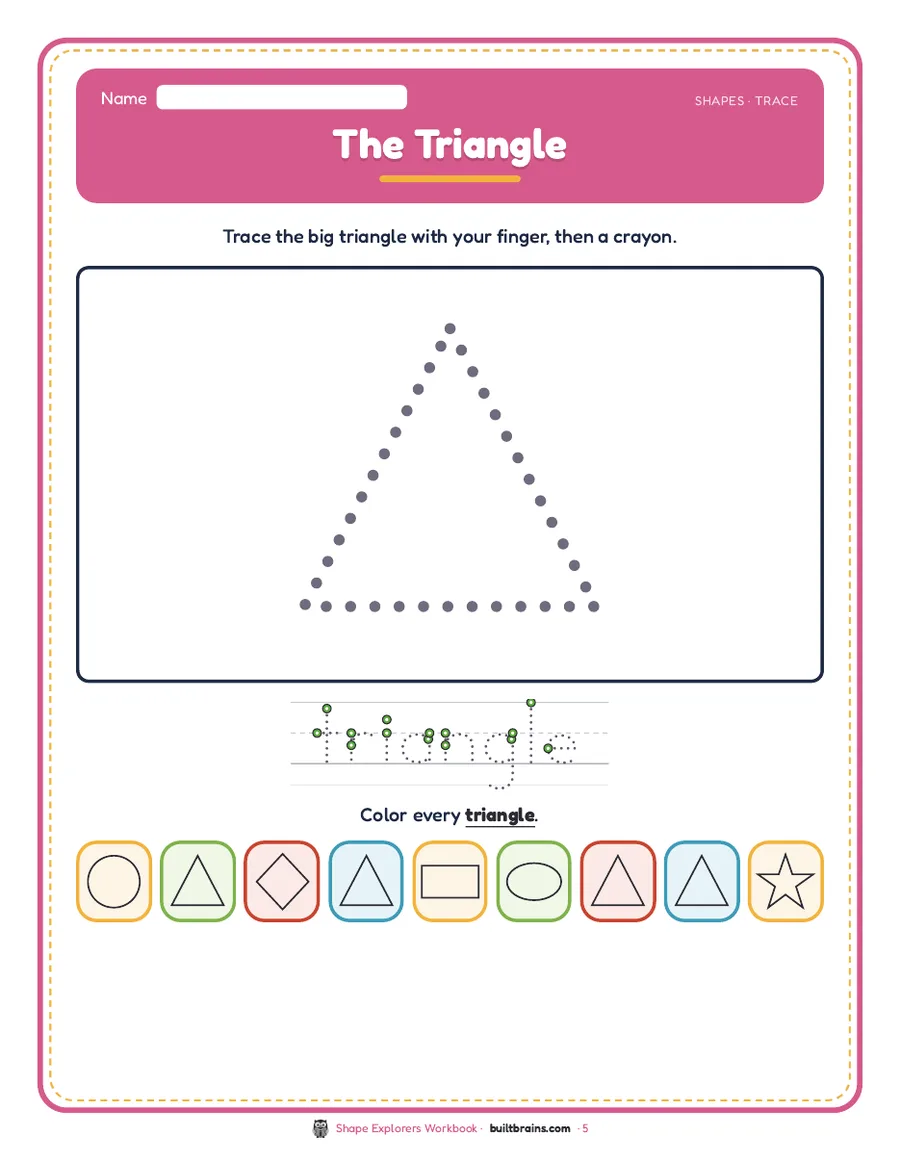
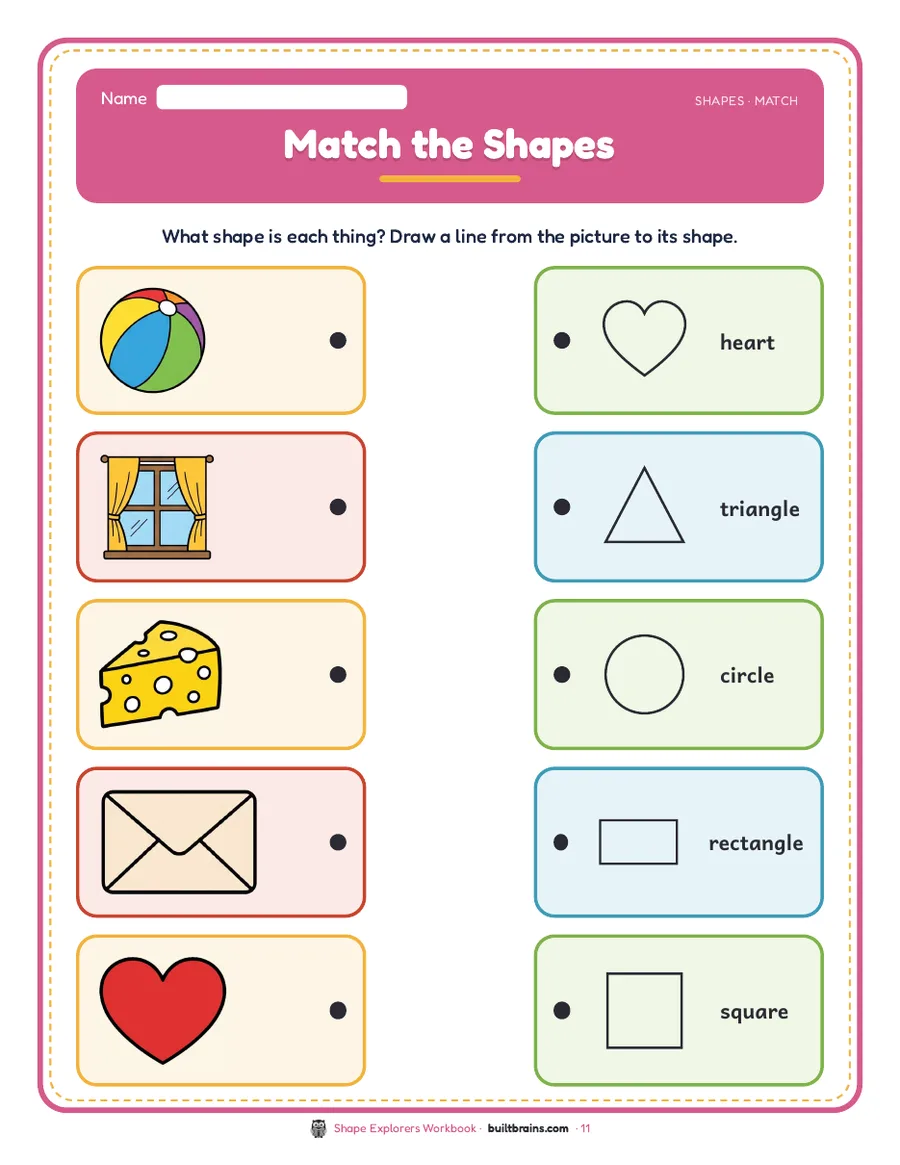
How to use these shapes worksheets
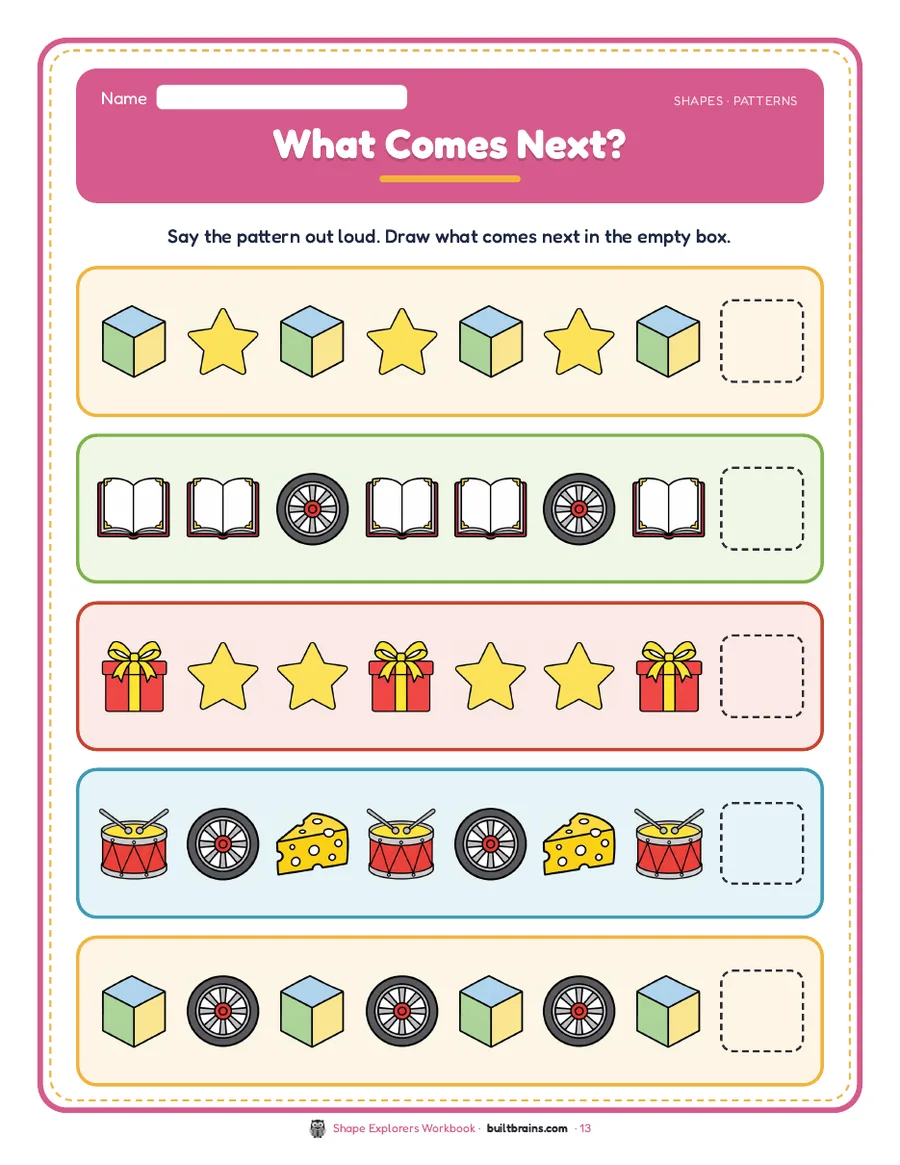
Do one shape page a day for three days, then the matching page and the pattern page. Each takes about 10 minutes.
- Feel the shape first. Find a real circle, square or triangle at home. Run a finger around the edge and count the sides and corners.
- Trace with a finger. Start at the dot on the worksheet and go all the way around.
- Trace with a crayon. Go slowly, especially at the corners. Corners are where squares and triangles get tricky.
- Name it out loud. "Circle, round, no corners." "Square, four sides, four corners."
- Match and pattern. Use the last two pages to review all three shapes together.
You need a crayon or pencil, a few colors and a handful of shaped objects such as blocks, lids or crackers. Our guide to shapes activities for preschoolers has 30 more ways to explore shapes, plus a 2-week plan.
Tips by age
Age 3. Focus on naming and finger tracing. A circle is usually easiest. Let your child color inside each shape after tracing. On the matching page, talk about each picture first: "Is a clock round? Which shape is round?"
Age 4. Most 4 year olds can trace all three with a crayon and count the sides. Ask "How do you know it's a triangle?" On the pattern page, ask them to say the pattern out loud before finishing it.
Age 5. After tracing, ask your child to draw each shape freehand. Then try making your own pattern with three shapes instead of two, such as circle, square, triangle, circle.
Games to play with the pages
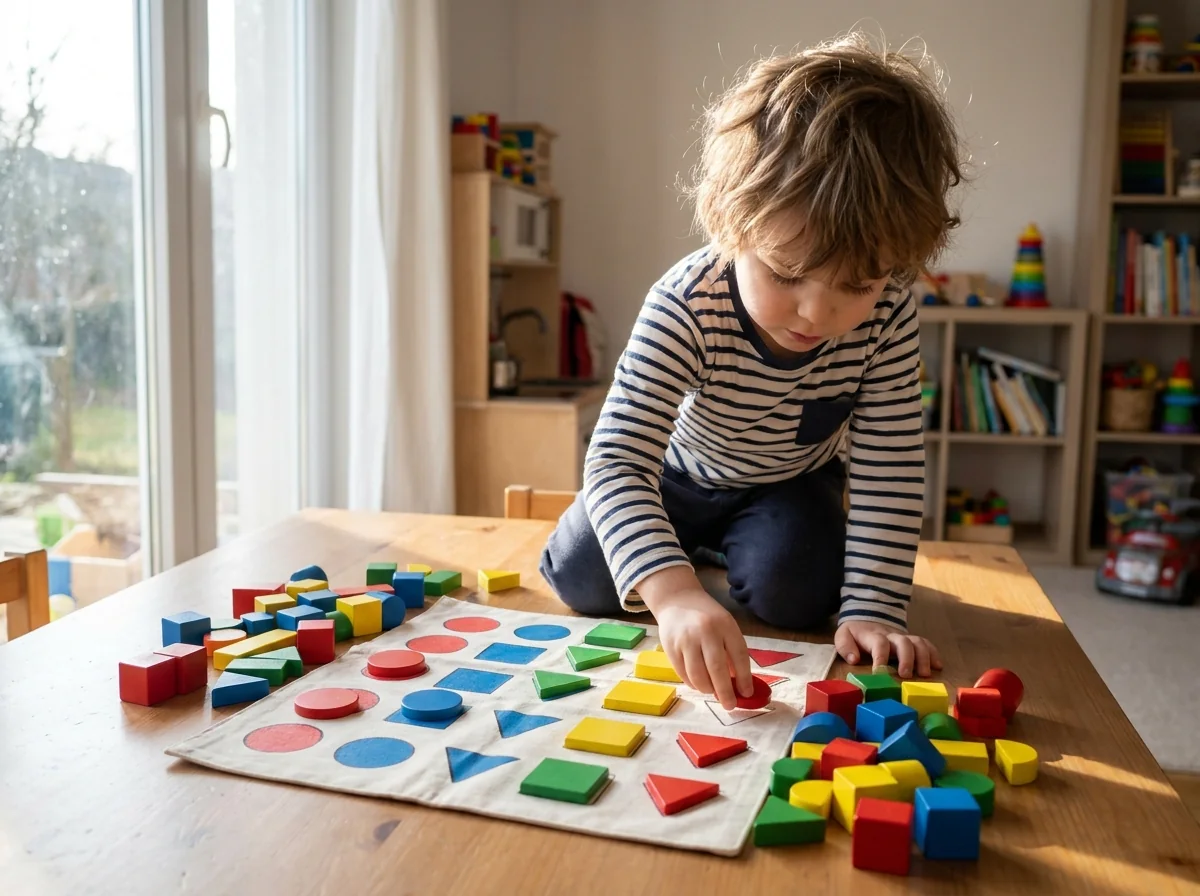
- Shape hunt. Take the matching page around the house and find one more thing for each shape.
- Snack shapes. Cut toast or cheese into circles, squares and triangles, and eat them in the pattern from the pattern page.
- Body shapes. Make a circle with your arms, a triangle with your hands and a square with four children or toys on the floor.
- Feely bag. Put shaped blocks in a bag. Your child feels one without looking and points to the matching worksheet.
- Pattern train. Line up toy blocks in a pattern and leave a gap for your child to fill.
When your child is ready for more
Once circle, square and triangle are easy, move on to the rectangle and oval. Comparing a square with a rectangle and a circle with an oval teaches your child to look closely at sides and curves. After that, stars, hearts and diamonds are fun because children see them everywhere.
The full Shape Explorers Workbook covers all eight shapes over 25 pages: 8 tracing pages, find-the-shape and shape-matching practice, a pattern page, dot-to-dots, finish-the-picture symmetry pages, an odd-one-out page and a certificate of completion.
Questions parents ask
Most children learn the circle, square and triangle first, usually between 3 and 4, then the rectangle, oval, star, heart and diamond. By kindergarten many can name these and spot them in everyday objects. Being able to say why a shape is a triangle, such as three sides, is a big step.
Yes. The 5 pages are free to download and print for home or class, as often as you need. No email is required. Choose Colourful or Black & White and US Letter or A4, and the PDF downloads instantly. Print extra copies to repeat.
Start with real objects: a round plate, a square cracker, a triangle sandwich. Name the shape and run a finger around the edge together. Then trace the shape on the worksheet with a finger before using a crayon. Talk about sides and corners as you go.
Patterns are early math thinking. Spotting that circle, square, circle, square repeats helps children predict what comes next, which builds the same reasoning they will later use with numbers. Using shapes they just traced makes the pattern easier to see.
The Shape Explorers Workbook has 25 pages covering eight shapes: circle, square, triangle, rectangle, oval, star, heart and diamond. It includes 8 shape tracing pages, matching pages, a pattern page, dot-to-dots, finish-the-picture pages, an odd-one-out page and a certificate of completion.