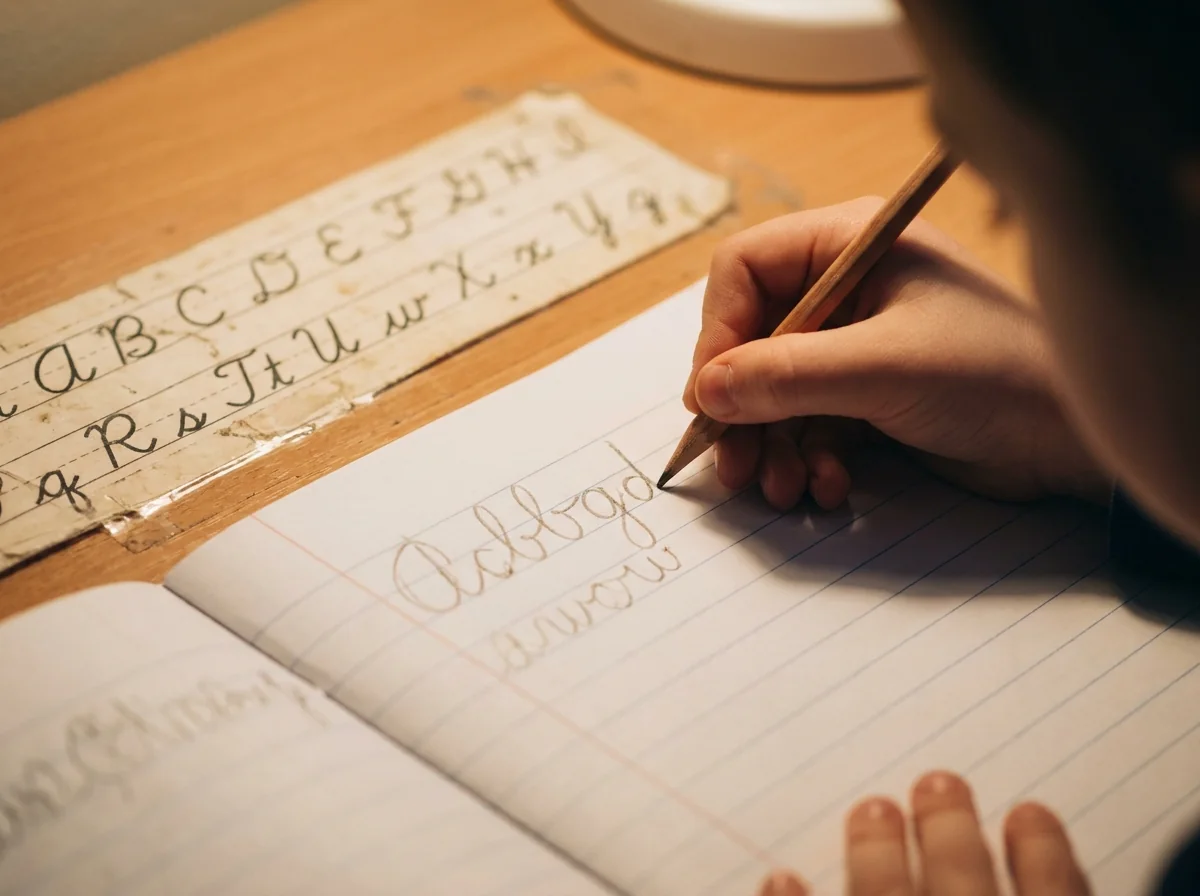
How to use these cursive worksheets
Set your child up at a table with a sharpened pencil, feet flat on the floor and the paper turned slightly, about the angle of their writing arm. Each page takes around 10 minutes.
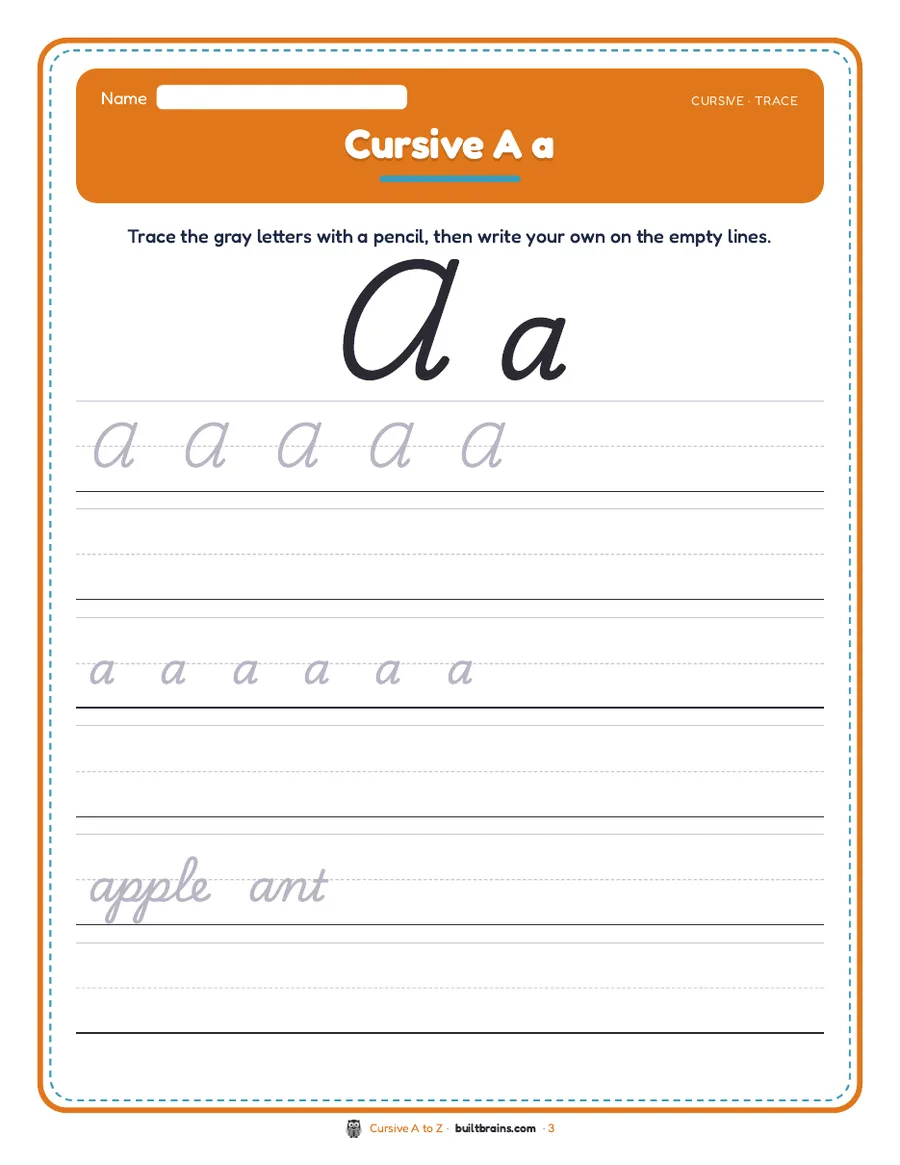
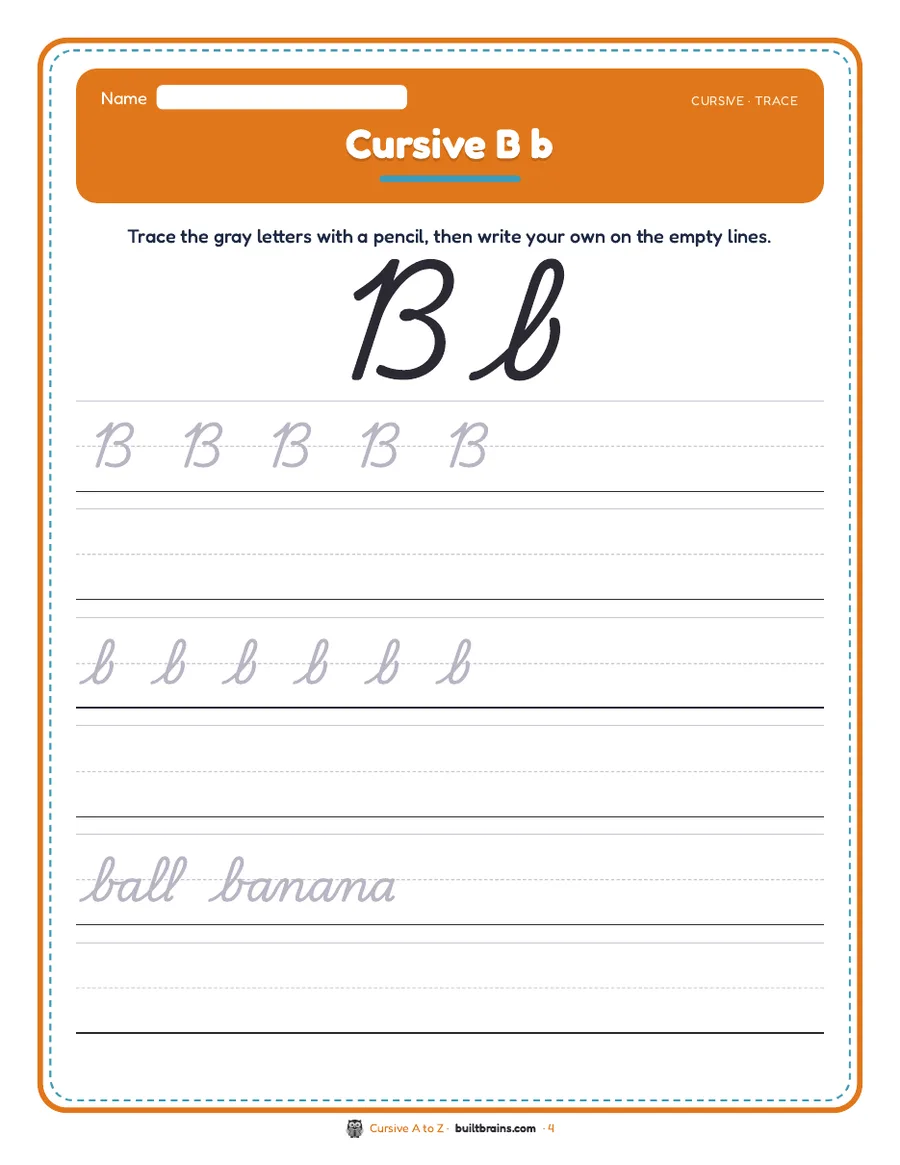
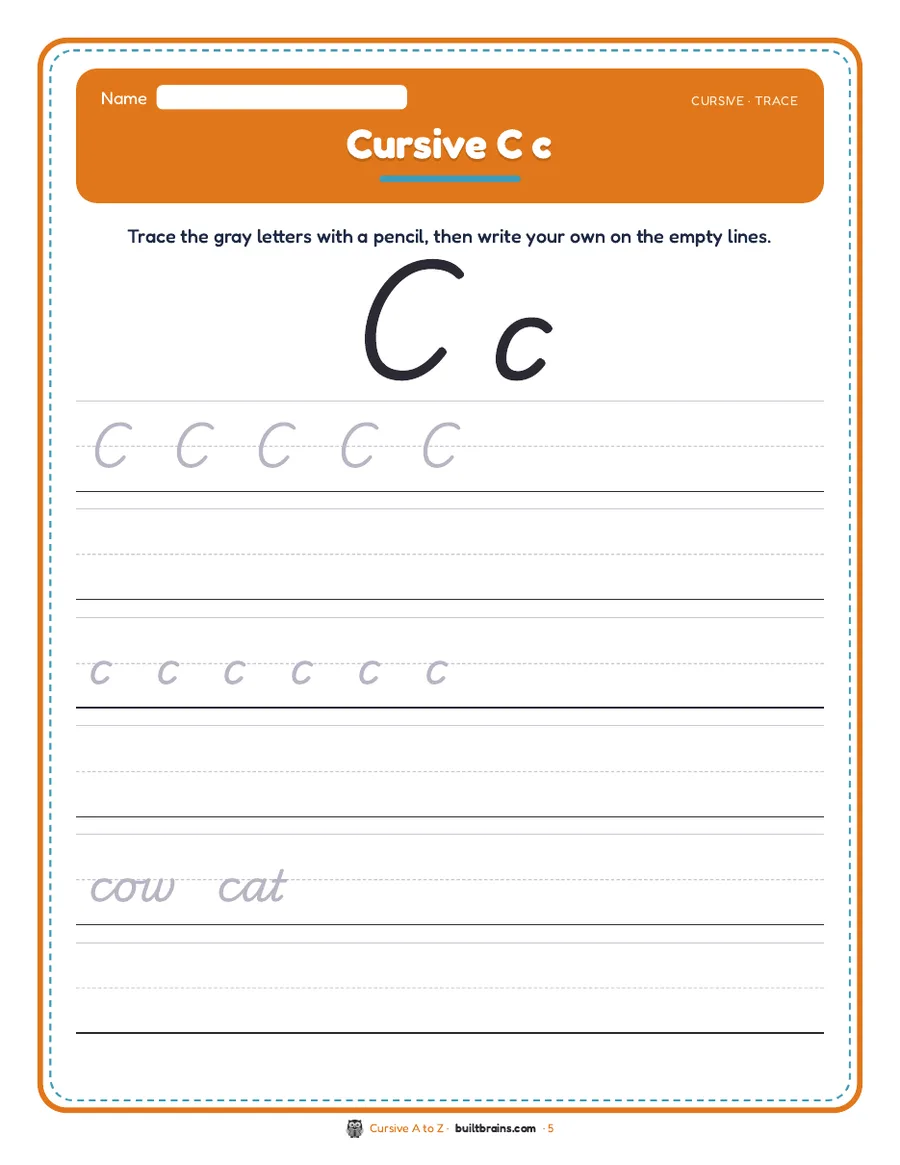
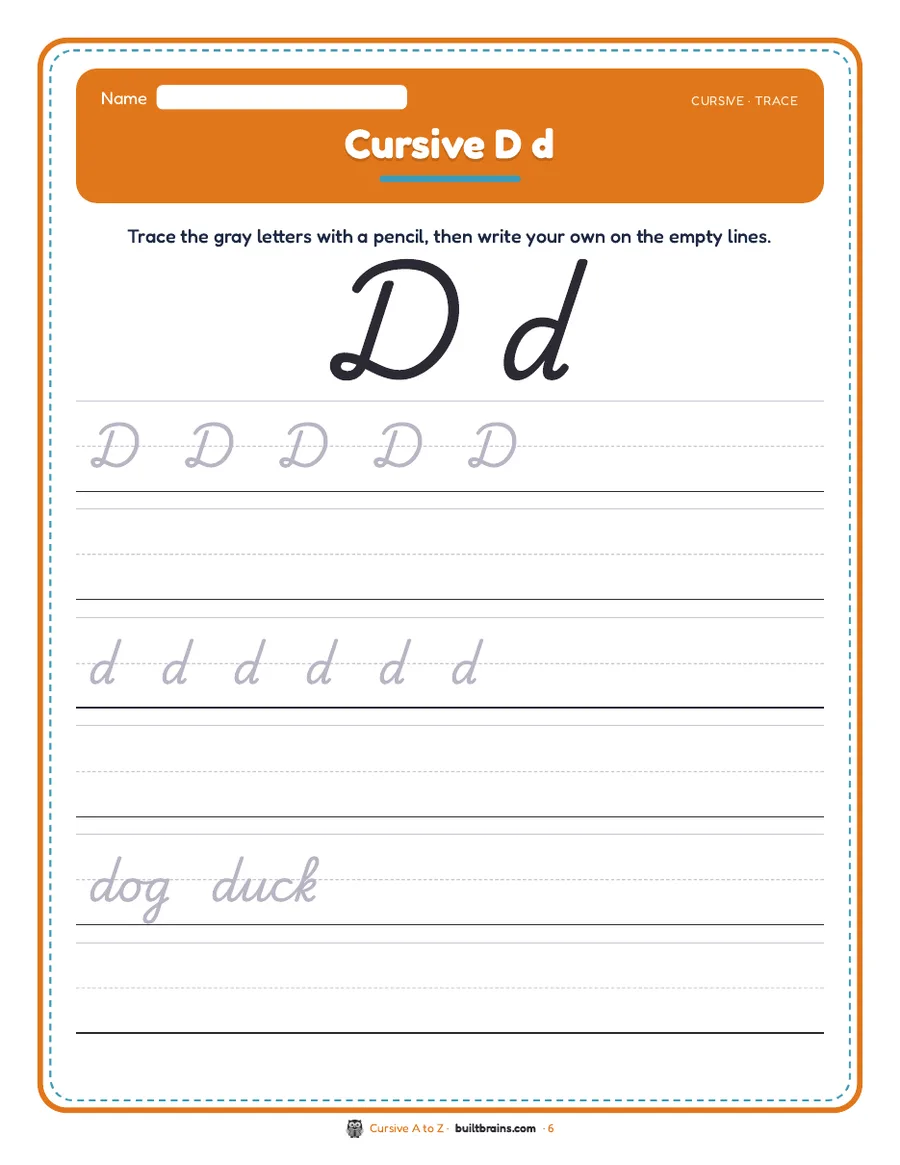
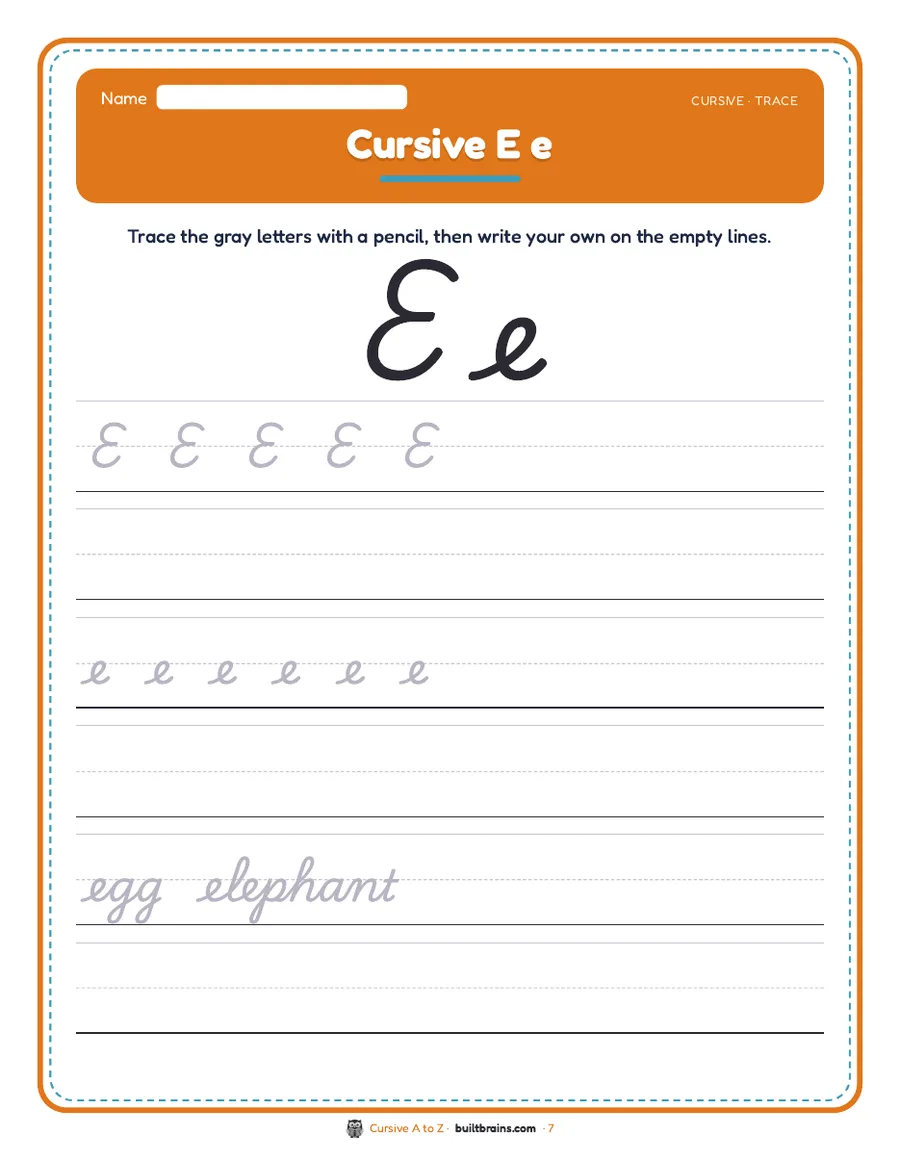
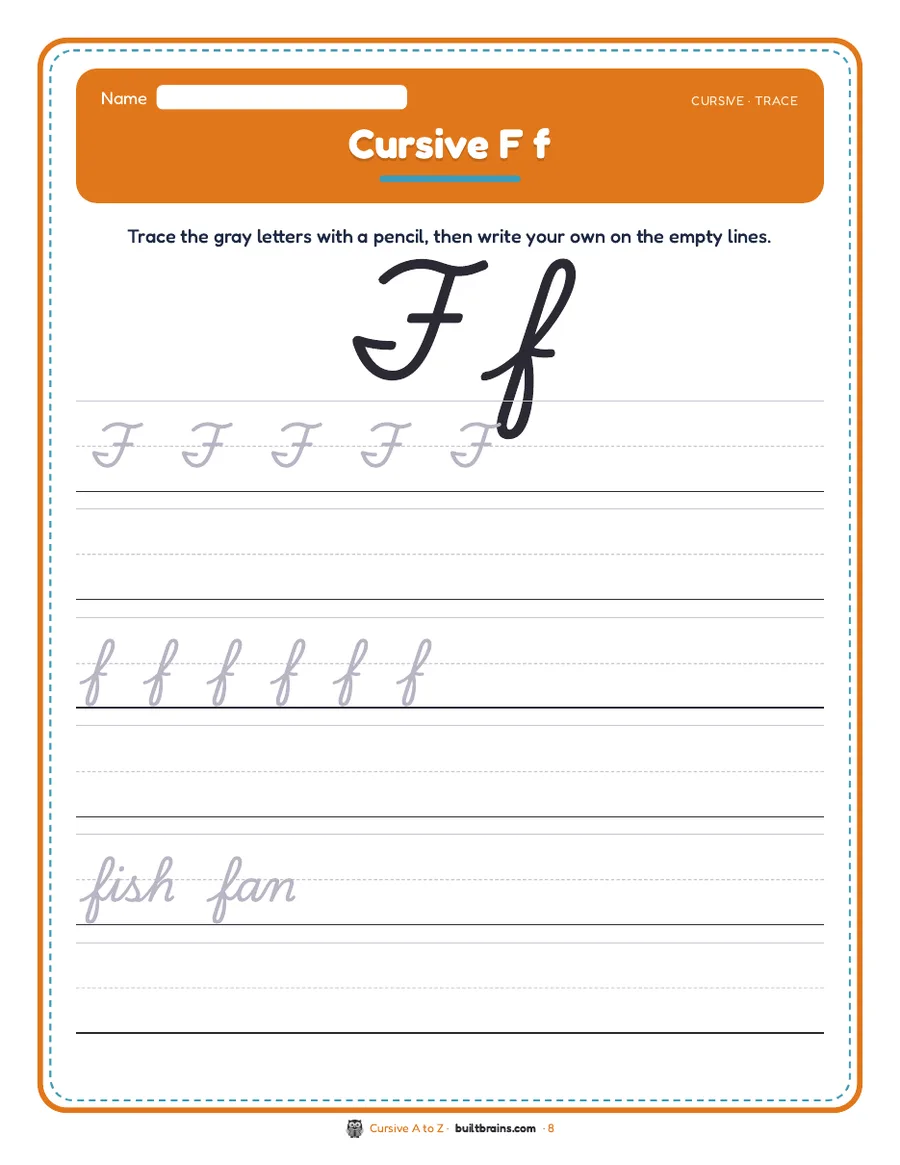
- Look at the big model. Trace the large capital and small letter with a finger first, saying where it starts and which way it goes.
- Trace the gray letters. Go slowly and keep the pencil on the paper through the whole letter. Cursive letters are made in one smooth movement.
- Write on your own. On the empty lines, write the letter without the gray guide. Compare each one to the model and circle the best one.
- Write the words. The bottom of each page has two words, like dog and duck or fish and fan. This is where your child joins the letters. Trace first, then write.
Do the pages in order, one a day. By the end of the week your child can write cab, bad, bed and fed using only the letters they know, which feels like a real reward. Our guide to teaching cursive to kids explains posture, paper slant and how to teach joins in more depth.
Tips by age
Age 7. Focus on the small letters, which get used far more than capitals. If a whole page is too much, trace every letter but write only the small letters on your own.
Age 8. Ask your child to say the strokes out loud while writing: "up, over, down, and out." Talking through the shape makes the movement automatic sooner.
Age 9. Time is better spent on joins than single letters. After each page, write a short word using only letters learned so far, such as face or bead.
Games to play with the pages
- Air writing. Before each page, write the letter big in the air with a straight arm, then smaller on the table with a finger.
- Rainbow letters. On a Black & White copy, trace each gray letter three times in three colors. The overlapping lines show how steady the hand is.
- Mystery letter. Write a cursive letter on your child's back with a finger and see if they can guess it.
- Word builder. Using only A to F, see how many words you can make together: bad, cab, fed, deaf, face. Write each one in cursive.
- Name card. Once a letter from their name comes up, practice it on a folded card to stand on the table at dinner.
When your child is ready for more
After A to F, keep going one letter a day. The letters that trouble most children come later: the loops and tails in k, q and z, the tricky capitals like G and Q, and joining after o, v and w, which leave from the top rather than the bottom.
Cursive A to Z covers every letter the same way as these pages: a big model, gray letters to trace, space to write alone and real words for each letter, across 26 letter pages. Once the alphabet is done, the best next step is copying short sentences every day so the joins become smooth and natural.
Questions parents ask
Many children start cursive around 7 or 8, once their print letters are steady and they can hold a pencil comfortably for a few minutes. Some start a little earlier if they are keen. A child who still reverses print letters often or tires quickly will usually do better waiting a few months.
Yes. Pick Colourful or Black & White and US Letter or A4 and the download starts immediately. There is no email to enter and no account to make. These are the first six letter pages from our Cursive A to Z book, exactly as they appear in the full PDF.
Alphabet order is easy to follow and works well for a first pass, which is how these pages are arranged. Some families prefer to group letters by their starting stroke. If your child finds one letter hard, it is fine to skip ahead and come back to it after a few others.
Ten minutes is plenty. One page covers one capital and one small letter, which is a good daily amount. Slow, careful letters teach the hand more than fast ones, so stop while the writing still looks neat rather than pushing through to the bottom of the page.
Cursive A to Z has 29 pages with 26 letter pages, one for every letter, each with the capital and small letter. Every page has a big model, gray letters to trace, space to write on your own and real words to practice, so your child goes from A all the way to Z.