How to use this butterfly life cycle printable
Spread the four pages across two or three short sessions of 10 to 15 minutes. You need crayons, a pencil, child-safe scissors and a glue stick.
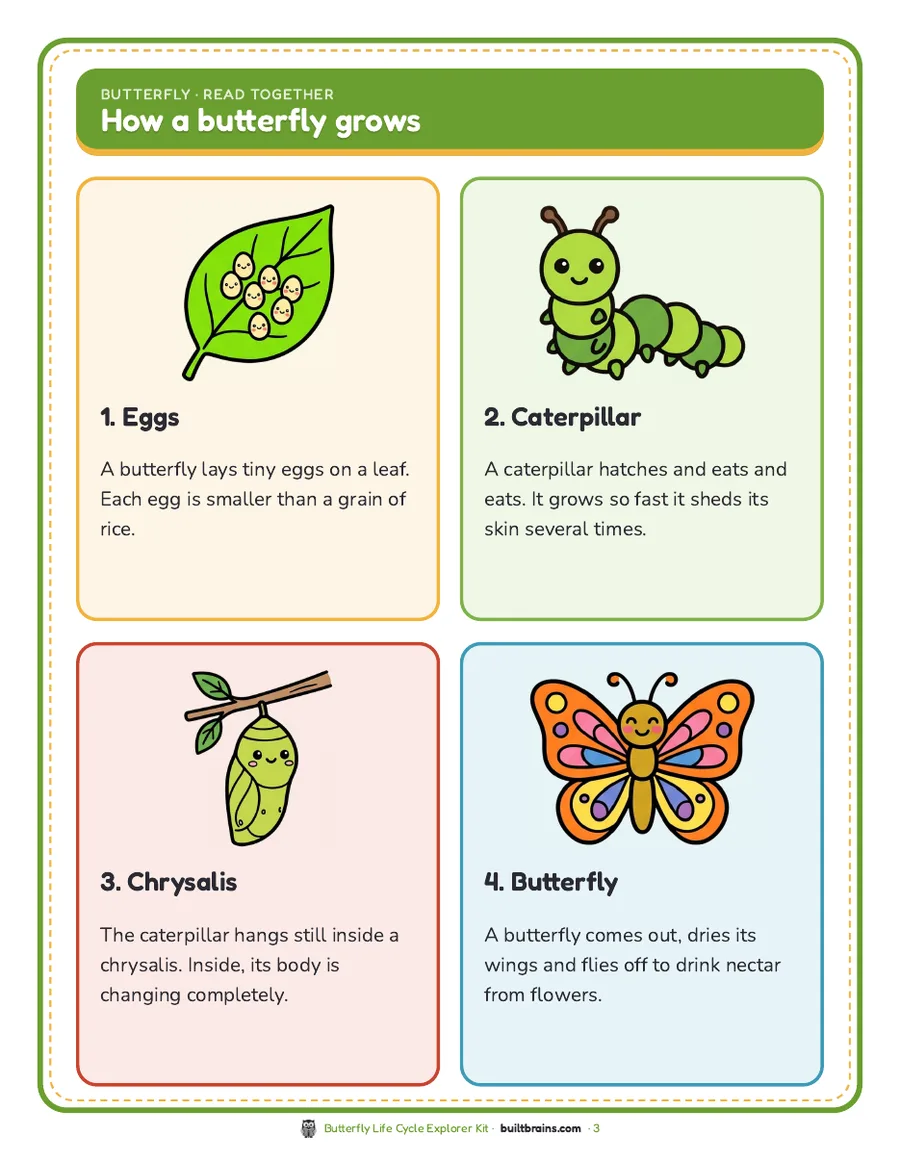
- Read together first. Read the "How a butterfly grows" page aloud, one stage at a time. Pause after each and ask, "What happens next?" Point out that each egg is smaller than a grain of rice; it's a fact children love.
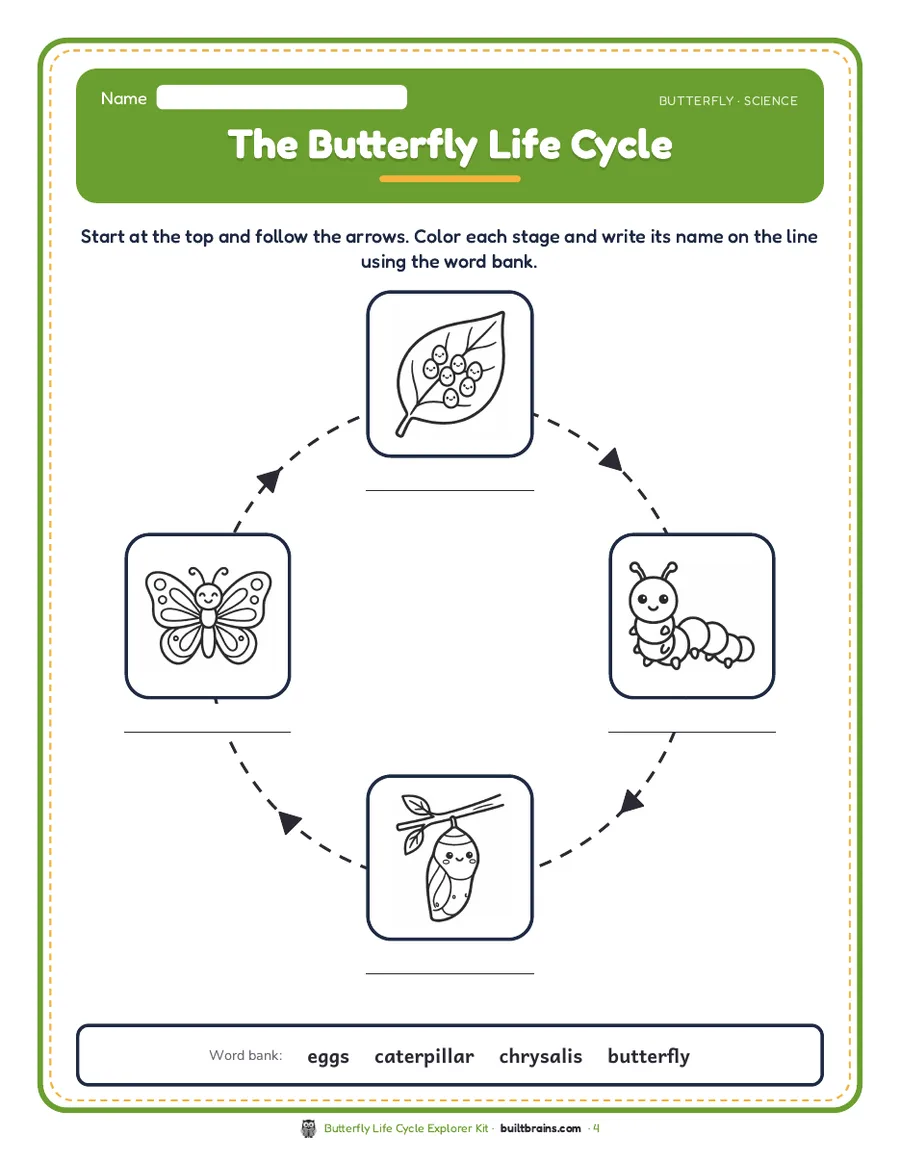
- Fill in the wheel. Start at the top, follow the arrows with a finger, then color each stage. Older children copy the names from the word bank; younger ones can tell you and you write.
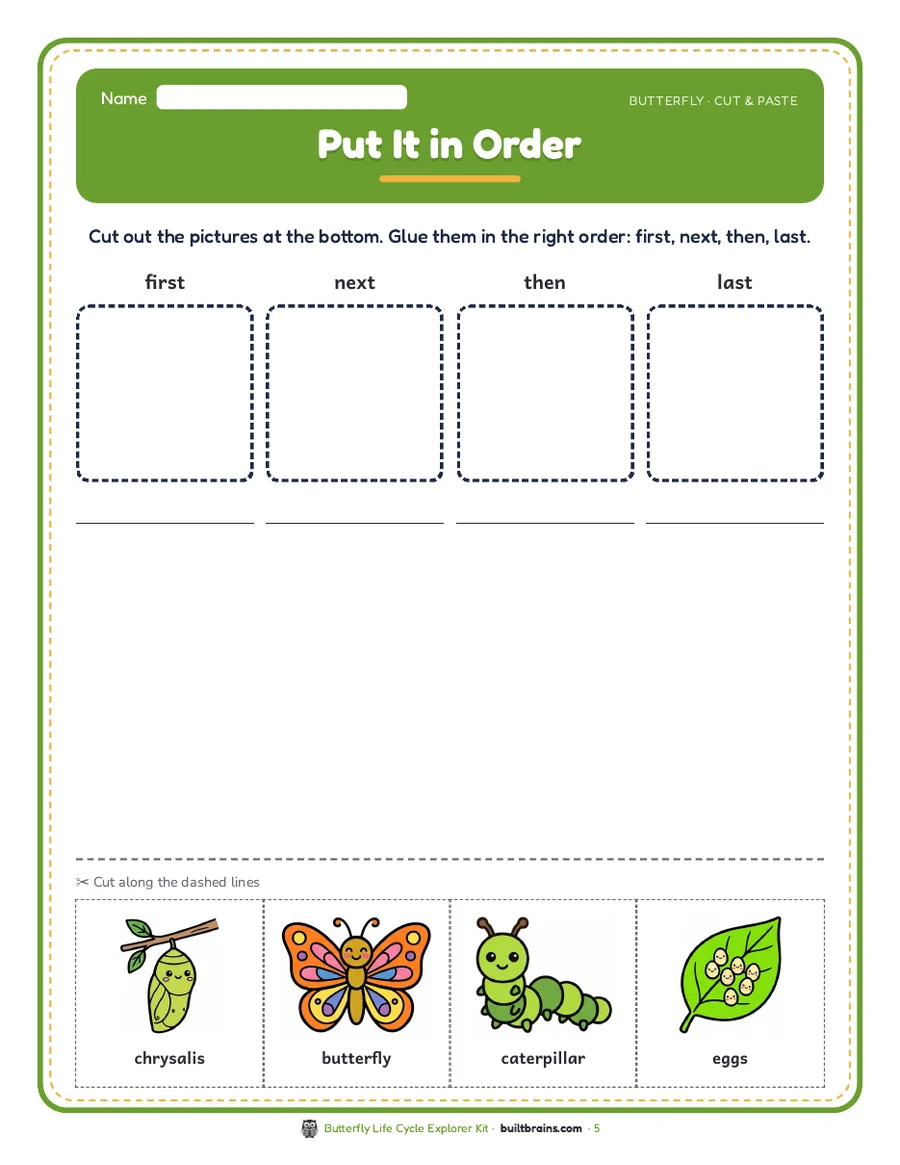
- Cut and paste. Cut out the four pictures, mix them up, and let your child put them in order before gluing. Saying "first, next, then, last" out loud builds the sequencing language they'll use in stories and math.
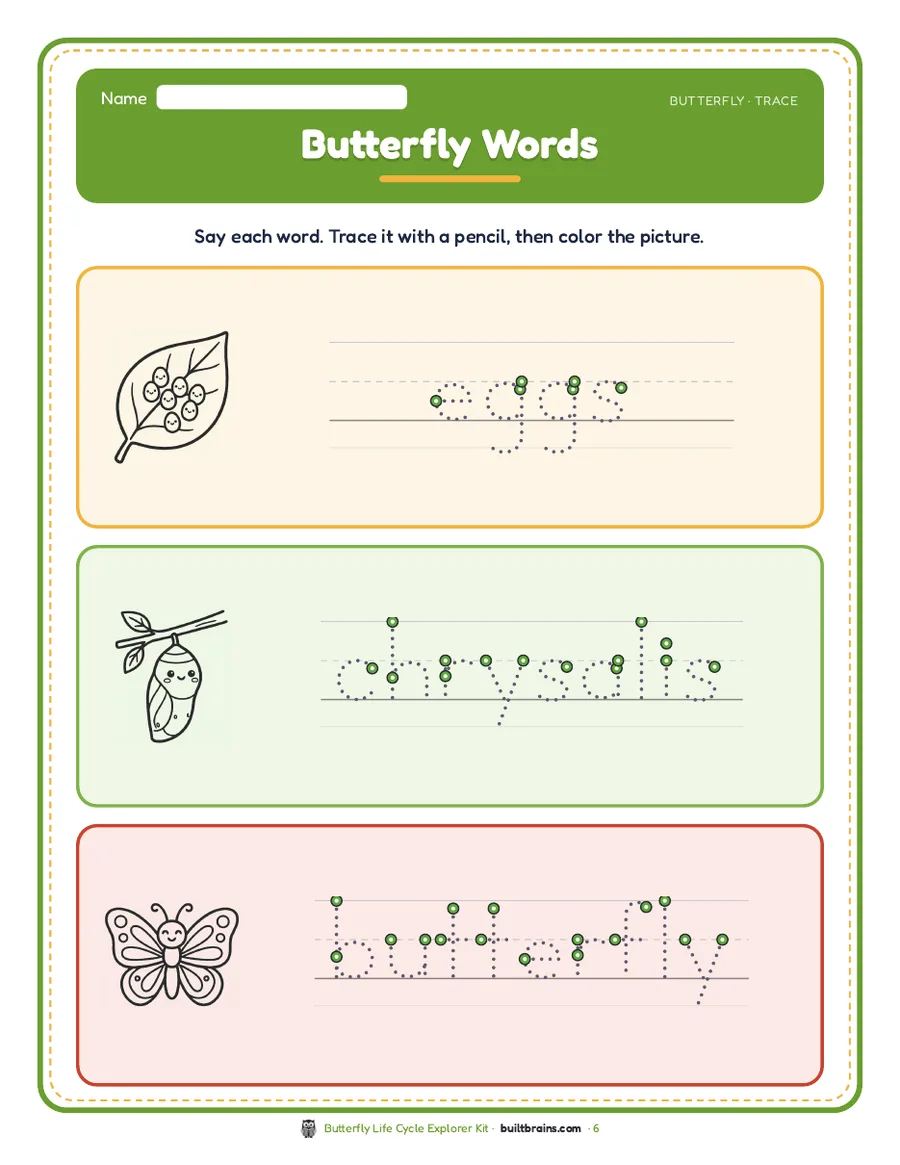
- Trace the words. Finish with the word page. Say each word slowly, trace it, then color the picture.
For hands-on ideas beyond paper, such as raising caterpillars, butterfly snacks and movement games, see our life cycle activities for preschoolers.
Tips by age
Age 4: Keep it to the read-together page and the cut and paste page in the first session. Cut the pictures out yourself if scissors are still new, and let your child do the gluing and ordering.
Ages 5 to 6: Ask your child to retell the life cycle using the wheel after they've labeled it. Introduce one new word, such as "hatch" or "nectar", and use it during the day.
Age 7: Ask "why" questions: why does the caterpillar eat so much? Why does the butterfly need to dry its wings? Have them write one sentence about their favorite stage on the back of the wheel page.
Games to play with the pages
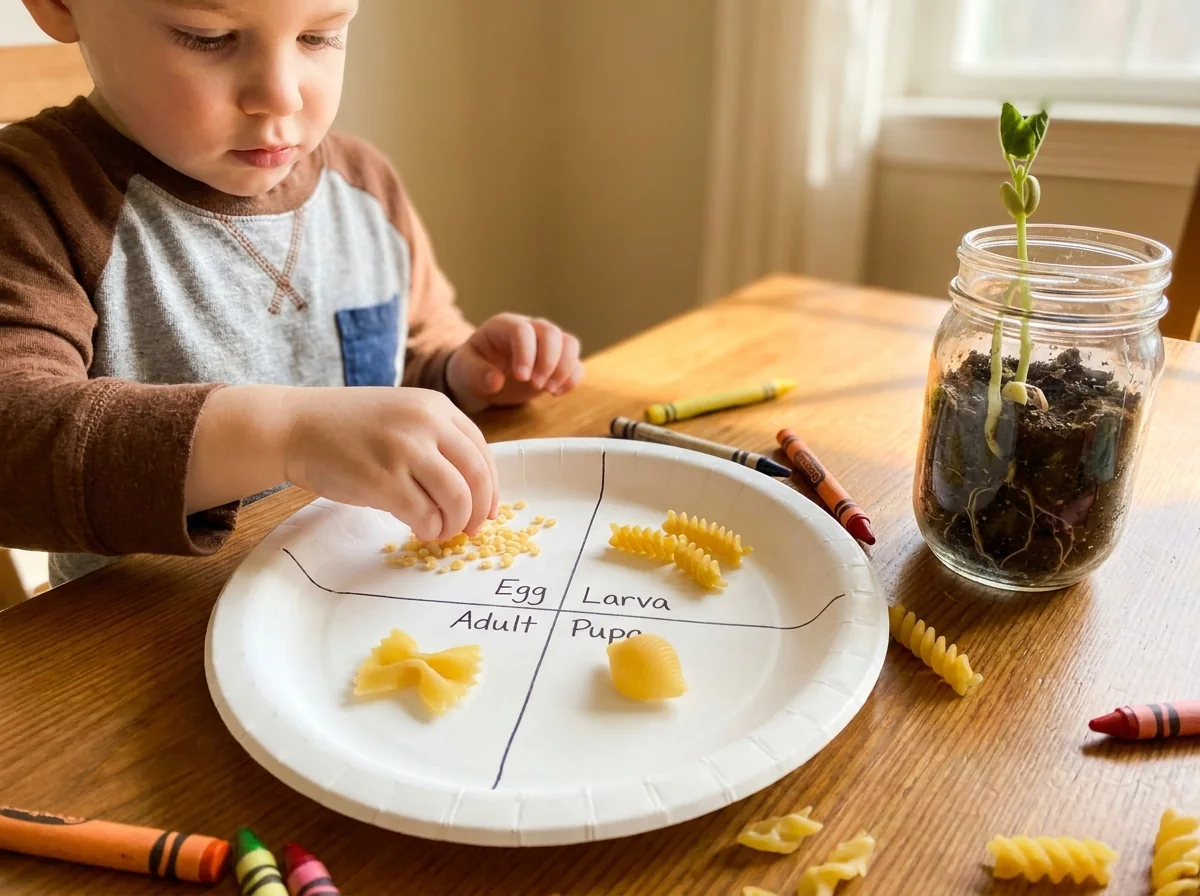
- Body life cycle. Curl up small as an egg, wriggle and munch as a caterpillar, wrap your arms tight as a chrysalis, then open them wide and fly.
- Mix-up challenge. Turn the cut-out pictures face down, flip one, and ask "What comes before this? What comes after?"
- Wheel spinner. Push a pencil through a paper clip at the center of the wheel page and spin. Act out whichever stage it lands on.
- Leaf hunt. On a walk, look under leaves for eggs or caterpillars (look, don't touch), then find the matching stage on the wheel at home.
- Symmetry wings. Fold paper in half, paint one side, press, and open to make a butterfly with matching wings.
When your child is ready for more
Once the butterfly stages are clear, children are ready to compare other life cycles, like frog and plant, and to notice that every living thing grows and changes. Spring is a lovely time for it; our spring activities for preschoolers ties life cycles into a four-week theme.
The full Butterfly Life Cycle Explorer Kit rounds out the unit with cut-out word cards for matching and games, a coloring page, a draw and write page, and a certificate to celebrate when you finish.
Questions parents ask
It is made for ages 4 to 7. Four year olds enjoy the read-together page, the coloring and the cutting, with an adult reading and writing the labels. Five to seven year olds can usually copy the stage names from the word bank and put the pictures in order on their own.
Egg, caterpillar (also called a larva), chrysalis (the pupa) and adult butterfly. The butterfly lays eggs on a leaf, a caterpillar hatches and eats and grows, it forms a chrysalis where its body changes completely, and then a butterfly comes out, dries its wings and flies.
It is free and there is nothing to sign up for. The PDF downloads as soon as you click. These four pages are taken from our full Butterfly Life Cycle Explorer Kit, so you can try them with your child and decide later whether you want the rest of the kit.
The color version is bright and easy to follow, and the black and white version saves ink and gives your child more to color, which suits the wheel and tracing pages well. Pick US Letter or A4 to match your paper and print at actual size.
The full kit has 10 pages: the read-aloud fact page, the life cycle wheel, the cut and paste sequencing page and the tracing page you get here, plus a page of cut-out word cards, a coloring page, a draw and write page and a certificate to finish the unit.