
How to make your name tracing worksheet
- Type your child's name in the box. Up to 14 letters fit on a line, and the letters shrink a little for longer names.
- Pick a letter style: a capital first letter, all capitals or all lowercase.
- Press Print the worksheet. In the print window choose US Letter or A4, or Save as PDF to keep it.
Print two or three copies at once so your child can practise on different days without waiting for you.
How to use it with your child
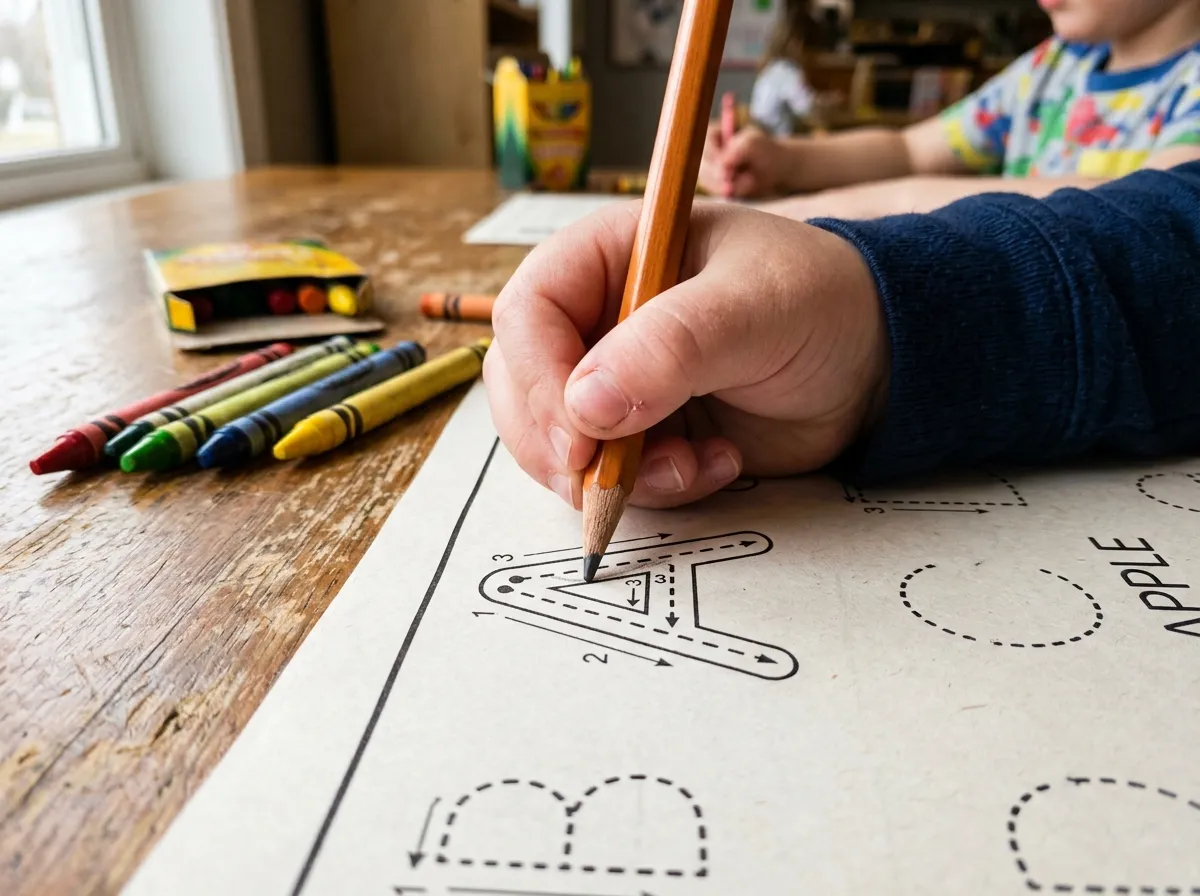
Start by reading the dark name at the top together and pointing to each letter as you say it. Then let your child trace the first gray row with a finger before picking up a crayon or pencil.
Each letter should start at the top, where your pencil touches the highest line it needs. Say the strokes out loud as you go, for example "down, across the top, across the middle" for a capital E. Slow and careful beats fast and wobbly.
After five rows of tracing, the two empty rows are for writing the name alone. Don't worry if the letters are big or uneven at first. Getting the letters in the right order, in the right direction, matters more than neatness.
Signs your child is ready for name tracing
Name tracing goes best when a child can already do a few simple things:
- Hold a crayon with fingers rather than a whole fist
- Copy a straight line down, a line across and a circle
- Recognise the first letter of their name
If these are still hard, spend a week or two on pre-writing lines and shapes first. Our free pre-writing worksheets give your child the straight, curved and zigzag lines that every letter is made from.
When your child can write their name
Once the name comes easily, move on to the rest of the alphabet. Letters in your child's name are the best place to start, because they already know them. The free alphabet tracing worksheets cover A, B and C with start dots and arrows, and the full book carries on to Z.
For more ideas, read our guide on how to teach a child to write their name, with games and steps for every stage.
Questions parents ask
Most children start tracing their name between 3 and 4, once they can hold a crayon and copy a line and a circle. If your child is younger, let them trace the gray letters with a finger first. By 5 most children can write their name on the empty rows without tracing.
Teach the name the way school will write it: a capital first letter and lowercase for the rest, like Mia. Many children start with all capitals because the straight lines feel easier, and that is fine for a first go. Move to the capital-first style once they know their letters.
Yes. There is no sign-up, no email and no account. Type a name, press Print and choose your paper size. To keep a copy, choose Save as PDF in the print window. You can make a sheet for every child in the family or the whole class.
A few minutes a day works better than one long session. One sheet, two or three times a week, is plenty for most preschoolers. Stop while your child is still enjoying it, and praise the careful letters, not only the finished name.
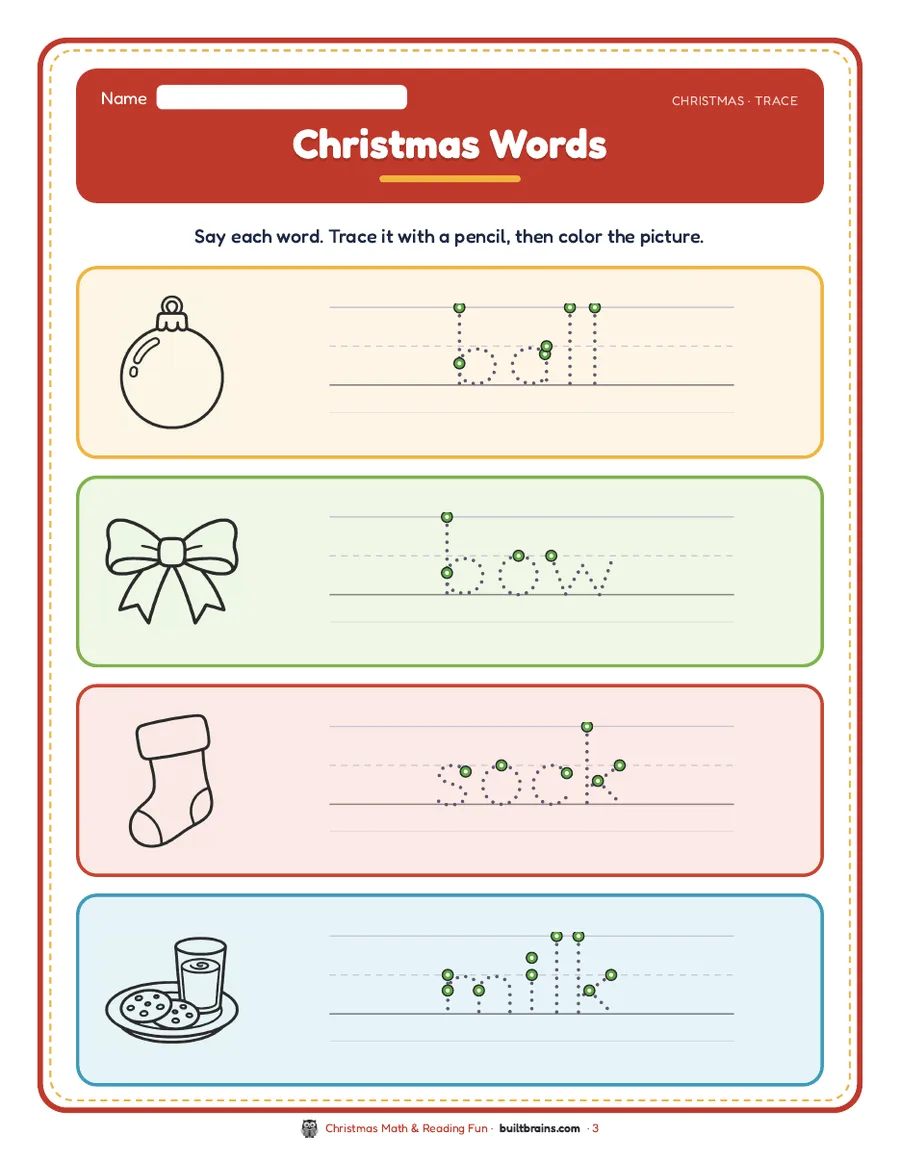
The top line, the dashed middle line and the baseline show where each letter starts and stops. Tall letters touch the top line, small letters reach the dashed line and every letter sits on the baseline. Children who learn this early find spacing and letter size much easier at school.